
As rising temperatures collide with increasingly dense AI workloads, Colin Rees, Co-lead of Consultancy at IES, explains why data centre operators need to start designing for a very different thermal future.
With record summers and AI-era rack densities squeezing cooling headroom, operators should consider how future conditions could affect efficiency and uptime.
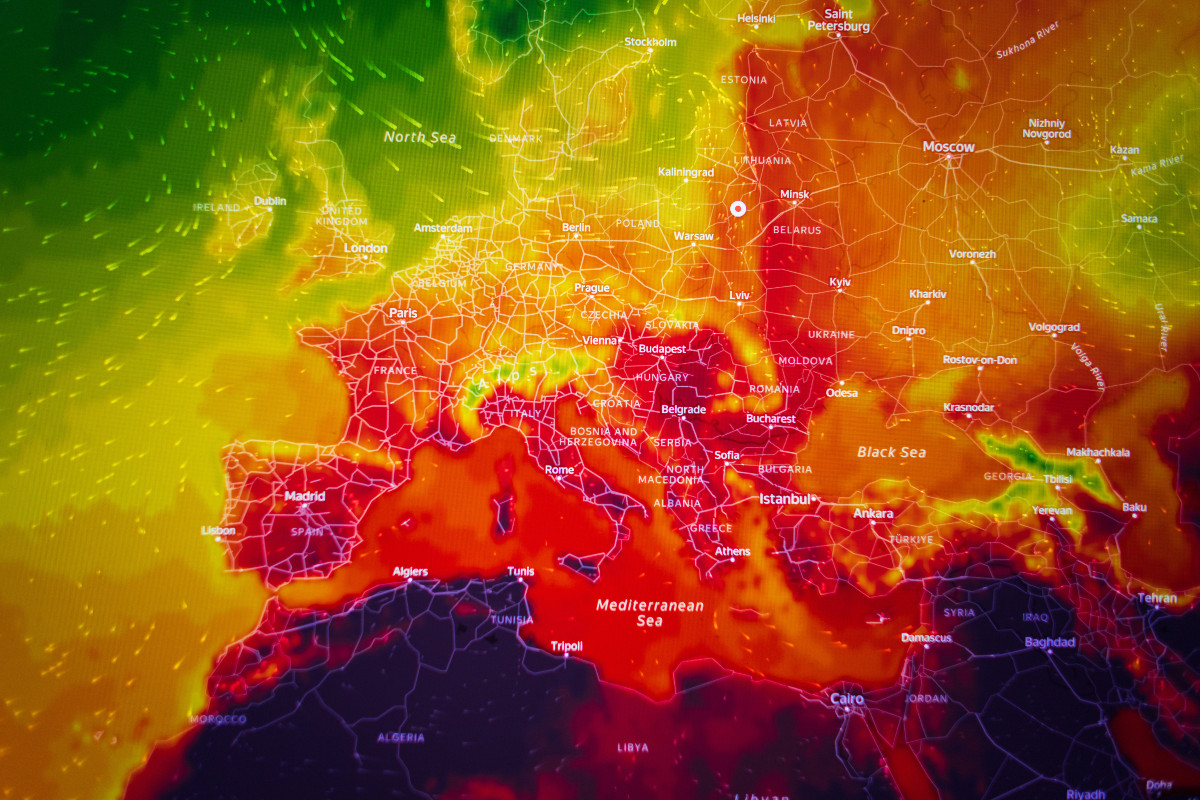
Western Europe just lived through its hottest June since records began. The regional average reached 20.74°C, 3.05°C above the 1991–2020 norm. The Copernicus Climate Change Service (C3S) estimates that Europe has warmed by around 2.5°C since pre-industrial times, more than twice the recent global rate.
For a data centre, the heat reaches every part of the cooling chain. Chillers lose capacity, economiser hours shrink and heat-rejection equipment works harder. Humidity can restrict evaporative cooling, while warm nights leave less time for plant and the surrounding environment to recover.
Compute demand is adding heat from inside the building. JLL’s 2026 Global Data Center Market Outlook report predicts that global data centre capacity will grow from 103 GW to 200 GW by 2030. Meanwhile, the International Energy Agency projects electricity use by data centres to rise from 485 TWh in 2025 to around 950 TWh in 2030, with consumption at AI-focused facilities tripling over the same period.
Design for the climate ahead
Historic weather files remain a useful reference, despite describing conditions drawn from the past. A facility entering service now may still be operating in the 2040s, with a different pattern of summer peaks, humidity and overnight temperatures.
Project teams should use future weather files alongside recent observed extremes. Run the model through multi-day heatwaves and high wet-bulb conditions, including nights that stay unusually warm. Local factors belong in the model too. Dark hardstanding, nearby buildings, restricted roof layouts and urban heat can create conditions around the plant that a regional weather station will miss.
Set the pass/fail criteria before the analysis begins. Define acceptable rack-inlet temperatures and any permitted excursion. Specify the cooling headroom required during maintenance or equipment failure. A design that survives one peak hour may still struggle on the fourth day of sustained heat.
AI loads have changed shape
AI has changed both the concentration and speed of heat release. The IEA reports that AI server power density increased elevenfold between 2020 and 2025 and could rise another fourfold by 2027. It also says AI data centres can experience repeated server-load swings exceeding 50% of rated capacity within a second.
Staged rack deployment and rapid changes in IT demand should appear in the load profile. Separate cases can examine mixed air and liquid cooling, maintenance states and credible failures. These scenarios can show how quickly the controls respond. They can also reveal margin at the coolant distribution units and any need for thermal buffering.
Pair full-year modelling with CFD
Different modelling methods answer different engineering questions. Computational fluid dynamics (CFD) shows where air travels, where hot exhaust mixes with supply air and how a fan or cooling-unit failure changes local conditions. Whole-facility dynamic simulation tracks the interaction between IT load, cooling plant, controls, weather, energy and water over every hour of the year.
Used together, the two approaches can connect local airflow risk with annual performance. Internal CFD can expose bypass air, containment leakage, uneven pressure and rack-level hotspots. External CFD can test wind direction, plant spacing, parapets and the route taken by discharged heat.
External recirculation deserves particular attention. Warm exhaust from a dry cooler, chiller or condenser can return to an intake when the plant is tightly packed or wind conditions are unfavourable. Inlet temperature rises, available cooling capacity falls and fan or compressor energy climbs. High ambient temperatures can also derate chillers, narrowing the margin further.
Give PUE a time axis
Power Usage Effectiveness (PUE) remains useful, provided operators can see what sits behind the annual figure. An annual average can conceal a sharp rise during heatwaves, poor plant sequencing at part load or very little spare cooling capacity.
Hourly PUE shows when fans, pumps, compressors and coolant distribution units drive demand and cost. It should sit beside Water Usage Effectiveness, Carbon Usage Effectiveness and the facility’s thermal headroom. Reading the metrics together can help teams compare cooling options while avoiding an electricity saving that creates extra water demand or erodes resilience.
The numbers can change sharply once local climate is modelled. In one full-year analysis by IES of a hyperscale site in a cool, dry North American climate, direct evaporative cooling was required for around 15% of the year; for the remainder, ambient outdoor air was sufficient. The simulated design achieved a PUE of 1.16, compared with 1.38 for conventional air-cooled chillers.
In the modelled annual result, WUE was around 0.1, substantially below the water-cooled alternative. However, short-period evaporative water demand can rise during operation, so the value should be interpreted as an annualised result. The model showed a reduction of more than 90% in annual water use compared with the water-cooled alternative.
The design produced a weaker result under hotter, more humid weather files, where evaporative cooling lost effectiveness and cold-aisle temperatures risked exceeding recommended limits. Site climate changed the engineering answer. A cooling template that performs well in one region should be retested before it is carried into another.
Keep the model alive after handover
A calibrated digital twin can carry the design work into operation. Metering, rack-level data, BMS logs and actual control sequences allow the model to reflect how the facility behaves. Operators can compare predicted and measured performance, identify drift and investigate thermal anomalies before they develop into wider operational issues.
The model can then test an increase in rack density or a revised control sequence before work begins. It can also assess a move towards direct-to-chip cooling and support measurement and verification after a retrofit, helping teams determine whether anticipated savings and capacity improvements have appeared in practice.
Calibration is important to maintaining the model’s operational value. Filters foul, heat exchangers degrade, setpoints change and IT layouts evolve. Regular updates keep the digital twin aligned with the live facility. Seasonal commissioning should revisit performance during hot weather, since tests completed in mild conditions provide limited evidence about summer capacity.
Make the hard decisions early
Cooling architecture and plant location become expensive to change once procurement and construction are underway. Alterations to containment can be equally disruptive. Early analysis gives project teams more opportunity to remove weak options and refine the controls. Equipment can then be sized with a clearer understanding of the associated risks.
Agree the scenario set before major design decisions are fixed. Include future weather and staged AI deployment, together with maintenance outages and credible equipment failures. Revisit the results as the IT brief develops and again when equipment selections are confirmed.
Europe’s next data centres will operate through hotter summers and tighter water conditions while supporting denser compute. The next heatwave will arrive on its own timetable. Operators have far more control over how their facilities meet it. Climate-aware simulation and targeted CFD, supported by calibrated operational data, can help provide the evidence needed to protect uptime while keeping energy and water use under control.