
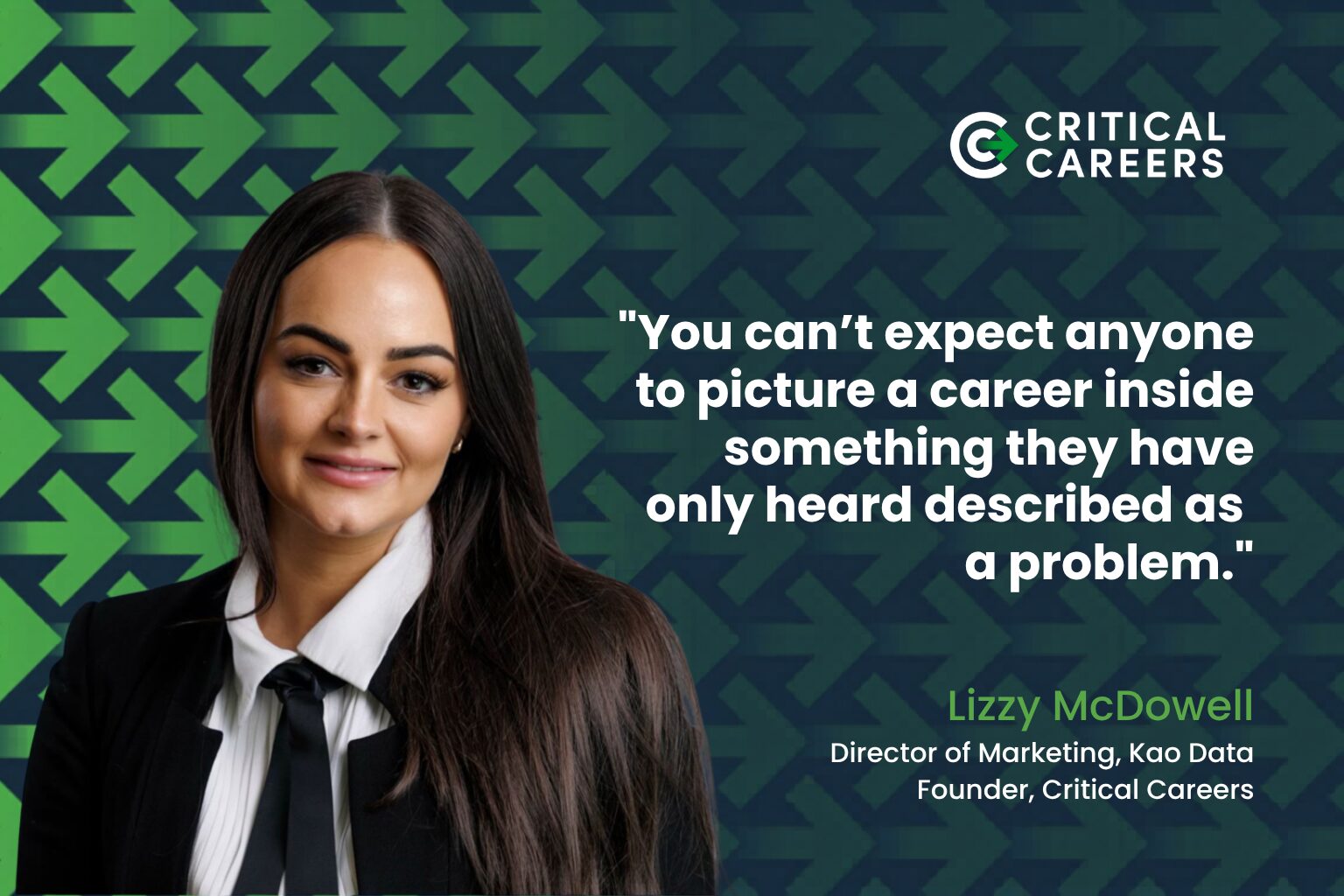
Lizzy McDowell, Director of Marketing at Kao Data, argues that the biggest barrier to attracting new talent into digital infrastructure is not a lack of jobs, but a lack of understanding about why the industry exists.
A few months ago, I stood in front of a room of A-level students and asked how many of them could tell me what a data centre was. Three hands went up, tentatively, each one glancing sideways first to see if anyone else was going to answer before committing. When I asked the same group what they thought happened inside one, the answers were more confident and considerably less accurate, painting something closer to the vague, faintly suspicious picture you get from a headline-grabbing news story than anything resembling an actual workplace.
None of that surprised me, and none of it was really their fault. If the only information reaching them comes from a worried headline about water shortages or a planning objection about noise, that is the picture of the industry they will build. You cannot expect anyone to picture a career inside something they have only ever heard described as a problem.
The myths are not really about data centres
We talk a great deal in this industry about the skills gap and the talent pipeline, and rightly so, given the scale of the build-out ahead of us. What we talk about far less is the fact that most people outside the sector are working from a set of assumptions that are, at best, out of date and, at worst, simply wrong.
Ask around and you will hear the same handful of claims repeated with real confidence. Data centres are draining water supplies. They are pushing up household electricity bills. They run on diesel around the clock. They are noisy and secretive, and are widely assumed to be bad for the environment. Some of that concern has a grain of truth buried inside it, usually about a different type of facility in a much hotter country. Most of it has simply calcified into common knowledge because nobody bothered to correct it.
That matters for planning applications and public trust, which is where these myths usually get discussed. It matters just as much for recruitment, which is where they rarely get discussed at all. A career changer weighing up whether this industry is somewhere she wants to build a professional life is unlikely to get that far if she already believes it damages the environment and hides what it does.
You cannot recruit people into an industry they think is doing harm
This is the part of the conversation I think we consistently underestimate. We spend a lot of energy explaining why the work is interesting and purposeful, and I stand by every word of that, but purpose only lands once someone has already cleared the more basic hurdle of believing the industry is not something to be wary of in the first place.
I have lost count of the number of times a perfectly reasonable question about water use or electricity bills has come from someone who might otherwise have been curious about a role in this sector. The honest answer to most of those questions is more reassuring than people expect, and considerably more nuanced than a single alarming statistic allows for. Modern UK data centres commonly use closed-loop or waterless cooling systems, and techUK’s own research found that almost two-thirds of the commercial sites it surveyed used less water annually than a typical leisure centre. Electricity is bought through commercial arrangements with energy providers rather than drawn from the homes next door. None of this is hidden information. It simply tends to stay inside industry conversations and rarely gets said in language a curious eighteen-year-old could follow.
Answering the question properly, for once
This is the motivation behind the newly launched Data Centres Explained, a plain-English online resource from Kao Data that answers the questions people are asking about this industry, rather than the questions we assume they are asking.
It starts with the basics, covering what a data centre is, what is inside one and what it enables in an ordinary day, from a banking app to a hospital record. From there, it moves straight into the questions that tend to sit behind the myths. Will it affect my water pressure? Will it push up my electricity bill? Why does it need so much power? Why does construction take so long? Are the jobs it creates real, and what do they look like? Each answer is written the way I would explain it to a curious neighbour rather than the way I would present it to a planning committee, because that is usually the register these questions get asked in.
A resource like this only earns its keep if people use it, so I want it to become the place we point every school group, every career changer and every curious neighbour towards, instead of leaving them to piece the answer together from whatever they can find in the media.
Visibility only works if what people see is accurate. There is little value in getting more people to notice this industry if the first thing they learn about it turns out to be wrong. A young person deciding whether to consider a career here deserves the same honest, specific answers as a resident deciding whether to support a planning application down the road, and until now those two audiences have been served very differently.
Correcting the record is a recruitment strategy
I do not believe we will close the talent gap through purpose alone, however much I believe in it. Every myth left unanswered gives someone bright and curious another quiet reason to rule out a career in digital infrastructure before they have even considered it.
DatacentresExplained.com will not persuade everybody, and it is not trying to. It is there so that whoever does look, whether she is sixteen and choosing a college course or forty and considering a career change, is deciding based on what this industry actually is rather than what it has been rumoured to be.
That room of sixteen- and seventeen-year-olds is, I hope, slightly better informed now than they were that afternoon. There are a great many more like them out there, and correcting the record is the least we owe them.
See you next month.