

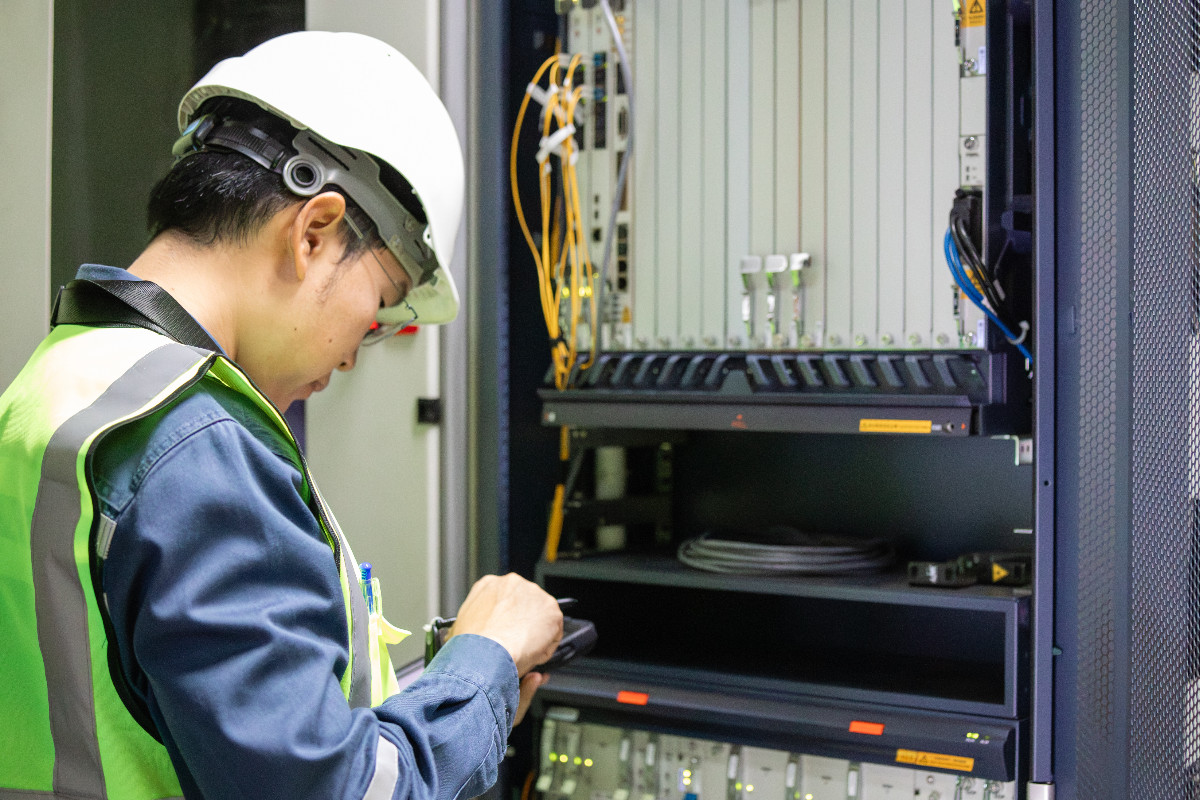
Patrick Quirk, President and General Manager at Opengear, explores why escalating outage costs and cascading business impacts demand a shift from reactive firefighting to proactive, resilience-first network design.
Data centres are becoming more complex, and with that complexity comes a rising tide of outages. What was once an occasional disruption has turned into a pattern many organisations can no longer ignore. Opengear research shows 84% of businesses experienced more outages over the past two years, a clear warning that resilience can no longer be treated as optional.
The increases are significant. More than half of businesses reported outages up by 10% to 24%, and another quarter saw increases of 25% to 50%. That is not noise in the system. It is a structural challenge with serious consequences.
Why outages are rising
Failures rarely come from a single source. Configuration changes, power cuts, and cyberattacks all play a role, compounded by geopolitics, the energy transition, and the weight of digital demand on aging infrastructure. This combination means firefighting after the fact is not enough. Teams need early detection, automation that contains problems quickly, and recovery paths they can trust.
When outages hit, the ripple effects are immediate. A fire at a substation near London Heathrow led to 18 hours of downtime and more than 1,000 canceled flights. Major shutdowns in Spain and Russia had similar impacts. These events show just how quickly digital failure becomes business failure.
The cost of downtime
The financial toll is steep. In the UK, Opengear’s survey found that 32% of businesses lost between £1 million and £5 million to outages over the past year. Across Europe and the US, 35% of organisations reported annual outage costs in the $1 million to $5 million range. These figures show how quickly downtime translates into hard financial loss. And the impact does not stop there. Outages also erode customer trust, damage reputations, and stall growth. For 24/7 businesses, they threaten continuity at the core.
Technology as the turning point
Recovery times remain too high because responses are still manual, fragmented, and slow. When primary paths fail, access takes too long to secure, and dependencies delay rollback. That is why more organisations are investing in resilience-first technology: tools that predict, prevent, and shorten incidents instead of simply reacting.
AI and machine learning lead the way: 32% of organisations are investing in AI for predictive analytics, automated tasks, and proactive mitigation. The aim is better allocation of resources, stronger security, and greater efficiency. Other investments are reshaping the landscape too: quantum computing, IoT, and edge architectures, which analyst IDC projects will reach $380 billion in spend by 2028.
From a network management perspective, out-of-band management is also gaining traction. A quarter of organisations plan to increase their investment in out-of-band over the next five years to support data centre operations. This highlights its importance as a complementary technology to AI and ML. Out-of-band provides secure, independent access to network infrastructure even when the primary network is down, which is critical when uptime is essential and physical access is limited.
Next steps for resilient operations
Investing in these technologies is essential, but achieving resilience requires more than capital spend. It demands a mindset shift. Organisations must move past siloed approaches and align technical teams with leadership to establish shared priorities around secure remote management, robust operational protocols, and clarity of execution. This alignment ensures that the transition to advanced architectures such as edge computing happens with purpose and control rather than fragmentation.
AI and out-of-band solutions can work together to materially strengthen resilience, offering predictive insights and assured access to contain disruptions before they escalate. Yet adoption only succeeds when organisations address the realities of implementation: bridging skills gaps, integrating with legacy systems, and unifying oversight to ensure continuity. These are the issues network engineers face every day as they modernise systems, invest in training, and partner with managed service providers to reinforce their security posture.
The shift is clear. Network management must evolve from reactive response to proactive planning. Building distributed visibility, establishing resilient recovery processes, and equipping teams with predictive, automated, and secure out-of-band capabilities will turn resilience from aspiration to standard practice. The benefits follow quickly: fewer incidents, higher confidence, and continuity that is no longer in doubt but embedded in the way the business runs.