As we move into 2026, one thing is certain: Europe’s data centre market is no longer evolving – it’s accelerating. Powered by unprecedented AI demand, shifting geopolitical dynamics, and intensifying competition for power, land, and talent, EMEA finds itself at the centre of a global transformation in digital infrastructure.
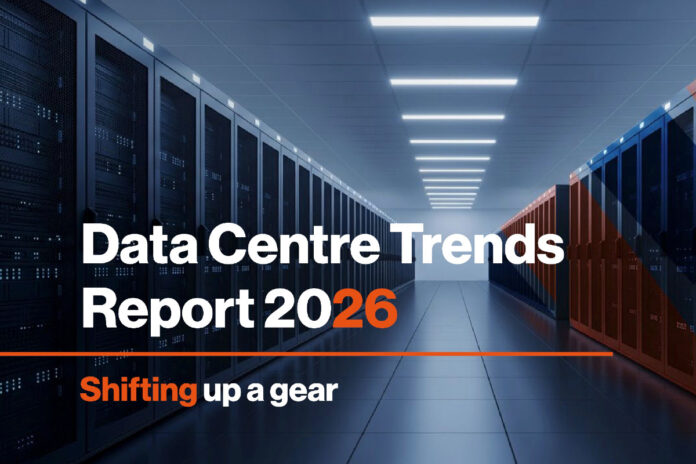
In December, Soben, part of Accenture, released its 2026 Data Centre Trends Report, offering one of the industry’s most comprehensive views into the market pressures, opportunities and innovations shaping the next decade. While the full report dives deep into the trends influencing global development, the EMEA narrative is particularly compelling – and increasingly urgent. Here’s a snapshot of what’s inside.
Power scarcity redraws the European map
Across Europe’s established hubs – Frankfurt, London, Amsterdam, Paris and Dublin (FLAP-D) – the message is loud and clear: power availability is now the dominant barrier to growth. Frankfurt’s AI developments are paused until new capacity comes online; Amsterdam is limiting developments until at least 2035; Ireland is permitting self-generation, but approvals remain complex.
As a result, developers are looking north and south. Nordic nations offer abundant hydropower, cool climates, and advancing incentives for hyperscale development – though community acceptance and environmental regulation remain non-negotiable. Southern Europe, particularly Madrid, Zaragoza, Milan and emerging Mediterranean hubs like Marseille, Barcelona and Crete, is becoming increasingly attractive thanks to favourable regulation, solar generation potential and growing connectivity.
2026 will be remembered as the year Europe’s data centre gravity noticeably shifted.
Talent is the new critical infrastructure
Europe simply doesn’t have enough skilled contractors, MEP specialists or experienced commissioning teams to meet its pipeline. Fewer than 10 general contractors currently dominate the region, and demand now far outstrips availability.
Competition is fierce – and rising Middle Eastern megaprojects are drawing experienced teams out of Europe with lucrative compensation packages. The sector’s success in EMEA will hinge on how quickly markets can attract, train and retain skilled construction talent. Governments across Europe are beginning to recognise this pressure – but progress must accelerate.
The rise of modular and industrialised delivery
Speed has become the currency of competitiveness. The report highlights a clear industry shift towards standardisation, prefabrication and modular assembly as the only scalable way to meet hyperscaler timelines. From modular halls and power skids to fully contained rack modules designed for slot-in deployment, the road to faster delivery now runs through industrialisation. And this isn’t just a cost-saving exercise – it’s essential for unlocking faster permitting, improving quality assurance, and reducing on-site labour requirements in markets already short of resources.
Middle Eastern investment sends ripples across EMEA
The Middle East continues its meteoric rise as a global data centre powerhouse, with Saudi Arabia and the UAE announcing multi-gigawatt strategies and investment programmes. This growth is creating new competitive dynamics for talent, materials, and supply chains – and opening new opportunities for EMEA-based developers to partner, expand or reposition in neighbouring regions. For European operators, this shift presents both a challenge and an opportunity: compete with Middle Eastern ambitions or align with them.
A decade defined by AI – and the race to support it
From constrained grids to cooling innovations, AI is reshaping infrastructure faster than the industry can currently build it. Whether through natural-gas-assisted hybrid power strategies, liquid cooling evolution, or next-generation chips, AI workloads are rewriting the rules for design, delivery and long-term operation. EMEA’s ability to compete in this race will depend on how quickly countries can modernise permitting, expand power transmission, embrace alternative energy strategies, and support next-generation engineering talent.
Final word
Europe stands at the crossroads of opportunity and constraint. With escalating AI demand, shifting power strategies and intensifying competition for both land and labour, 2026 will require bold decisions and smarter delivery models. The organisations that can build faster, think modularly, secure supply chains and harness emerging technologies will define the next era of EMEA’s digital infrastructure.
Get the full report
This article only scratches the surface, the full 2026 Soben Data Centre Trends Report includes Global trend analysis across 10 major themes, deep-dive global chapters, exclusive insights from project leaders, emerging investment hotspots and risk maps, insight into future technologies, and more. For decision-makers navigating 2026, the report offers strategic clarity in a rapidly shifting landscape. Read the full report here.