

TechBuyer’s Astrid Wynne argues that as AI drives up cooling demand, water stewardship must become a core design principle – not an afterthought.
As artificial intelligence accelerates demand for data centre capacity, the conversation around sustainability is shifting. Energy efficiency has long dominated the agenda, but water, the silent resource underpinning cooling systems, has emerged as a critical concern.
Scoping the problem on site and throughout operations, and providing practical guidance to avoid extra strain on freshwater use, were key aims of The Data Centre Alliance’s Drowning in Data best practice paper, published in October 2025. Developed by leading industry experts, the paper explains how to avoid freshwater use, how to account for the water footprint of energy use, and how to maximise water efficiency in cooling systems.
Growing awareness of water scarcity
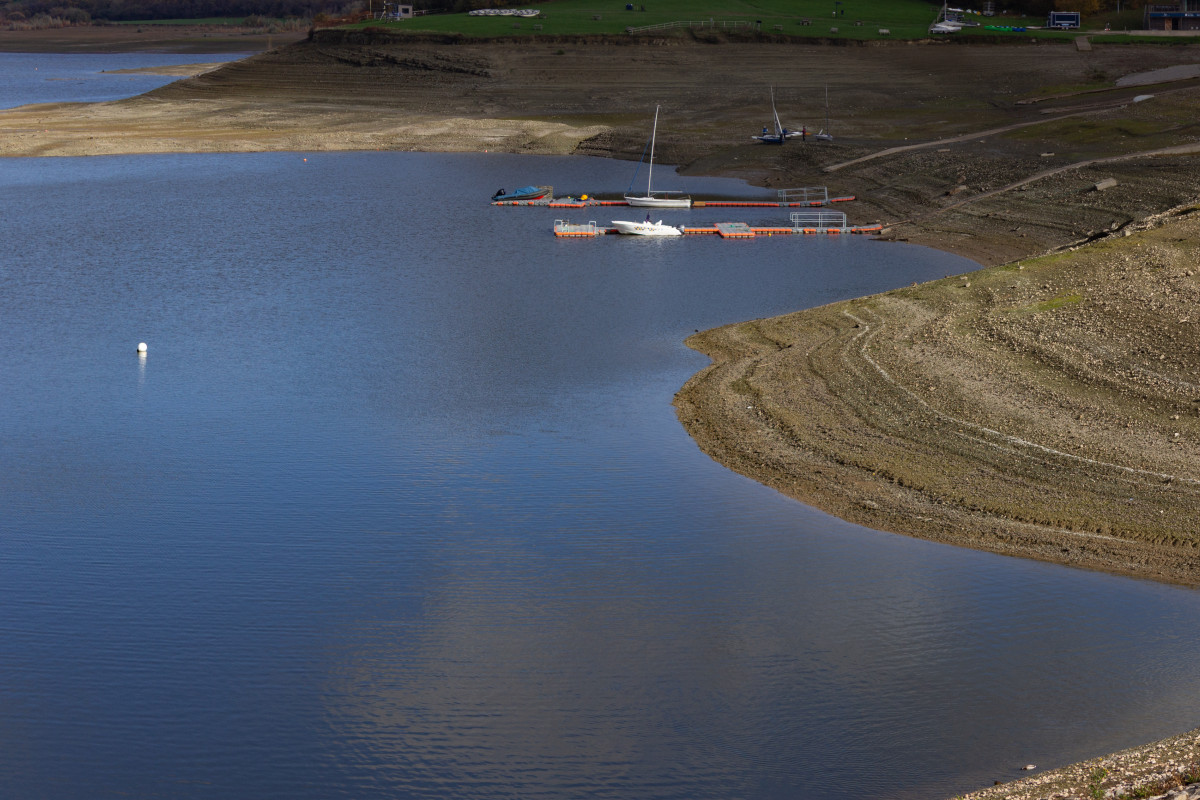
Water scarcity is no longer a distant threat. Today, four billion people experience severe water stress for at least one month each year, according to a 2025 World Economic Forum report. In the UK, the deficit between the infrastructure capacity to provide clean water and the demands placed on it by agriculture, housing and industrial needs is in the billions of litres a day. The growing number of data centres, and reports of their on-site water use, began to raise alarm bells in the mainstream press in early 2025.
With Keir Starmer’s announcement of projected ‘AI Growth Zones’ early in the year came articles from the BBC raising concern that the UK’s AI ambitions could lead to water shortages. While it is true that high-density computing drives up cooling requirements, there are also numerous technologies to address this.
Large evaporative cooling towers, which can consume tens of thousands of cubic metres a year, are not popular in the UK. By August, a techUK report had found that half of England’s data centres now use waterless cooling. Other reports also suggested that used water could be deployed to cool data centres.
Industry guidance
Just as with carbon emissions, data centre water consumption is an issue both on site and through the energy supply chain. The authors of the Drowning in Data paper recognised this early on and structured the guidance around water efficiency in the cooling system; the type of water drawn on site and how it can be treated; and the water footprint of the energy supply.
The paper shows that operators, vendors and policymakers are collaborating to tackle water use with the same rigour applied to energy efficiency—and recognises that it is a system with many moving parts.
The fundamentals of water stewardship
The paper outlines six actionable principles for reducing water impact. It also recognises that these are interrelated, and that they have a relationship with energy efficiency. A brief overview is given below:
- Evaluate cooling systems
Not all cooling systems are created equal. Designs for a 5 MW data centre in London that involve cooling towers can be around 38,000 m³/year, whereas adiabatic coolers can be around 800 m³/year, and dry coolers would result in no direct water use. Selecting the right technology can cut water use by orders of magnitude. - Minimise the water footprint of the energy used
Beyond direct consumption, electricity generation carries an embedded water cost. No studies have yet defined the proportion for AI workloads, but studies on another intensive compute operation – Bitcoin – suggest that most of this sits in the energy footprint. Maximising energy efficiency, and using energy supplies with lower water footprints, is a key part of good water stewardship. - Design with the surrounding environment in mind
Cooling systems must take into account the surrounding environment in order to balance savings in direct water use (through reduced cooling demand) with indirect water waste through increased electricity use overall. - Design with non-potable water in mind
Grey water systems and rainwater harvesting can offset potable water demand, reducing strain on municipal supplies. However, different water qualities require different levels of electricity to make them suitable for cooling systems, and this needs to be considered. - Apply systems thinking
The surrounding community’s needs also play a part. In water-stressed areas, reducing direct water use will be a priority. In cooler, wetter areas, priority may shift towards the benefits of heat generation from the data centre—captured by direct-to-chip cooling and fed into district heating systems. - Introduce circular economy principles for hardware refresh
Extending IT equipment life and promoting reuse reduces embodied water in manufacturing – a hidden but significant component of total water impact. According to the Green Electronics Council, the manufacture of a single server requires 1,500–2,000 gallons of water.
Where next for water use in the data centre sector
Continuing press coverage in recent months shows that data centres are under scrutiny for their water use in a way that other sectors are not. A December 2025 article in The Guardian is one such example. With researchers increasingly turning towards the water footprint of AI, mainstream media is becoming more aware of indirect water consumption as a result of energy use.
No similar stories circulate about heavy industry or manufacturing, which are more established and more likely to fly under the radar. Whether or not this is fair is a moot point; water is the next frontier in data centre sustainability. As the industry scales to meet digital demand, water stewardship must become a core design principle, not an afterthought.
The Drowning in Data paper provides insight into how the sector can address this with an approach that balances operational resilience with environmental responsibility. However, it is just the start of a long, complex process of understanding impacts and balancing competing demands. The Data Centre Alliance welcomes suggestions and collaborations that can move the conversation forward.
You can read the full paper and join the discussion at dcauk.org.