

Suneel Appan, Client Account Manager at Future Biogas, looks at biomethane as a drop-in alternative to fossil gas that can support additionality and speed up data centre delivery amid gridlock.
If you’re planning, building or funding major data centre developments, securing a power connection is likely to be a key challenge. It may even be the biggest barrier you face to getting builds from planning to reality.
While the UK’s National Energy System Operator (NESO) connection reforms have placed 99 GW of transmission-connected demand into the connections pipeline, only 11.8 GW of this is prioritised for 2030 delivery. If you’re not among the few projects with a firm connection offer, you’re still looking at multi-year power delays – not to mention substantial connection and use-of-system costs.
Yet the world needs data centres, and European economies urgently need the investment and growth they represent. In the UK and Ireland, Government policy and economic need are coming up hard against the reality of legacy power networks. The need for power alternatives is acute. There are options – and some can move at similar timescales to data centre development itself.
Power alternatives
Let’s start by parking some of the most commonly mooted solutions. The UK’s first small modular reactor (SMR) isn’t expected before 2035, and it’s likely that more widespread nuclear power for data centres will take substantially longer. Hydrogen is emerging as an alternative, particularly for cleaner backup power, but it comes with high costs and technical challenges around distribution and storage. Availability is also limited, particularly at the cleaner end of the spectrum. Here, I want to focus on proven solutions that are commercially available today and can make a material difference to data centre viability and delivery.
As an industry, we’re already familiar with behind-the-meter power arrangements, where local generation and storage are connected primarily as backup power, providing redundancy and flexibility to a primary grid supply. But in an environment where grid connections are hard to secure – or not available on the scale we need – behind-the-meter can become a route to viability. Through private networks, for example, major demand, generation and storage customers can collaborate to share a grid connection. Generating and using power on site reduces the necessary grid capacity. Smaller connections can be quicker and cheaper to secure, and they may even be available within existing capacity at some brownfield sites.
Private networks can offer other benefits to participants. Many low-carbon generation and storage projects have been cleared from the oversubscribed grid queue as part of NESO’s connections reforms. For these connection-less projects, or their investors, private networks can provide an alternative route to market via long-term offtake partnerships with price stability alongside shared grid access. Such partnerships may also appeal to data centre operators, who can benefit from longer-term power purchase agreements, redundancy through local and grid supplies, and reduced transmission network use of system (TNUoS) charges.
Stepping up from backup
Private networks are an established technology and a commercial reality – as are microgrids, their smaller, distribution-connected cousins. Both are seeing growth, particularly as independent distribution network operators (IDNOs) seek innovative ways to solve the connections logjam. But they aren’t the only behind-the-meter answer to providing data centres with dependable power.
It’s usually relatively straightforward to secure a gas grid connection. In the context of electricity grid delays, that availability has the potential to shift gas generation from a backup role towards a source of primary power in some scenarios. This is especially the case given that electricity delays may be temporary: when the grid catches up, a data centre can revert to grid electricity as primary power and retain gas as backup.
However, even amid grid queues, or as a backup option, it’s difficult to justify burning fossil gas. It may be cleaner than diesel, but the emissions remain significant – and increasingly at odds with ESG goals.
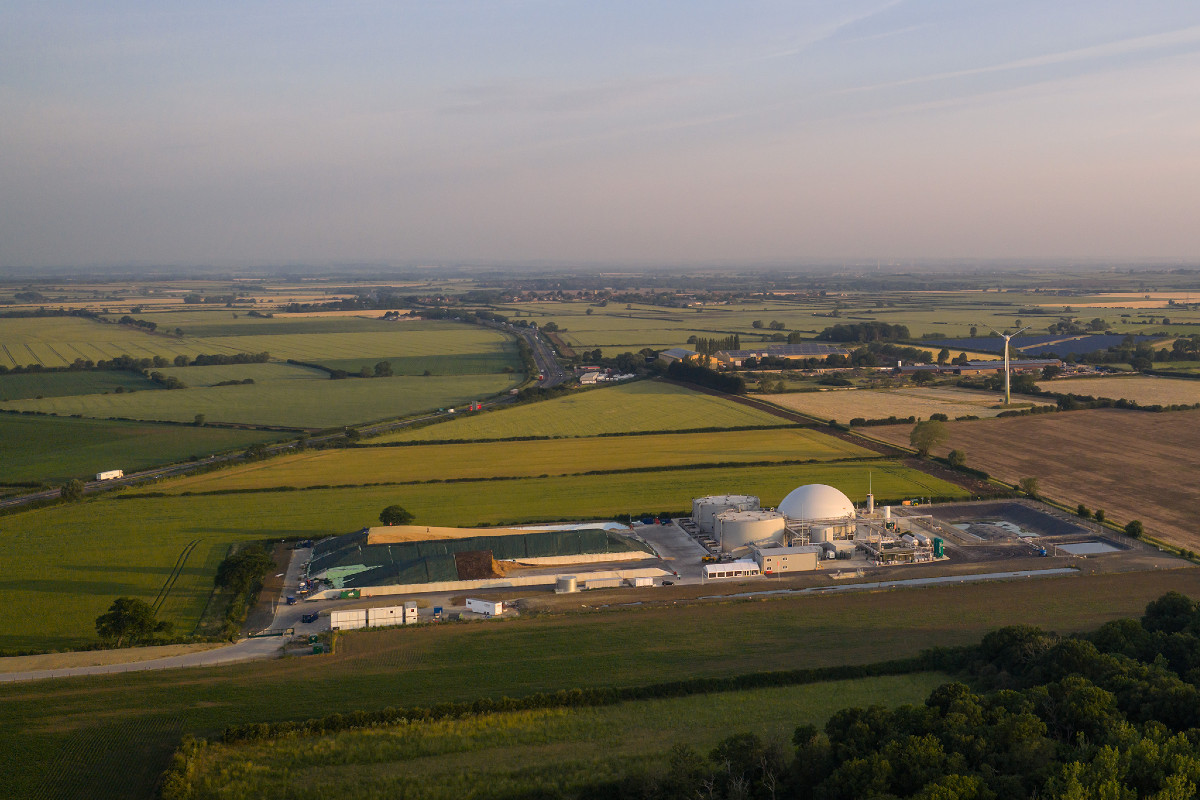
This is where biomethane is increasingly being considered. Produced sustainably and supplied via the existing gas grid, biomethane is compatible with proven on-site generation assets, meaning it can act as a drop-in replacement for natural gas. Biomethane is generally lower-carbon than fossil gas, and can be carbon-negative where projects combine production with carbon capture and storage. Where procured without subsidy, biomethane can also support additionality claims: each megawatt-hour is traceable and linked to an offtake contract that helps underpin new supply.
Additionality is a key concept for any organisation serious about its environmental claims. Put simply, it requires that a purchasing decision results in more clean energy being produced than would otherwise exist. When a data centre operator buys grid electricity matched with renewable certificates, it can be purchasing attributes from generation that was already going to happen – for example, subsidised wind or solar that exists regardless of the contract. As corporate sustainability reporting faces greater scrutiny, it’s worth asking whether procurement choices are driving new clean capacity, or primarily reallocating existing supply.
How supply works
While still relatively new, direct biomethane supply agreements are in place between biogas producers and large offtakers. AstraZeneca, for example, has been reported as buying over 100 GWh per year. As with private networks and microgrids, the commercial frameworks exist, and new capacity can be developed on timeframes that can align with major energy users’ project schedules.
In the UK, the Green Gas Certification Scheme provides independent verification and chain-of-custody tracking for biomethane injected into the grid, enabling offtakers to evidence the provenance of their gas supply. This matters for emissions reporting: while grid-injected biomethane is physically indistinguishable from fossil gas once in the network, certified Renewable Gas Guarantees of Origin allow buyers to claim the environmental attributes of specific production. Data centre operators should note that emissions accounting treatment can vary depending on reporting frameworks and jurisdictions – early engagement with sustainability teams can help ensure biomethane procurement aligns with ESG reporting requirements.
One common criticism of biofuels is that their production removes land from food production – which would clearly be unacceptable as the world’s population grows alongside a per-capita decrease in farmland. Studies, such as those prepared for the Italian Biogasdoneright initiative, suggest that biomethane feed crops such as maize, grown on a rotational and regenerative basis, can contribute to soil health and improve yields. The key is ensuring they are grown within sustainable, closed-loop farming methods.
Unlocking the queue
Biomethane isn’t a silver bullet, and it’s not necessarily a permanent solution for all data centres. The burning of any fuel can affect local air quality, which may create tension with local bylaws or planning constraints. Supply is also limited: in the longer term, as the UK transitions towards net zero, low-carbon fuels are likely to be prioritised for harder-to-abate industries such as cement, glass or steel.
But in an era when major electricity connections are measured in years, and large data centre projects risk losing momentum – and investment – alternative power arrangements are increasingly part of delivery planning. New partnerships can broaden the available options. Whether data centre developers work with IDNOs and generators via private networks, biogas providers through the gas grid, or a combination of both, BtM partnerships can provide practical routes to delivery amid gridlock – and help operators progress projects while the wider network catches up.