

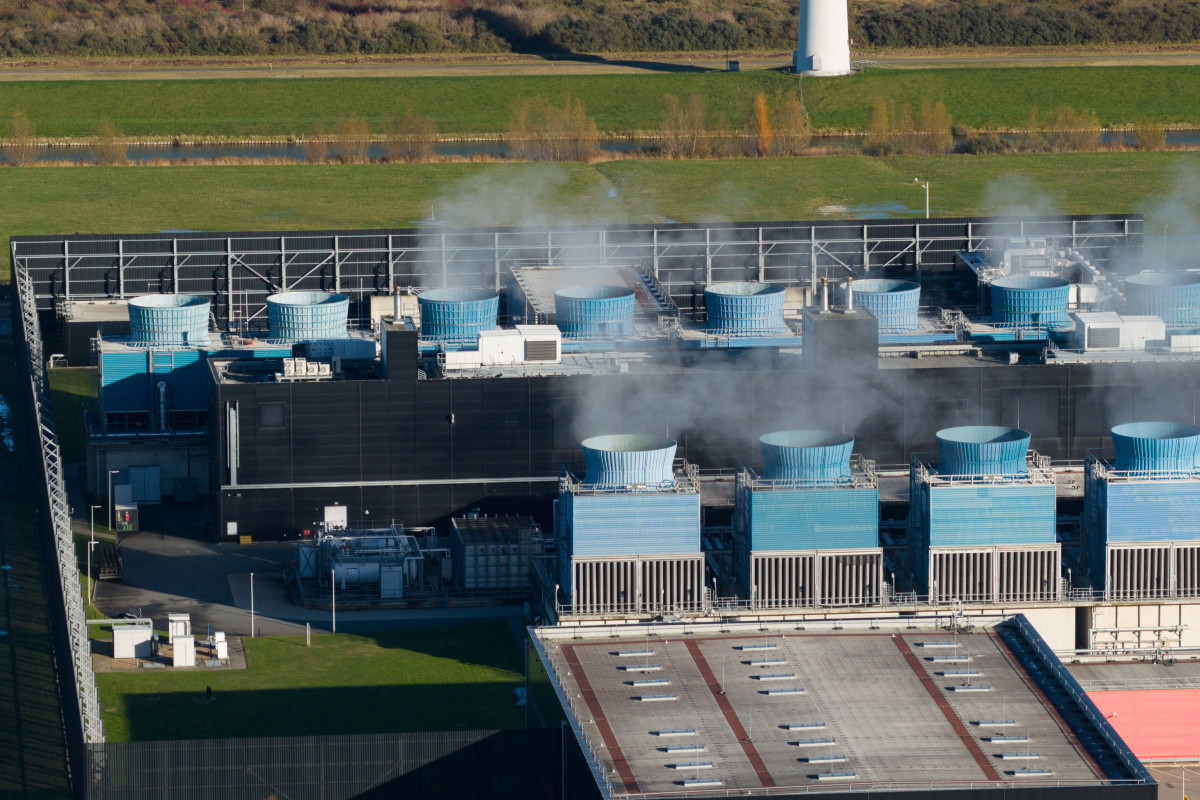
Data centre waste heat is already abundant and predictable. That’s why Simon Kerr, Head of Heat Networks at EnergiRaven, believes the UK needs joined-up regulation, heat zoning, and early planning engagement to capture it at scale.
As artificial intelligence, hyperscale computing and cloud services fuel an unprecedented expansion in the number of data centres, there is an accompanying increase in the amount of waste heat produced by digital infrastructure. Harnessing this heat could help the UK strengthen energy security and support decarbonisation, provided the right frameworks and infrastructure are put in place.
Each facility produces a continuous, predictable flow of heat which, with vision and planning, could contribute to urban energy systems, reduce reliance on gas for space heating, and support grid stability at a time of rising demand.
Today, much of this heat is treated as a by-product, expelled into the environment and lost. But with the right infrastructure, a larger share of it could be used to supply homes and public buildings, and to support local heat networks.
With careful policy and national planning, each unit of low-carbon electricity could deliver more value – for example, once in a data centre for computation and again through useful heat in nearby buildings.
Learning from Scandinavia and charting our own path
Looking to our Northern European neighbours, Denmark and Sweden are demonstrating that heat reuse can work. Data centre heat flows into city-wide heat networks, reducing heating costs, gas consumption and exposure to volatile fossil fuel imports.
These outcomes are helped by alignment between policy, finance, governance and planning, creating an environment where connection is expected, investment is bankable and energy systems are coordinated.
However, it would be naive to assume the UK can simply copy Scandinavia. The UK is different: local authority powers are fragmented, heat zoning is inconsistent, and there is no obligation to consider heat recovery. The UK must develop its own blueprint, one that reflects our geography, regulatory landscape and existing infrastructure, and decide which approach will deliver the most practical results for UK citizens.
With ambition, joined-up planning and predictable funding, the challenge of cooling data centres could also become part of a broader energy opportunity.
How can we make this happen?
To get to a networked UK – where waste heat from data centre clusters in Slough, West London, Manchester and Edinburgh is fed into local heat networks to support homes and businesses – planning reform should treat data centres as strategic national energy assets. Every new facility should assess heat recovery potential, and early engagement with heat network developers should become routine.
Regulation should bring waste heat into mainstream energy policy, requiring large producers to report on and evaluate options to act on their waste heat potential. This should be supported by clear guidance from Ofgem, DESNZ and local authorities. Predictable frameworks for connection, supported by heat zoning, would reduce uncertainty for operators and help communities plan around available supply.
Meanwhile, establishing long-term capital frameworks and heat-purchase agreements would provide the commercial certainty required to accelerate adoption. This would encourage operators to treat heat as a managed output—valuable where there is a viable offtake route and a clear investment case.
To tie this all together, our mindset as a nation must shift towards seeing heat itself as a utility. This is already underway, with Ofgem set to start regulating heat networks from January 2026.
The practical barriers in our way
Integrating a new energy source at national scale is a daunting task, but it is something we have done many times before.
There are a number of measures we can take to realise this vision. We can task a central body with providing guidance to local authorities to help them build expertise; mandate that operators engage at the earliest stages of planning to enable cost-effective integration; and ensure “lessons learned” are collected and shared widely among all stakeholders.
We don’t need to look far to find examples of communities making heat recovery and usage work for them. Shetland Heat Energy and Power (SHEAP) is one example: by recovering heat from a local waste-to-energy plant, residents have benefited from reduced exposure to energy price shocks in recent years. The UK can overcome these challenges, but only with clarity and ambition. Early alignment of policy, planning and investment can turn heat recovery from a theoretical possibility into a deliverable, repeatable model.
A practical opportunity for operators
For data centre operators, heat reuse can create an additional revenue line in the right locations and, importantly, support decarbonisation objectives. Recovered heat can reduce cooling loads, improve ESG reporting, and strengthen investor confidence where delivery is measurable and contractual.
Early collaboration with regional heat networks can also improve project economics by aligning technical design, connection requirements and commercial terms from the outset. The operators best placed to benefit will be those that plan for heat export early, particularly in areas with dense heat demand and credible network development.
Operators who engage now may be better prepared as regulation evolves. Heat supply could become a stronger factor in planning decisions over time; planning early reduces risk and helps avoid costly retrofits.
Why the UK must act now
The stakes are high. Reusing data centre heat can reduce household heating costs, enable urban heat zoning strategies, and cut national gas demand – while supporting a rapidly expanding digital economy. As AI and cloud computing drive energy demand, aligning digital infrastructure with energy planning is a pragmatic opportunity that can be captured where the technical and commercial conditions are right.
The UK has the chance to turn a by-product into a useful local resource. By combining long-term vision with practical action, we can support a future where digital growth and decarbonisation can progress in parallel. The heat is already there – the question is whether we have the foresight to use it.