
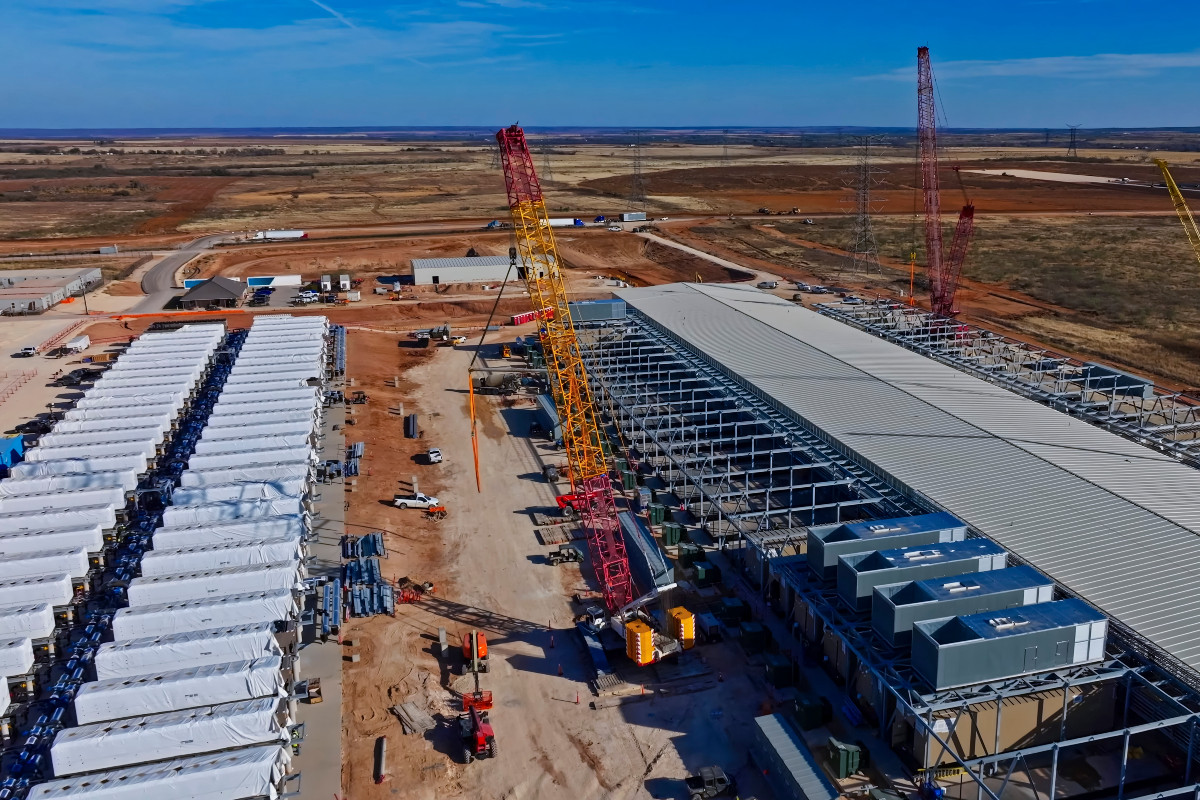
The rapid growth of AI infrastructure is squeezing global construction capacity, with data centres now the most in-demand and capacity-constrained construction sector in the world.
That’s according to a new report from Turner & Townsend, which found that demand for data centres and other AI-related infrastructure is intensifying existing labour shortages, particularly across specialist mechanical, electrical and plumbing trades.
That could create a significant number of new jobs in the coming years, but only if the construction sector can attract and train enough skilled workers to actually deliver the infrastructure that AI growth is expected to require.
According to Turner & Townsend, more than 70% of the markets analysed reported tightening or overstretched contractor capacity in the data centre sector. That compares with a much looser picture across hospitality and leisure, residential and commercial development, where more than 79% of markets were either balanced or seeing spare capacity.
That is creating a two-speed construction market, where contractors and suppliers are increasingly being drawn towards technology-led sectors that often offer higher margins, while more traditional sectors face weaker investor confidence, economic uncertainty and viability challenges.
Data centres stretch construction capacity
While the construction industry has always faced cyclical pressures, the report suggests the current market is being reshaped by the sheer scale of demand for digital infrastructure.
Data centres ranked as the most in-demand construction sector globally, followed by industrial and logistics. Renewables and clean energy also recorded a significant annual increase in demand in 2026.
The skills pressure appears to be particularly acute in the trades needed to deliver more complex, technology-heavy projects. Turner & Townsend found that 87% of markets reported shortages in MEP trades, which are essential for data centres and other critical infrastructure projects.
The report also notes that AI itself could help improve productivity in construction, although progress remains uneven. Some 66% of markets said AI capability had become slightly or much more important in tendering and client discussions over the last 12 months.
Stephanie Marshall, Managing Director, Real Estate Cost Management, at Turner & Townsend, noted, “The global construction market is shifting and new dynamics are reshaping the key drivers of cost performance. Demand is increasingly uneven and concentrated on AI-driven sectors like data centres, while broader labour constraints, supply chain volatility and geopolitical risk are becoming more pronounced.
“There is a very real risk that growth in the pool of skilled labour needed to build data centres won’t keep up with demand. In construction, AI has the potential to be a force for good in terms of job creation, but only if the right resources are put in place to support it. Additionally, the impact on energy prices of the conflict in the Middle East will be indirect and uneven, varying by geography and sector depending on supply chain structure and energy dependence.
“Clients with global portfolios must use this opportunity to review international programmes to ensure the right projects are prioritised depending on local conditions. It is not only a question of the relative cost, but also factors such as interest rates, labour availability and digital maturity in the supply chain.”
Labour becomes the biggest cost pressure
Despite recent geopolitical volatility, Turner & Townsend said construction input costs have stabilised over the last year, with supply chains proving more resilient than they were during the Covid-19 pandemic.
However, that does not mean the pressure has gone away. Instead, the report suggests cost drivers are becoming more localised and sector-specific, with labour availability now the primary driver of cost escalation across the global construction market.
Around 71% of markets reported labour shortages, with Australia and New Zealand facing shortages across all markets analysed. The European Union exceeded 93%, while around 79% of North American markets reported shortages or severe shortages.
Global construction cost inflation came in at 4.2% in 2025 and is expected to rise to 4.5% in 2026, before remaining broadly flat in 2027. While that is relatively stable compared with the volatility seen in recent years, the report warns that persistent labour constraints and exposure to energy volatility are now more prominent risks.
The UK is not immune from that pressure. London ranked as the fifth most expensive construction market in the world, with an average cost of $6,032 per sq m. Only New York, San Francisco, Geneva and Zurich were more expensive.
Construction inflation in the UK is expected to rise to 3.7% in 2026 and 4.2% in 2027, which could further complicate efforts to deliver the next wave of data centres, clean energy projects and grid infrastructure.