
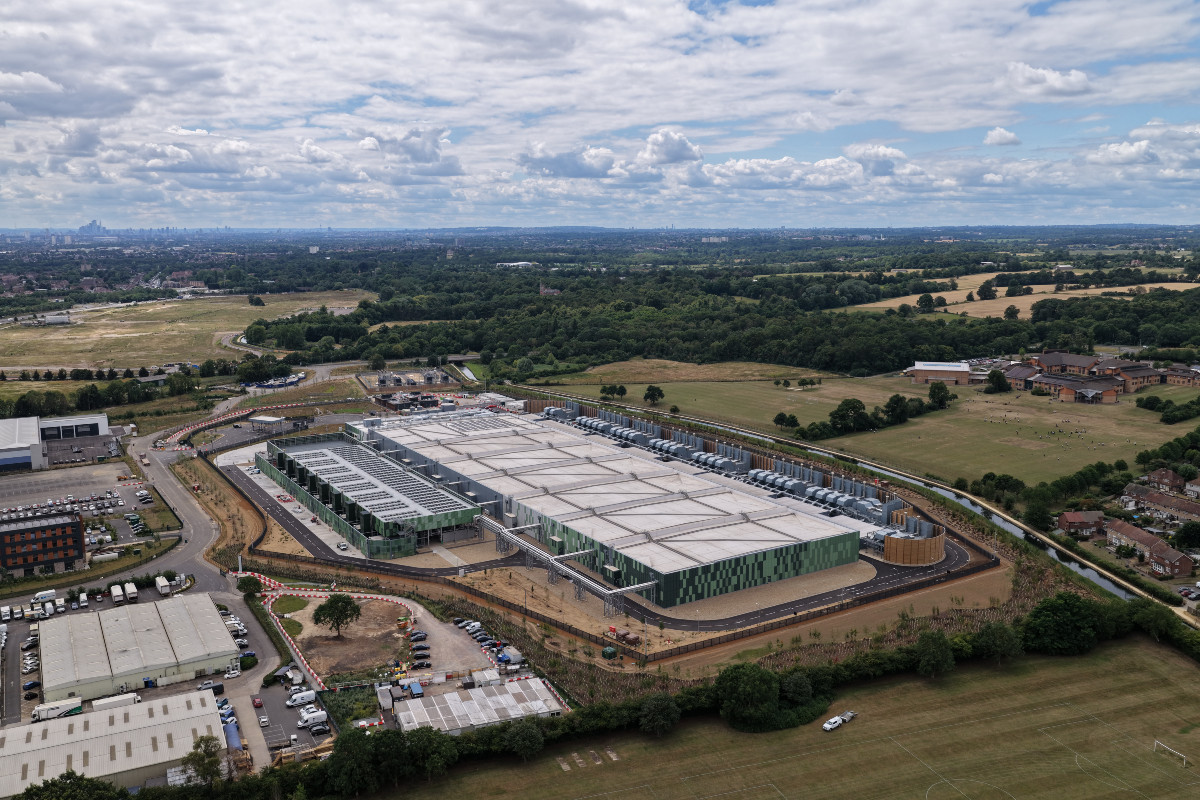
A Devon councillor has launched a Parliamentary petition calling for an immediate moratorium on planning approvals for AI data centres and Battery Energy Storage Systems (BESS) outside designated AI Growth Zones.
Cheryl Cottle-Hunkin, a Liberal Democrat councillor on both Torridge District Council and Devon County Council, launched the petition earlier this week. She represents Torrington Rural at county level, where she is also Cabinet Member for Rural Affairs and Broadband.
Alongside the proposed moratorium, the petition calls for mandatory Rural Impact Assessments and greater scrutiny over the costs, benefits and financing of new developments.
It argues that large-scale data centre and BESS projects risk affecting farmland, rural communities, heritage, landscapes and ecology without sufficient consideration of their wider impact.
At the time of writing, the petition had attracted more than 7,500 signatures. It will require 10,000 to trigger a formal Government response, while reaching 100,000 would see it considered for debate in Parliament.
A fight close to home
Cottle-Hunkin’s involvement comes as North Devon faces its own debate over a major data centre development.
Xlinks is proposing its Devon Data Campus at Alverdiscott, comprising an AI data centre with up to 1.5GW of compute capacity alongside a 1.8GW BESS.
The development has already attracted local opposition, with concerns raised over its scale and impact on agricultural land. That helps explain the petition’s emphasis on rural communities, although its demands would have implications far beyond Devon. In fact, it could potentially be devastating for the UK.
Firstly, including all BESS developments within the proposed moratorium would represent a significant intervention in the energy sector. Battery storage is not solely being developed to support data centres, but is becoming increasingly important for balancing an electricity system with growing amounts of intermittent renewable generation.
Without the deployment of more battery energy storage systems, the UK would be unlikely to meet its goal of achieving a carbon-free electricity system by 2030. That would be a huge blow to the UK’s ultimate quest to achieve net zero by 2050.
In addition to the impact it would have on the UK’s sustainability commitments, there would also be a seismic impact to the economy. In Q2 2026, the UK economy grew 0.4%, with information and communications responsible for almost half that expansion as the AI boom continues. Put a temporary pause on the construction of new AI data centres, and it’s likely that growth would simply fade away.
Scotland faces the same debate
This latest petition isn’t the first time that a UK Government has contended with opposition to the data centre industry. In fact, the Scottish Government is currently in the process of wrangling its own ambitions for economic prosperity versus the growing voices within the country opposed to data centre developments.
One such voice calling for a moratorium is Action to Protect Rural Scotland, with it urging the Scottish Government to assess the cumulative impact of hyperscale facilities on the grid, water supplies, communities and the environment prior to allowing more data centre developments to go ahead.
That view appears to be gaining momentum, as a related Scottish Parliament petition has now attracted almost 19,000 signatures, while the political pressure has also grown. The SNP’s National Council backed calls for a temporary moratorium in July, following similar calls from the Scottish Greens and Edinburgh Council, but that has yet to be a policy backed by Scotland’s Government.
That’s because it comes at an especially awkward time for the Scottish Government, which is trying to attract more investment into the sector, noting that it could potentially help supercharge the Scottish economy and create thousands of jobs.
To that end, Lanarkshire became Scotland’s first AI Growth Zone earlier this year, with the UK Government subsequently committing £300 million to the expansion of DataVita’s operations at the site just this week.
Despite that, however, other mega projects in Scotland are facing fierce opposition. More than 1,200 objections have been lodged against ILI Group’s proposed £5 billion, 600MW Cato data centre in Fife, with a separate petition against the project also attracting thousands of signatures.
While the latest petition is unlikely to force a change in Government policy, the opposition to data centres is becoming increasingly organised, as we can see in both Devon and Scotland. That means developers may find that securing planning permission is becoming just as challenging as securing power – and it also means the industry needs to work harder to espouse the key role it plays in keeping Britain online.