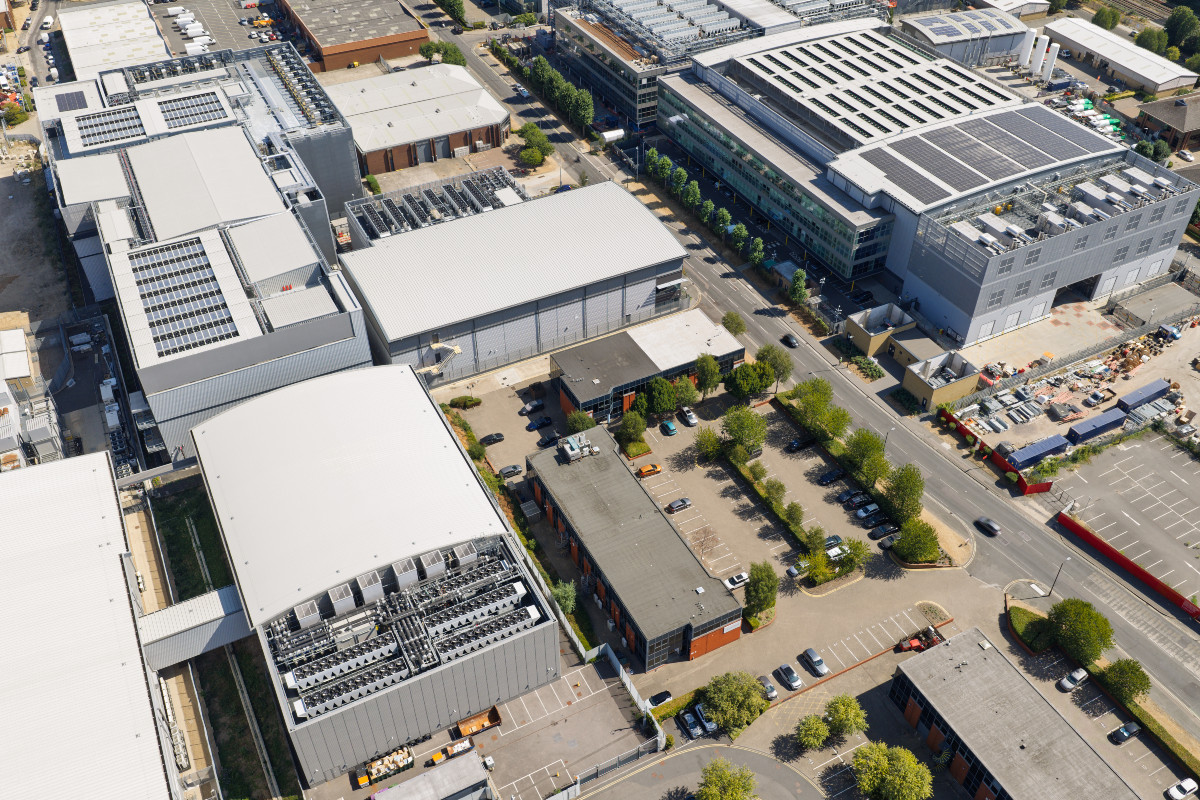
Slough Borough Council is seeking greater financial contributions from data centre operators to fund community improvements, amid growing pressure to ensure local residents benefit from the town’s expanding digital infrastructure.
According to the Financial Times, the council has proposed a framework under which operators could contribute £250,000 towards immediate community improvements, or as much as £1 million annually for more substantial projects.
The council is hoping to get companies onboard with the scheme, noting that it will develop it jointly with participating companies, but it remains unclear whether it will be voluntary or how the payments would ultimately be calculated.
One thing is for sure, however – such a scheme could bring in significant revenues for Slough Borough Council. After all, Slough is already home to more than 40 data centres, making it one of Europe’s largest digital infrastructure clusters. But while cold hard cash may be tempting for the council it’s not the only reason behind the move.
That’s because the data centre industry’s expansion in the area has also attracted increasing scrutiny from residents concerned about electricity and water consumption, pressure on local infrastructure, land use and the relatively small number of permanent jobs created by individual facilities.
The council is hoping that by extracting funds from data centre companies, it could prove more tangibly the benefit the industry has to the local area – and how they play important roles in the local economy.
An industry already contributing millions
Research published by Kao Data in January 2026 estimated that Slough’s data centre industry supports approximately 14,000 jobs and generates more than £30 million in annual business rates.
However, those employment figures include indirect and induced economic activity, alongside construction employment, rather than exclusively permanent positions within operational facilities.
The industry-backed report identified more than 8,000 construction job-years between 2010 and 2025, alongside several hundred permanent operational roles.
There is also a distinction between the business rates generated by data centres and the funding available directly to Slough Borough Council, that’s because while councils are responsible for collecting business rates – it’s estimated that they only keep half, with the central government taking the rest.
That’s not to say data centres aren’t paying their way locally. In fact, Slough Borough Council has already secured commitments from developers through existing planning arrangements.
In November 2024, Slough adopted a new Simplified Planning Zone for Slough Trading Estate, allowing qualifying developments, including data centres, to proceed without individual planning applications until November 2034.
An accompanying Section 106 agreement with SEGRO includes £4.3 million of highway improvements and a £2 million skills and training package, alongside support for local enterprises and start-ups.
That framework has supported continued investment in the area. Earlier this year, SEGRO announced a further expansion of its Slough data centre campus, with a new facility expected to provide 50MVA of power when fully operational.
Similar commitments have been sought from other developers. When councillors considered Equinix’s proposed data centre campus on the former AkzoNobel site in November 2025, they set a Section 106 agreement that included £2.5 million for public realm improvements, approximately £2.36 million for local economic development and more than £1 million for skills and employment training.
Now, however, the council is back to ask for more.
Growing opposition to further development
Despite the industry’s economic contribution, opposition to further data centre development has been increasing.
A petition on Slough Borough Council’s website has attracted more than 1,000 signatures calling for a pause on new approvals until an independent assessment of the impact that the data centre industry has had on the area has been completed.
The petition specifically references Microsoft’s proposed development near Langley railway station and raises concerns about electricity and water demand, noise and the loss of land that could be used for other purposes.
It’s not just utilities that are of concern to local residents either, with housing also becoming a particular point of contention – especially as data centre developers eye land previously earmarked for residential development.
In 2021, Slough Borough Council acquired land at the former AkzoNobel site on Wexham Road as part of plans for a mixed-use development incorporating up to 1,000 homes. However, following the council’s financial difficulties, the land was sold to Equinix in 2022 for £143.75 million.
Councillors subsequently backed outline plans for a data centre campus on the site in November 2025, with formal outline permission issued in July 2026.
Whether the new scheme proposed by Slough Borough Council will actually yield results in getting residents onboard remains to be seen, however. As does the actual mechanism behind the scheme – with the data centre industry likely asking whether the payments will be voluntary and whether it’ll actually move the needle when it comes to public opinion of the industry.