
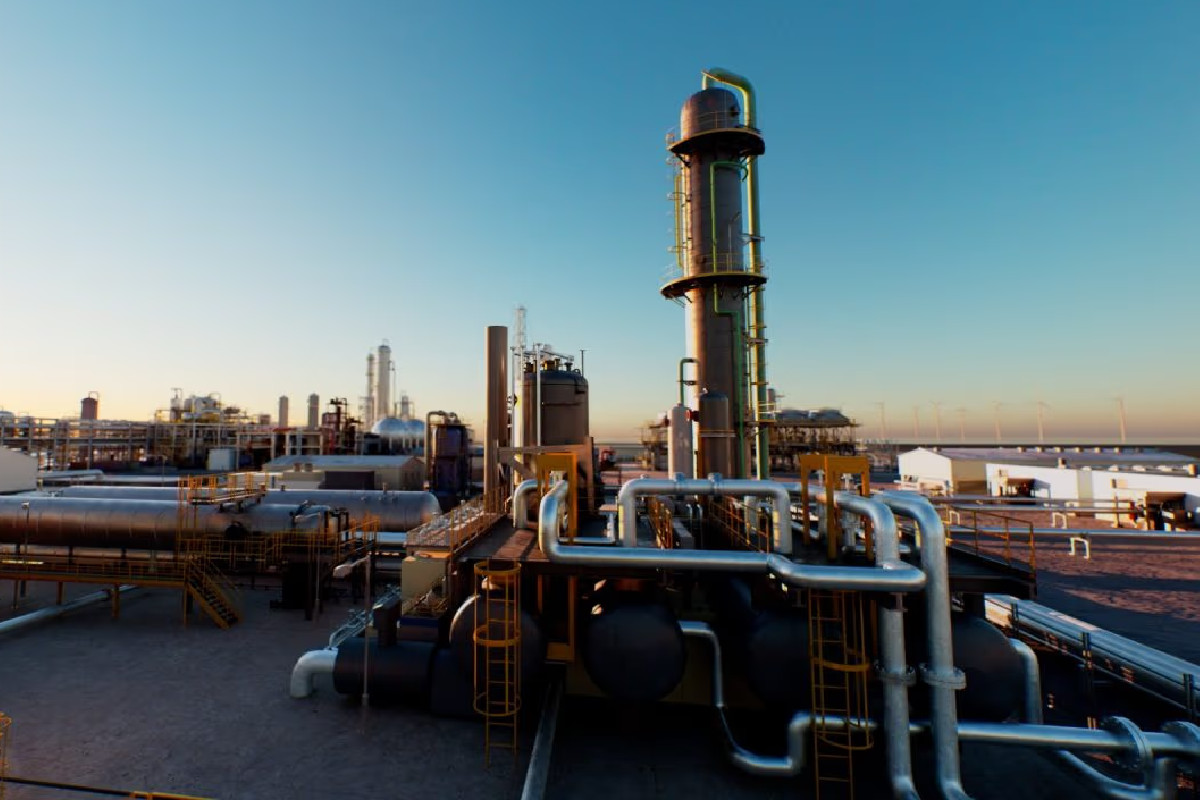
BP has withdrawn its H2Teesside blue-hydrogen project at Teesworks in Redcar, pulling out days before a key Government decision and blaming a ‘material change in circumstances’ after the same site was lined up for a major AI data centre instead.
The move ends BP’s bid to secure a development consent order (DCO) for H2Teesside, a nationally significant infrastructure project that would have given the company powers to compulsorily purchase around 115 acres of land on the former steelworks site. The DCO decision had been expected this week.
It follows months of wrangling between BP and landowners South Tees Group (STG) and Teesworks Ltd, which successfully secured outline planning permission in August for an AI data centre on the very plot BP had hoped to use for hydrogen production.
BP said the emergence of the data centre plan formed part of the ‘material change in circumstances’ affecting the land and ultimately prompted its withdrawal.
A spokesperson for the oil giant noted, “We continue to move forward with other projects on Teesside, including our investments in Net Zero Teesside Power and the Northern Endurance Partnership, and remain an active partner in the region.”
Hydrogen versus hyperscale on Teesworks
The H2Teesside scheme had been put forward as one of the UK’s flagship blue-hydrogen projects. BP’s plans involved splitting natural gas into hydrogen and capturing CO2, creating a large-scale hydrogen hub that would feed into the region’s emerging carbon capture and storage network and act as an anchor load for transport and industrial users.
BP has previously argued that H2Teesside was of ‘national significance’, and that it would make a ‘significant contribution’ towards the Government’s target of up to 10GW of low-carbon hydrogen production capacity by 2030, potentially supplying more than 10% of that quota. It also claimed “A data centre would not deliver comparable levels of public benefit.”
The company began the DCO application process in March 2024. Had the Government granted consent this week, BP would have gained the power to compulsorily acquire the land, despite the landowner’s competing ambitions.
Instead, Teesworks Ltd – which is part of STG – went to Redcar and Cleveland Borough Council with its own proposal: a large AI-focused data centre, which councillors backed in early August.
In a letter setting out its opposition to BP’s DCO bid, STG argued that the data centre was of ‘critical national importance’, and said it wanted to maximise the land’s long-term benefit for the local community. BP, for its part, had insisted it was seeking a position of co-existence and was “willing to have discussions aimed at finding a solution that would enable both developments to co-exist.”
Previously, BP had said the hydrogen plant would support a ‘peak construction workforce of 1,300 jobs’.
Google rumoured to be interested in Teesworks data centre
The battle over the Teesworks plot has increasingly been framed as emblematic of a wider dilemma for the UK: how to balance land-hungry AI and cloud infrastructure against heavy industry and net zero projects.
In August, it was reported that the AI data centre proposal at Teesworks was already in ‘advanced discussions’ with a potential occupier. By September, sources close to those talks suggested that Google was eyeing the Teesworks site, with discussions described as ‘finely poised’ and the possibility of a deal being signed before Christmas. No such deal has materialised publicly as of writing.
The intrigue around what to do with Teesworks deepened even more as the site itself has been designated an AI Growth Zone by the Government.
According to previous reporting, the row even exposed tensions within Whitehall, with Prime Minister Keir Starmer and Business Secretary Peter Kyle said to be backing multiple data centres at Teesworks, while Energy Secretary Ed Miliband was reported to be more supportive of BP’s hydrogen proposal.
What next for Teesside’s hydrogen ambitions?
The Department for Energy Security and Net Zero (DESNZ) was keen to stress that the decision to pull out of H2Teesside was made by BP.
“We continue to provide a route for hydrogen projects in Teesside, including Tees Green Hydrogen, which is moving towards final investment decision, along with several other projects creating high-quality jobs for the region,” a spokesperson said.
BP likewise emphasised that it is not walking away from Teesside entirely, pointing to its stakes in Net Zero Teesside Power and the Northern Endurance Partnership. Those projects aim to decarbonise power generation and heavy industry via gas-fired generation with carbon capture and a shared CO₂ transport and storage network in the North Sea.
However, the loss of a large blue-hydrogen plant that BP had hoped would contribute more than 10% of the UK’s 2030 hydrogen capacity target raises questions over how that shortfall will be made up – and where future hydrogen hubs will be located.
For Teesworks, the AI data centre plan remains in pole position, with or without a final deal involving Google. The site’s AI Growth Zone status and the wider push to attract AI-related investment to the UK suggest that more digital infrastructure could follow, particularly if the land now freed from the H2Teesside proposal is fully committed to data centres.