

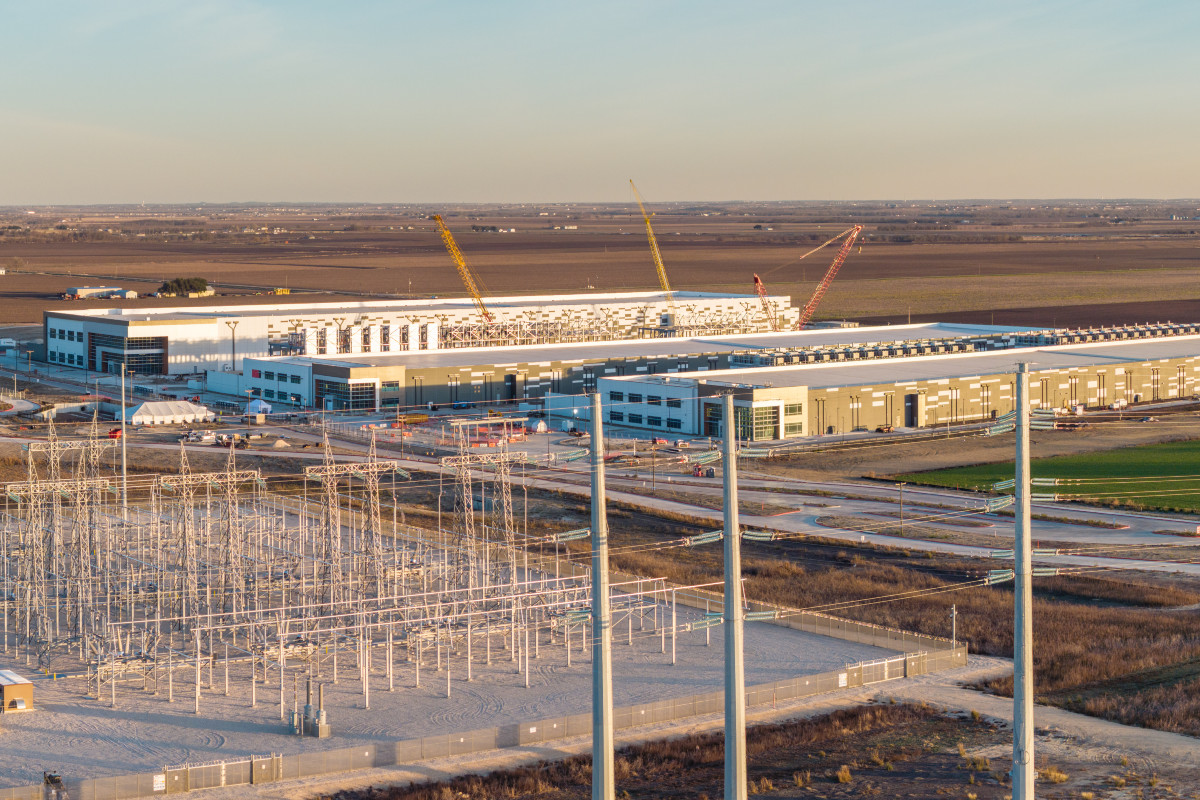
Matthew Baynes, Vice President, Strategic Partners, Cloud and Service Provider at Schneider Electric, argues that the UK is moving into its fastest-ever phase of data centre expansion – and the campuses breaking ground now will define the country’s AI capability for the next decade.
Through 2026, the UK will enter the most rapid phase of digital infrastructure expansion in its history. With almost 100 new data centres already in the pipeline representing an anticipated 20% increase by 2030, the foundations laid today will crystallise into large-scale, AI-ready campuses capable of supporting the country’s next era of innovation.
The scale of infrastructure now being committed makes it clear that 2026 will be the year the UK shifts decisively into high-density, AI-first digital capability.
AI demand is rewriting the UK’s data centre map
As AI adoption accelerates across every sector, 2026 will mark the moment when the UK’s data centre landscape must scale to meet the pace of demand. With an estimated 477 facilities already in operation, the UK ranks as the world’s third-largest market but the trajectory ahead reflects a new level of ambition.
A wave of planned sites across London, the South East, Wales, Scotland and Greater Manchester signal a shift toward not just more capacity, but a smarter, strategically distributed network of AI Factories designed for next-generation workloads.
Within this expansion, Scotland is emerging as one of the UK’s fastest-growing regions for AI-oriented data centre development. Its unparalleled access to renewable energy from wind and hydro gives it a structural advantage as operators seek sustainable ways to power high-density AI workloads.
Alongside this, Scotland’s strong innovation ecosystem spanning Edinburgh, Glasgow and Aberdeen continues to attract global investment. Developments such as DataVita’s expansion, strengthened by CoreWeave’s £1.5bn commitment, confirm Scotland’s growing strategic relevance and its role as a natural focal point for the UK’s next generation of AI infrastructure.
Further announcements by major global players will also significantly expand their UK presence. As an example, Google has committed £5 billion in data centre spending in the UK, while Microsoft’s $15 billion on capital expenditures, which includes the construction of the UK’s largest supercomputer building in partnership with NScale at its AI Campus in Loughton, will all have a significant impact. That’s on top of the £10 billion AI campus in Blyth that is being led by Blackstone Group.
All of these investments will be at advanced construction or early operational stages over the next year – which sets the trajectory for 2026 as a year defined by large-scale AI infrastructure build out.
Energy, water and resilience
As this shift accelerates, both energy and water will move to the centre of operational strategy. The National Energy System Operator estimates that data centres could drive up to 71 TWh of additional demand over the next 25 years, signalling that by 2026, energy planning will be as critical as compute planning.
Regions with dense build activity, such as Slough and the Thames Valley, are likely to intensify their focus on diversified and distributed power, incorporating battery energy storage systems, behind-the-metre generation including microgrids, private wire integration and increasingly advanced liquid-cooling technologies.
This intensifying demand is directly reshaping the UK’s transmission network. National Grid has begun construction on the new Uxbridge Moor substation in Buckinghamshire, which will connect more than a dozen new data centres and deliver 1.8GW of additional capacity; this is the equivalent to adding a mid-sized city to the grid.
As part of its £35 billion investment programme from 2026 to 2031, the substation will incorporate two SF6-free GIS substations, reducing environmental impact by around 70% and marking one of the first major deployments of SF6-free insulation technology in the country. Located beside the now-at-capacity Iver 400kV site, Uxbridge Moor exemplifies the scale of electrical reinforcement required to support the UK’s AI-driven digital economy.
Water usage will become an equally defining challenge. With 28 planned sites located in areas served by Thames Water, and growing scrutiny from providers such as Anglian Water, the coming years will see operators accelerate the adoption of liquid-cooling systems that significantly reduce water consumption while supporting the thermal demands of AI infrastructure at scale.
The moment to build smarter, faster and greener
This all reinforces a simple prediction that throughout 2026, the UK will start to emerge as home to a new generation of purpose-built AI factories, engineered for high-density compute, liquid cooling and integrated on-site or behind-the-metre power.
As this transformation accelerates, the UK’s strategic positioning will strengthen further through deepening international alliances, including the new UK-US pact on AI and life sciences, which is set to generate tens of thousands of jobs and add significant momentum heading into 2026.
That momentum is already visible across the country through the rapid rollout of AI Growth Zones in the North East and Greater Manchester to the newly confirmed site in North Wales, where more than 3,400 jobs are now slated to be created and where reforms to planning and energy access will help unlock up to £100 billion in additional investment.
In North Wales, the AI Growth Zone will harness the UK’s first small modular reactor at Wylfa, uniting future-facing technologies in a key clean-energy corridor. Work to secure an investment partner is already underway, with construction set to accelerate in the coming months under the government’s Modern Industrial Strategy.
Supported by £5 million for local skills and business adoption, the Zone will become a hub for AI development combining compute, research expertise and regional talent to drive innovations from new medical breakthroughs to cleaner, greener industry.
A new era in digital infrastructure
Taken together, these developments confirm that AI Growth Zones will be central to regenerating communities, creating thousands of jobs nationwide, and supporting the fastest-growing cycle of AI infrastructure investment the UK has ever experienced. It is this desire to deliver that led the UK’s Prime Minister Sir Keir Starmer to state, “Artificial Intelligence will drive incredible change in our country…Our plan will make Britain the world leader.”
By 2026, that plan will move beyond intent and its impact will be visible in concrete, steel and silicon across the nation, marking a defining moment in the UK’s ascent as a global AI powerhouse.
This article is part of our DCR Predicts 2026 series. Come back every week in January for more.