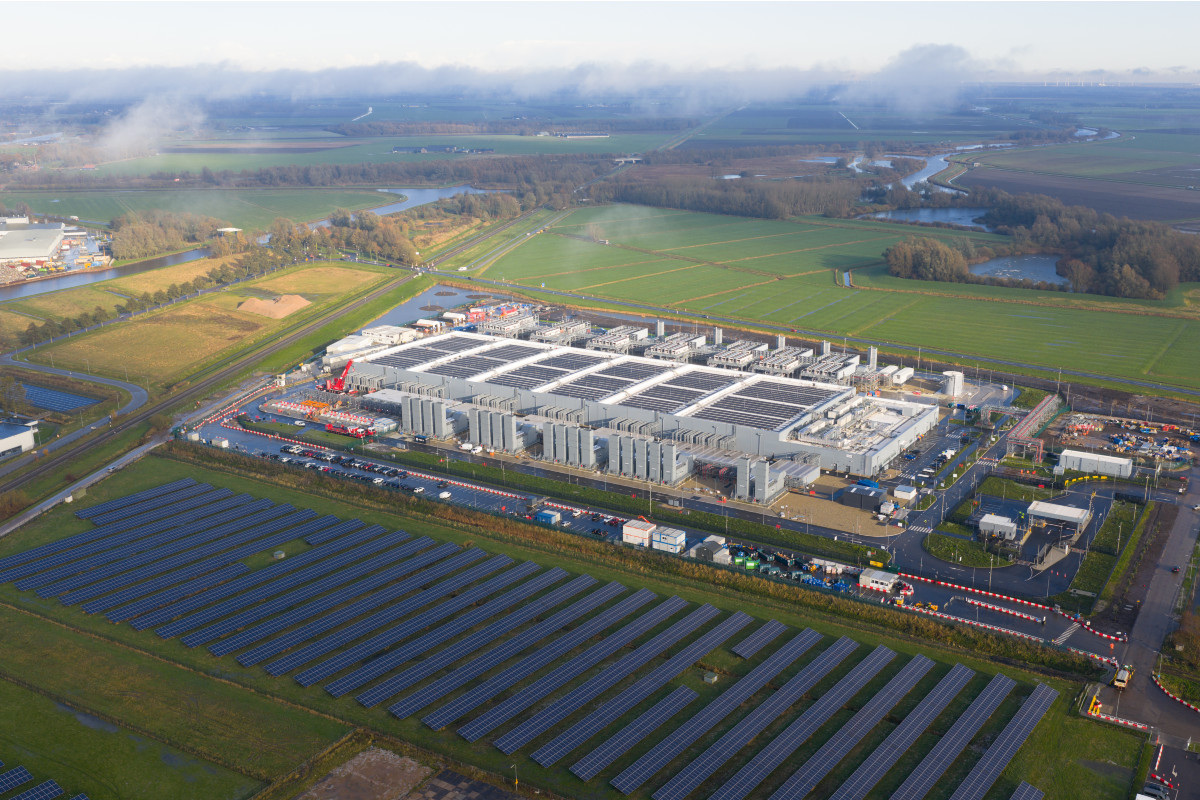
Data centre planning applications hit a record high across England and Wales in 2025, as developers and investors raced to secure sites amid rising demand for AI and cloud compute.
That’s according to new analysis from City AM, which noted that more than 60 planning applications for new data centres were submitted in England and Wales during 2025. That represents a 63% increase compared with 2024.
It shouldn’t come as too much of a surprise that there has been a surge in data centre planning applications, especially as the industry splashes the cash as big tech fights over who will be number one in the AI race. Firms such as Google, Microsoft and OpenAI are all committing huge capex budgets to expanding their data centre portfolio, and the UK is seen as a key target for new data centres.
What could be a surprise, however, is the fact that all the new applications cited by City AM were for new data centre developments and excluded extensions to existing sites, revisions to past applications, and wider mixed-use schemes that included a data centre component. That means the true volume of data centre-related proposals moving through the planning system is likely to be higher.
Dame Dawn Childs, Chief Executive of Pure Data Centres, told City AM, “With this AI bubble that everyone’s talking about…because of the increased valuations for powered land, everyone’s trying to get a piece of the pie, and that creates a bunch of fizziness.
“We’re seeing lots of people who are sending out on a daily basis: ‘we’ve got this significant plot of land with all of these megawatts of power in the middle of nowhere, it’ll be an AI gigafactory, buy it for a gazillion pounds’ – they’re absolutely trying to get increased valuations for scrappy industrial land.”
Childs said the strongest demand is being driven by AI-related applications from major hyperscalers, while adding that even without AI, the UK would likely have seen a notable rise in activity as cloud adoption accelerates across the wider economy.
Geographically, the South East continues to dominate. Around half of the applications were located in London and the South East – areas already seen as a European hotspot for data centre capacity because of connectivity, customer proximity, and established infrastructure.
That said, the analysis points to a broader spread of proposals beyond the traditional hubs. Seven applications were submitted in Wales during the year, along with another seven in the East Midlands, four in the North West and four in Yorkshire, suggesting developers are increasingly looking further afield as land and power constraints bite in the South East.
It’s not just the number of applications that is changing — it’s the type of sites being targeted. Developers appear to be getting more creative, with proposals to repurpose a wide range of existing brownfield assets into data centres. The examples cited in the analysis include an abandoned Mercure hotel site in Watford, the old Truman brewery earmarked for conversion in Hackney, a shuttered coal mine in Nottinghamshire, and a former landfill site in Chesterfield.
Given the demand for power many modern data centres now have, old power stations are also proving popular sites for hyperscalers. In fact, it was recently revealed that Amazon was prepping a brand-new data centre on the site of the former Didcot A data centre in Oxfordshire. Now it seems that project is just one of the many currently battling their way through the UK’s planning system.