
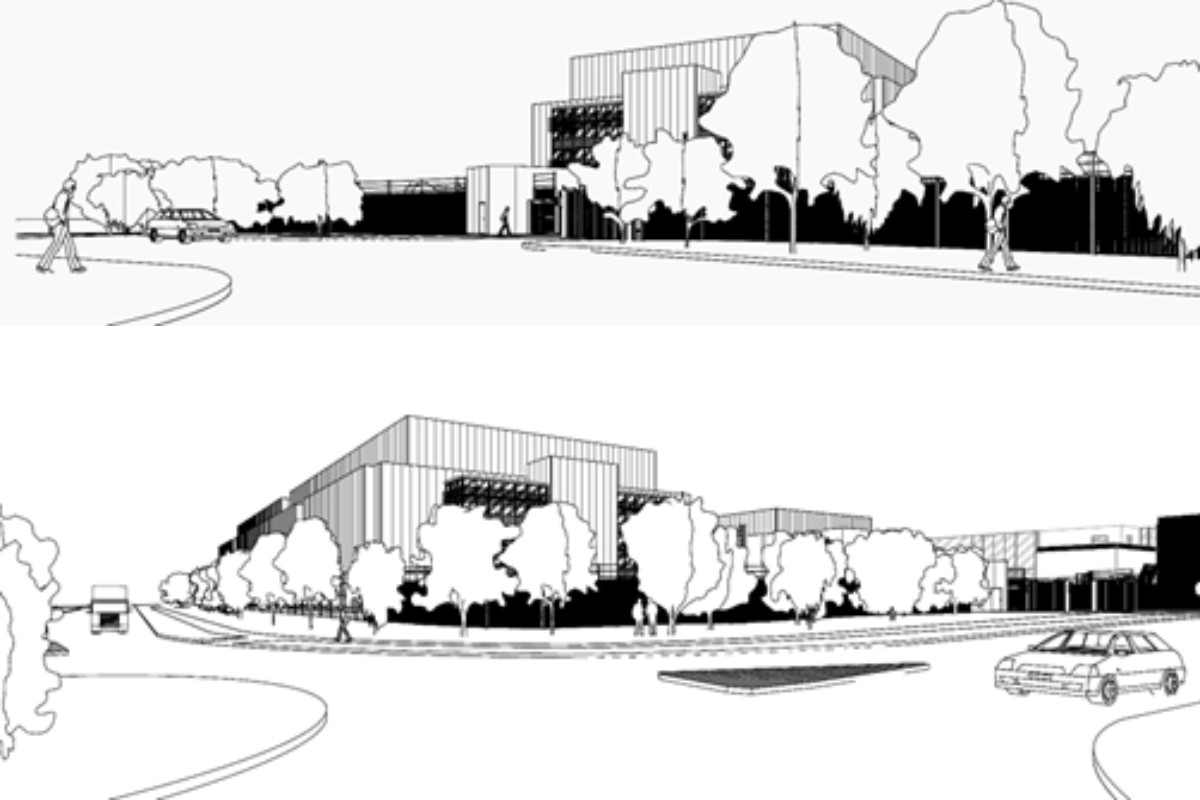
Campaigners have launched a last-ditch effort to block a proposed data centre in Edinburgh, warning that the development’s back-up power plans could mean ‘100,000 idling cars-worth of diesel’ being burned if generators were ever run at scale.
Action to Protect Rural Scotland (APRS) published research ahead of a meeting this week where Edinburgh City Council is due to consider planning permission in principle for a green data centre at Redheughs Avenue in the Gyle area – which is the site of RBS’ former HQ.
Edinburgh Council planning officers have recommended the project for approval, but campaigners have warned that the application does not take into account the full environmental impact of the site.
Kat Jones, a Director at Action to Protect Rural Scotland, noted, “There is so much information missing from the application documents about the environmental impacts of this development.
“The data centre will draw 210MW from the grid, which would power a quarter of a million homes, so a few low energy lighting solutions are neither here nor there. And that’s before we even start talking about the diesel generators.”
“If there were medals for greenwashing then these data centre developers are Olympic-level. The claims from the developer that this is a green data centre are obviously bunkum.”
“Diesel generators need to be testing and when you look at what is happening in the US, diesel generators are being used more as the grid becomes under pressure from the demand from datacentres due to their astronomical energy demands”
“This site is just upwind of the city centre, close to residential homes, and 220m from a Nursery. This is not something that should be happening with so little oversight – and without being required to do an Environmental Impact Assessment.”
The framing around the diesel generators can certainly sound scary – but as many in the data centre industry will know, they are primarily there as emergency back-up, rather than a primary power source. In fact, one of the key reasons that Scotland is being considered as an attractive location to site data centres is because of the high availability of power coming from renewable generation in the area. Scotland already produces much more power than it consumes, and data centres are hoping to tap into that surplus, and even potentially reduce the amount of curtailment that is required when the country is producing too much electricity.
That doesn’t mean the backup generators won’t ever be required – grid issues can and do happen – but that can happen at many sites, whether it’s a hospital, factory or warehouse, and isn’t exclusive to data centres. Scotland also may have an abundance of power, but it still needs its grid reinforcing if it’s to use more of that power, something SSE and National Grid are keen to deliver.
But Dr Jones is keen to stress that data centres have already shown more regular use of diesel backup generators than other sectors, noting, “When you look at what is happening in the US, diesel generators are being used more as the grid becomes under pressure from the demand from data centres due to their astronomical energy demands.
“This site is just upwind of the city centre, close to residential homes, and 220 metres from a nursery. This is not something that should be happening with so little oversight – and without being required to do an environmental impact assessment.”
While Dr Jones is not wrong, it’s not exactly the same situation. US markets cited in these debates often face acute, localised capacity constraints and commercial incentives that can normalise generator operation beyond rare emergencies; Scotland’s system challenges are different. That doesn’t remove the central planning question – what happens if generators run more frequently than residents expect, and what conditions or assessments are in place to manage that risk? That will be up to Edinburgh City Council.
What the proposals actually entail
The proposed data centre would sit on the former campus of Royal Bank of Scotland, a large office complex originally constructed in the early 1990s and later demolished after staff relocation. Shelborn Asset Management bought the site in 2021, and the original buildings were demolished in 2022 following NatWest Group staff moving to Gogarburn.
The developer later pivoted away from office-led plans and consulted on a campus featuring two data centre buildings of different sizes and a new on-site substation – which could help with power capacity and ensure the back-up generators remain turned off.
When planning officers assessed the site, they noted that the plans had ‘regard to the global climate and nature crises through re-use of brownfield land in a sustainable location’, while also adding that ‘it is not considered that the proposal will have a significant effect on the environment’.
For councillors, the decision is whether to accept officers’ recommendation and approve the scheme in principle, or whether the questions raised over diesel back-up, local impacts and the absence of a formal environmental impact assessment justify holding the project back. We’ll find out when the council’s planning committee meets on Wednesday, February 4.