
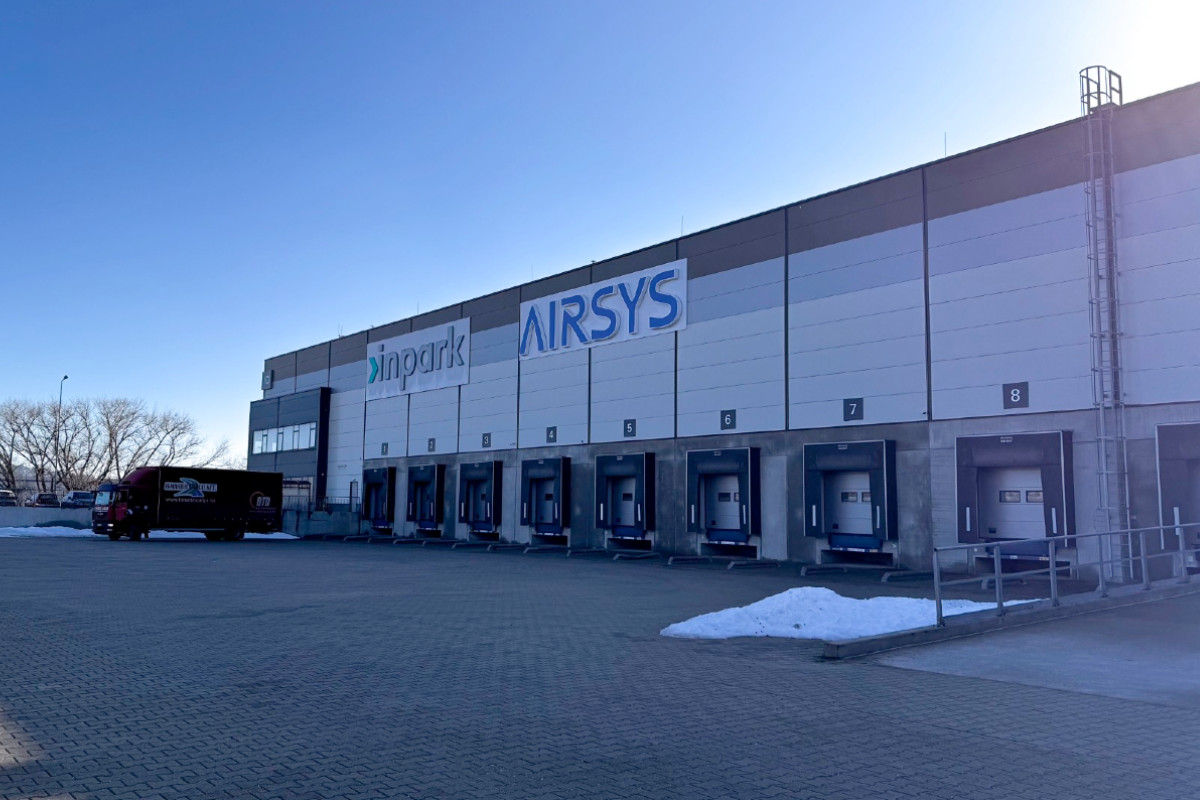
Airsys is setting up its first European manufacturing facility in Hungary, as the cooling supplier looks to capitalise on the growth of the data centre industry across Europe.
The new manufacturing facility is based in Páty, which is within the Budapest metropolitan area, and spans more than 11,000 square metres. That gives an ideal central European location for Airsys to operate out of, with it planning to use the facility as a centralised hub for European manufacturing, assembly and quality assurance.
While there are many reasons why Airsys has chosen to open its first European manufacturing hub, it’s a notable shift for the company. It currently relies heavily on manufacturing bases in China, including in Beijing and Gu’an, while it has also significantly expanded manufacturing capacity in South Carolina.
In fact, a new facility in Woodruff, South Carolina, is due to open this year – and it will feature more than 264,000 square feet of office and manufacturing space, while also playing host to Airsys’ global HQ.
“With today’s announcement of our Hungarian facility, Airsys is taking a decisive step in bringing manufacturing closer to our European customers,” said Yunshui Chen, CEO and Founder of Airsys.
“This investment reflects our commitment to regional resilience, operational excellence, and delivering high-quality cooling solutions with greater speed and flexibility as global data centre infrastructure demands continue to evolve.”
“This facility represents an important foundation for Airsys’ continued growth in Europe,” added Matthew Thompson, Managing Director – Europe at Airsys.
“By establishing a European manufacturing footprint, Airsys is strengthening customer relationships, improving responsiveness, and building the infrastructure needed to support the next phase of regional expansion.”
Why Airsys has opened a European manufacturing facility
While the investment in South Carolina is reported to be worth $40 million, Airsys hasn’t spelled out exactly how much the new European facility has cost, but it comes at an important time.
Higher-density deployments are tightening build schedules and raising expectations on cooling suppliers to deliver quickly, and with fewer surprises – a challenge made harder by volatile logistics, trade restrictions and recurring geopolitical shocks.
Recent supply-chain analysis has pointed to rising trade barriers, sudden tariff impositions and restrictions on critical technologies as continuing risks into 2026. We’ve already seen the impact that sudden changes in US policy can have on European data centres, with a sudden export restriction from the Biden administration in January 2025 impacting many EU countries’ ability to buy the latest generation of AI chipsets. That was later lifted, but since then, the EU has been rocked by threats of tariffs and other geopolitical shocks that have hammered home the importance of sovereignty – whether it be digital sovereignty or making more things closer to home.
That backdrop helps explain why European manufacturing capacity is increasingly being framed as a strategic advantage. The broader policy mood music in Europe has been moving towards a more explicit ‘Made in Europe’ push in certain sectors, as the bloc grapples with cheap imports and questions about industrial resilience.
“A global manufacturing footprint is increasingly a prerequisite for serving data centre customers at scale,” said Alex Cordovil, Research Director at Dell’Oro Group.
“As AI and high-density infrastructure expand across Europe, proximity to manufacturing enables faster execution, greater flexibility, and deeper customisation. Airsys’ European facility strengthens its ability to support complex air and liquid cooling deployments as infrastructure designs become more bespoke and timelines continue to compress.”
Airsys said the Hungary hub will support its strategy of aligning future production capacity with regional demand, while maintaining consistent engineering, quality and performance standards globally. In practical terms, customers will be watching for specifics: which assemblies move to Europe, how quickly capacity can scale, and whether local production can meaningfully shorten lead times in a market where programmes are increasingly unforgiving.
Either way, the direction of travel is clear. With cooling now a delivery-critical workstream for many data centre projects – and with tariffs and geopolitics still capable of rewriting cost assumptions overnight – more suppliers are likely to come to the same conclusion: being ‘global’ increasingly means being local, too.