

As scrutiny of data centre power and water use intensifies, David Field, Senior Associate Cost Consultant at Arcadis, believes the conversation needs more context and less caricature, as he explains.
Data centre energy demand is increasingly under scrutiny as digital infrastructure expands globally, raising concerns about power availability, grid resilience, and the long-term sustainability of energy systems.
Yet much of the discussion around data centre energy demand is still reduced to negative headlines. This framing portrays data centres as disproportionate consumers of power and water, overlooking their role within wider economic and infrastructure systems.
The picture is actually far more complex, and it matters because today’s decisions will directly shape future energy systems, investment priorities, and community outcomes.
Understanding data centre energy demand in context
There is no question that data centres are energy-intensive assets. But evaluating their impact in isolation risks misunderstanding the wider system within which they operate.
Five years ago, global data centres were estimated to consume around 2% of total global electricity production, with predictions that this would double within five years. Despite those predictions, however, that figure remains broadly unchanged – still around 2% – despite exponential growth in digital services.
This tells us something important: data centre demand is growing in line with overall global electricity demand, not overwhelming it.
This broader growth is driven by well-established trends:
- Population growth and urbanisation
- Continued expansion of housing stock
- Rising GDP and industrial output
- Electrification of heating, moving away from fossil fuels
- Electrification of transport
- Growth in digital needs, such as the Internet of Things
Seen at a system level, data centres should therefore be understood as part of a broader shift in how electricity is consumed, not as an outlier. In the UK, for example, government analysis suggests that total electricity demand may remain stable – or even decline – despite data centre growth, due to efficiency improvements elsewhere. This is rarely reflected in public debate.
How phasing helps shape data centre energy demand over time
Another frequent misconception is that a consented data centre equates to immediate, full-scale power consumption.
In practice, data centres are delivered in phases over a long period. Planning approval to first operation typically takes two to three years, with initial occupancy often representing only 10-20% of ultimate capacity. A data centre might not reach its full potential until three to five years later, with larger campuses built out over 10- to 15-year periods.
This phasing is critical. It allows for progressive grid reinforcement, closer alignment with evolving regional energy strategies, and the integration of improving efficiency and cooling technologies over time.
Importantly, it creates the opportunity to plan infrastructure proportionately and responsibly, rather than reacting to headline capacity figures.
Assessing the role of SMRs in meeting data centre energy demand
Small Modular Reactors (SMRs) have often been proposed as a clean, dedicated power solution for data centres. On the surface, this appears attractive. However, sole reliance on SMRs misunderstands how data centres actually consume power, particularly as AI-driven workloads increase.
Data centre demand is highly variable, fluctuating rapidly in response to computational load. Power systems must be able to respond in near-real time.
National grids manage this variability using fast-response generation and storage, continuously balancing supply and demand. Nuclear generation, by contrast, is fundamentally designed to provide baseload power rather than rapid load-following.
This does not mean SMRs should be discounted entirely. Any on-site generation must be considered as part of an integrated energy system, alongside flexible generation, storage, demand management, and grid reinforcement.
Holistic energy system planning consistently delivers more resilient and adaptable outcomes than single-technology solutions, particularly for assets with long operational lifespans and evolving load profiles.
Water use: why regional design matters
Water usage is another area where broad assumptions can sometimes obscure reality.
In Northern Europe, most modern data centres are predominantly air-cooled, closed-loop systems. Aside from initial fill, these systems consume minimal water and benefit from extensive free cooling due to ambient temperatures. In hotter climates, adiabatic or water-assisted cooling becomes more common, increasing water consumption.
In the US, cooling towers have historically been favoured due to lower capital cost and energy efficiency, but often at the expense of significantly higher water use.
The industry’s response has been the introduction of Water Usage Effectiveness (WUE) metrics. While helpful as a transparency tool, WUE, like PUE before it, can oversimplify sustainability performance. In particular, it does not fully account for regional water scarcity, energy trade-offs, or whole-life environmental impact.
More effective solutions lie in climate-responsive design, alternative water sourcing, reuse strategies, and a clearer link between water and energy performance, to ensure that efficiency gains in one area do not drive unintended consequences in another.
What evidence-based planning means for data centre energy demand
Data centres are now critical parts of national infrastructure. Their impacts on energy and water are real, but are frequently mischaracterised when viewed without system-level context.
Planning needs to align with wider energy strategies, and design must reflect regional climate, resource constraints, and long-term operational realities. When data centre energy demand is understood and managed as part of the wider energy and infrastructure system, data centres can play a pivotal role in supporting sustainable economic growth.
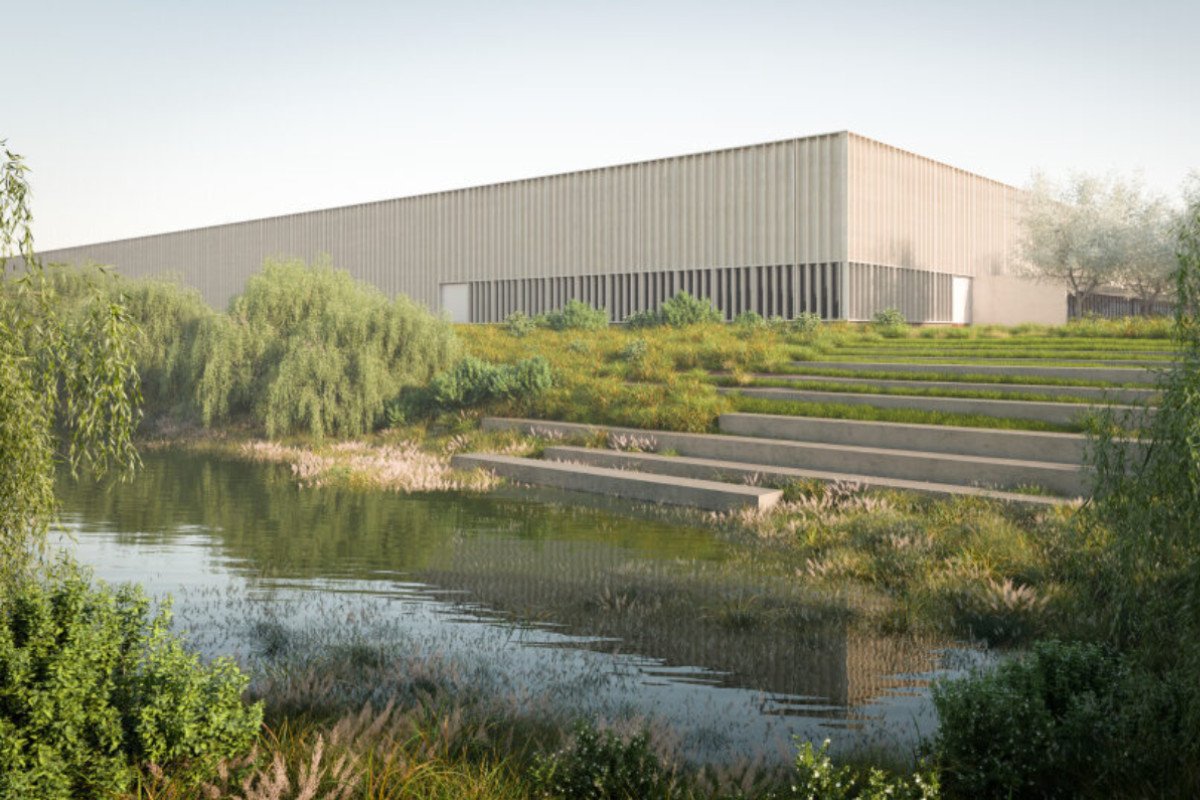
There are now multiple regions where local conditions enable genuinely different approaches at scale, from sea- and river-water cooling to connections with district heating networks, integrated retention ponds and reservoirs, and on-site renewables or alternative generation.
The SINES data centre campus in Portugal is one example of how site conditions can shape a more integrated approach, with cooling, phasing, and infrastructure planned in response to coastal location, grid availability, and long-term energy strategy.
Having worked on the construction of data centres for around 30 years, I have seen the evolution from energy-hungry sheds to the complex, interdependent buildings they are today. More importantly, I have witnessed a real shift in intent, with operators and hyperscalers increasingly motivated to deliver portfolios that are more sustainable, more resilient, and better integrated with their surroundings.
So perhaps it is time to acknowledge how far the sector has come, while continuing to raise the bar for what comes next.
Ultimately, it is this level of integration, rather than any single technology, that will determine whether data centres strengthen or strain the power, energy, and water systems they depend on.