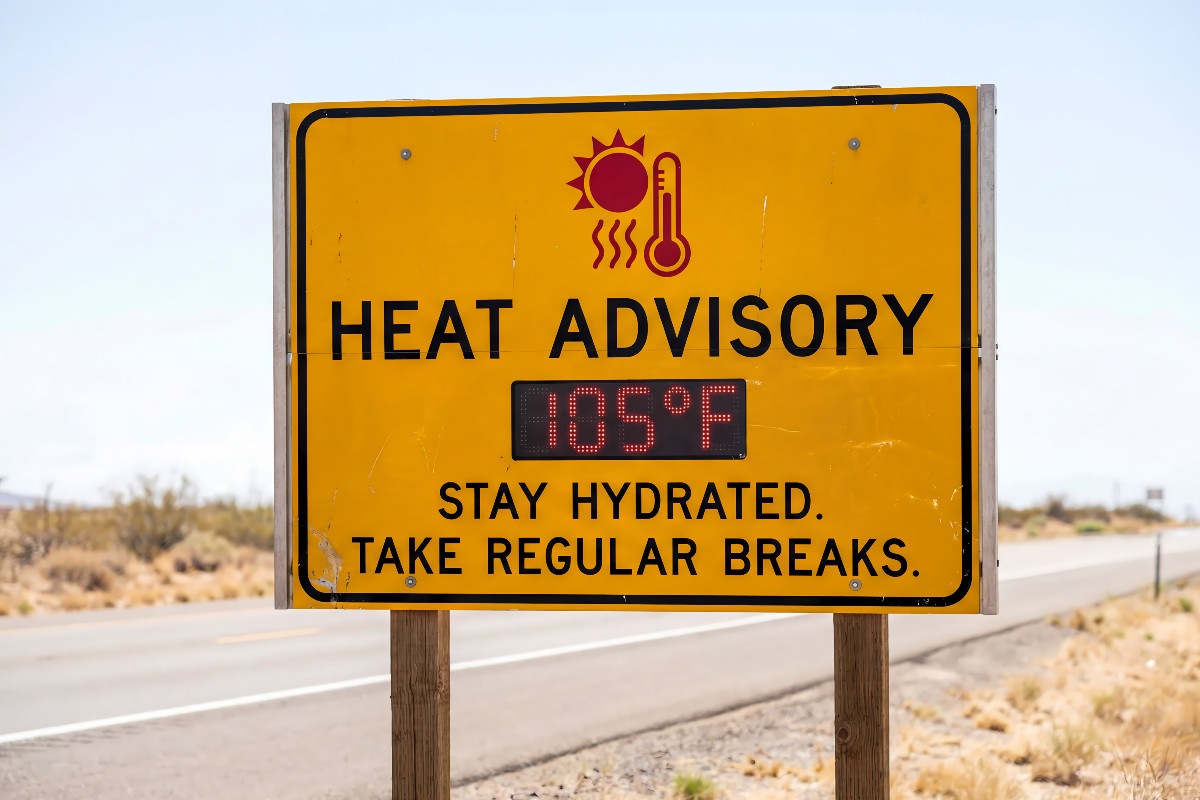
You may want to review your data centre cooling strategy ahead of the summer, with scientists warning that current climate conditions could increase the risk of extreme weather in the months ahead.
The warning comes after global sea temperatures of 21°C were reported in April, the second highest on record for the month. Scientists have also pointed to the possibility of another El Niño warming cycle, which could intensify extreme weather and place further strain on critical infrastructure.
For data centres, that matters. Cooling systems are already being asked to work harder as rack densities increase, while the cost of any outage is becoming harder to ignore. According to Aggreko, the risk is that operators wait until temperatures rise before discovering that existing cooling assets are no longer fit for purpose.
Chris Smith, Head of Temperature Control at Aggreko, commented, “We need only look back at 2024 to see what El Niño might have in store for us this year. Summer temperatures regularly exceeded 30°C, placing immense pressure on data centre cooling infrastructure and even leading to full-blown equipment failure in worst-case scenarios.
“The reality is, current cooling strategies simply aren’t designed to deal with this kind of weather, or to operate in these temperature ranges. For this reason, now is the time to start reviewing current cooling infrastructure to assess whether it’s still fit for purpose, so the right measures can be brought in ahead of time.
“The main thing to look out for is ageing assets, as these are at the greatest risk of lower efficiency, overheating, and failure. Engaging with a specialist temperature control partner can help implement temporary cooling and industrial HVAC solutions to bridge gaps during equipment failures, manage seasonal demand peaks, and provide N+1 redundancy for greater operational resilience.”
A growing resilience problem
Cooling has always been a fundamental part of data centre resilience, but it is becoming more difficult to treat it as a static design consideration. Higher-density racks, AI workloads and more demanding availability expectations all mean that thermal performance is now a more visible operational risk.
Aggreko pointed to the Uptime Institute’s 2026 outage analysis, which found that cooling accounted for 14% of all impactful outages, making it the second biggest contributor behind power. The same analysis found that one fifth of respondents said their most recent outage cost more than $1 million.
That is why temporary cooling, industrial HVAC systems and additional redundancy are increasingly being discussed as part of a broader resilience strategy, rather than simply as emergency measures when something has already gone wrong.
One option being explored by some operators is the use of hybrid packages combining battery energy storage systems with temporary chillers or cold storage units. In this setup, the cooling unit can provide additional capacity during periods of peak demand, while the battery system can help reduce reliance on standard generators and improve efficiency.
There is, of course, a commercial interest in Aggreko making this argument. But the wider point still stands: with weather patterns becoming less predictable, data centre operators may need to think more carefully about whether their cooling strategies are designed for the conditions they are likely to face, rather than the conditions they were originally built around.
Smith added, “While we’ll have to wait and see what the summer has planned for us, now is nonetheless a prime time to re-evaluate cooling strategies and identify where efficiency gains can be made. Procuring temporary cooling from a third-party specialist not only allows access to the latest, high-efficiency technology, but also opens the door to a number of creative solutions, such a hybridisation, which just aren’t feasible in-house.
“While cooling is just one of the challenges that data centre managers have to contend with at the moment, the gains this can deliver, alongside the resilience it provides against the threat of outages, mean that this is more than a worthwhile operational solution – delivering flexibility and resilience without the need for capital expenditure, thanks to the hire-based model.”