
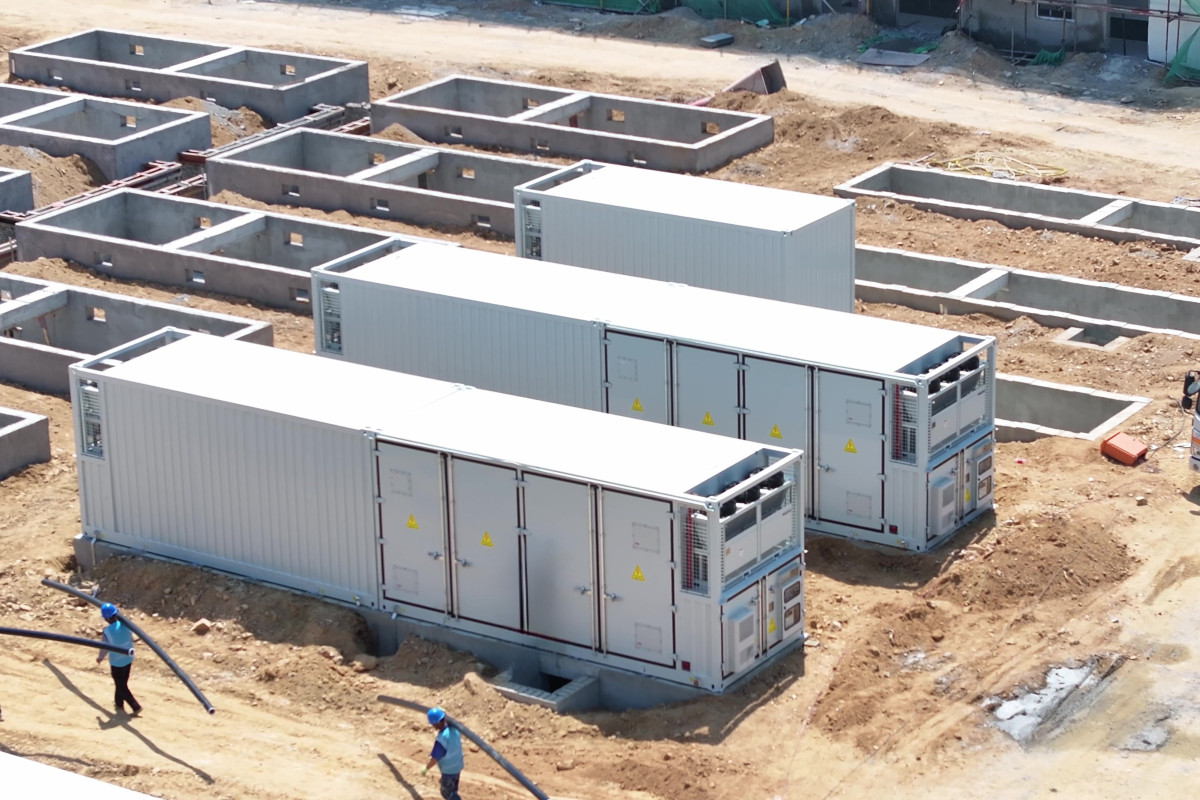
On-site battery storage could reduce the amount of electricity data centres draw from the grid during periods of peak demand by between 10% and 15%, according to new research.
Researchers from WU Vienna University of Economics and Business analysed the energy consumption of 96 data centres connected to UK Power Networks’ distribution network, finding that co-located batteries could supply part of a facility’s power requirements when demand is at its highest.
That could prove particularly valuable in areas where electricity networks are already constrained and developers face lengthy waits for new grid connections.
The research suggests that adding renewable generation either at or close to data centre sites could further reduce their reliance on the wider electricity system.
The findings come as the rapid growth of AI places increasing pressure on global electricity networks. The International Energy Agency expects electricity demand from new data centres to double by 2030, and while not all of the projects in the pipeline in the UK are going to be built, there will still be significant growth in the number of data centres that will be connected to the UK’s electrical grid.
Turning data centres into grid assets
The researchers at WU Vienna University of Economics and Business argue that electricity prices may not be the biggest obstacle facing data centre developers – despite it reportedly being a key reason OpenAI backed out of its Stargate UK project. Instead, the more immediate challenge is gaining access to large volumes of reliable electricity quickly enough to meet growing computing demand.
That has already become a major concern in the UK, where grid connection delays have threatened the development of everything from renewable energy projects to new industrial facilities.
Rather than assessing data centres solely as large sources of additional electricity demand, the study says planning and connection decisions should also consider the flexibility, storage capacity and clean generation that individual projects could provide.
That’s why the researchers are calling for grid connection rules to prioritise developments that can demonstrate measurable benefits for the wider energy system.
It also recommends removing regulatory barriers that prevent batteries and on-site generators at data centres from providing services to the grid.
Allowing facilities to export stored electricity or reduce their consumption during periods of network stress could provide operators with an additional revenue stream, while giving network operators more capacity to manage peaks in demand.
Computing workloads could also become increasingly flexible. Operators could be rewarded for temporarily reducing electricity consumption when the grid is under pressure or shifting less time-sensitive computing tasks to periods when renewable power is plentiful.
Lead author Behnam Zakeri from WU Vienna’s Institute for Data, Energy and Sustainability, noted, “AI is creating an unprecedented race for electricity. The question is not just where to find clean power but how quickly it can be delivered to meet AI’s growing compute demand.
“Big tech companies are increasingly investing in energy storage as a solution to several of their power problems. What is now emerging is a ‘nexus’ where AI and energy storage reinforce one another.”
While battery storage will not remove the need for substantial investment in electricity generation and network infrastructure, the research suggests it could help data centres make better use of the grid capacity already available.