


Steve Hone, CEO of The DCA, argues that the UK’s AI ambitions will only succeed if AI Growth Zones strengthen the colocation, connectivity and regional infrastructure already supporting the digital economy.
The UK Government’s AI Growth Zone programme represents one of the most significant developments in digital infrastructure policy for a generation. By recognising that artificial intelligence depends not only on software and algorithms, but also on power, planning and physical infrastructure, the Government has taken an important step towards building long-term national AI capability.
The ambition is clear. The UK wants to accelerate sovereign compute capability, attract global investment and create the conditions for world-class AI infrastructure. Delivering large-scale AI campuses, advanced GPU clusters and high-capacity energy infrastructure will be essential if Britain is to remain internationally competitive. There is therefore much to support in that ambition.
However, as the programme develops, an equally important objective is beginning to emerge. AI Growth Zones must strengthen the UK’s existing digital infrastructure ecosystem, not unintentionally fragment it.
For more than three decades, the UK’s colocation industry has quietly underpinned the nation’s digital economy. Since the early 1990s, operators have invested billions of pounds in resilient facilities, carrier-neutral connectivity, cloud exchanges and regional infrastructure that today support everything from banking and healthcare to government services and enterprise computing. AI infrastructure will not replace this ecosystem. It will depend upon it.
As Dame Dawn Childs recently observed, the challenges facing AI infrastructure represent a ‘wicked problem’ that can only be addressed through collaboration. AI Growth Zones should therefore be viewed as mechanisms for improving coordination across planning, energy and infrastructure, rather than creating isolated pockets of investment.
The largest AI training facilities may consume hundreds of megawatts of power, but the wider AI economy will also rely on enterprise colocation, regional data centres, edge infrastructure, cloud interconnection and low-latency inference platforms. AI training may be concentrated in a relatively small number of locations, but AI inference, business applications and sovereign workloads will be distributed throughout the UK.
AI Growth Zones should therefore be viewed as strategic accelerators rather than isolated investment destinations. Their success will ultimately depend on how well they connect with and reinforce the wider digital infrastructure landscape already operating across the country. This has important implications for future policy.
One area attracting increasing discussion is the possibility of incentives designed specifically to attract AI infrastructure. These could include preferential energy arrangements, planning support, infrastructure funding or accelerated utility coordination. Targeted interventions can play an important role in establishing an emerging market. However, they should be designed carefully.
Permanent or highly selective incentives risk distorting competition between regions and different types of digital infrastructure. Existing operators, many of which have invested over decades without such support, should not find themselves placed at a competitive disadvantage simply because policy has shifted towards AI. If the Government decides that intervention is necessary, incentives should therefore follow several principles.
First, they should be temporary. Their purpose should be to accelerate market formation, not create permanent structural advantages.
Secondly, they should reward delivery rather than designation. Support should be linked to projects that demonstrate credible pathways to deployment, secured land, realistic energisation plans and measurable economic value, reflecting the wider direction of electricity connections reform around ‘ready and needed’ infrastructure.
Thirdly, they should, wherever possible, strengthen the wider digital infrastructure ecosystem. Investment in transmission reinforcement, planning capability, fibre networks, skills development and utility coordination benefits AI campuses, enterprise data centres and regional digital infrastructure alike. In many cases, improving the underlying operating environment may prove more valuable than providing selective financial incentives.
The UK remains one of Europe’s most attractive markets for digital infrastructure, but operators continue to face common challenges, including lengthy grid connection times, planning complexity, transmission constraints and high operational costs. Addressing these issues across the entire sector would enhance the UK’s competitiveness far more effectively than creating isolated areas of preferential treatment.
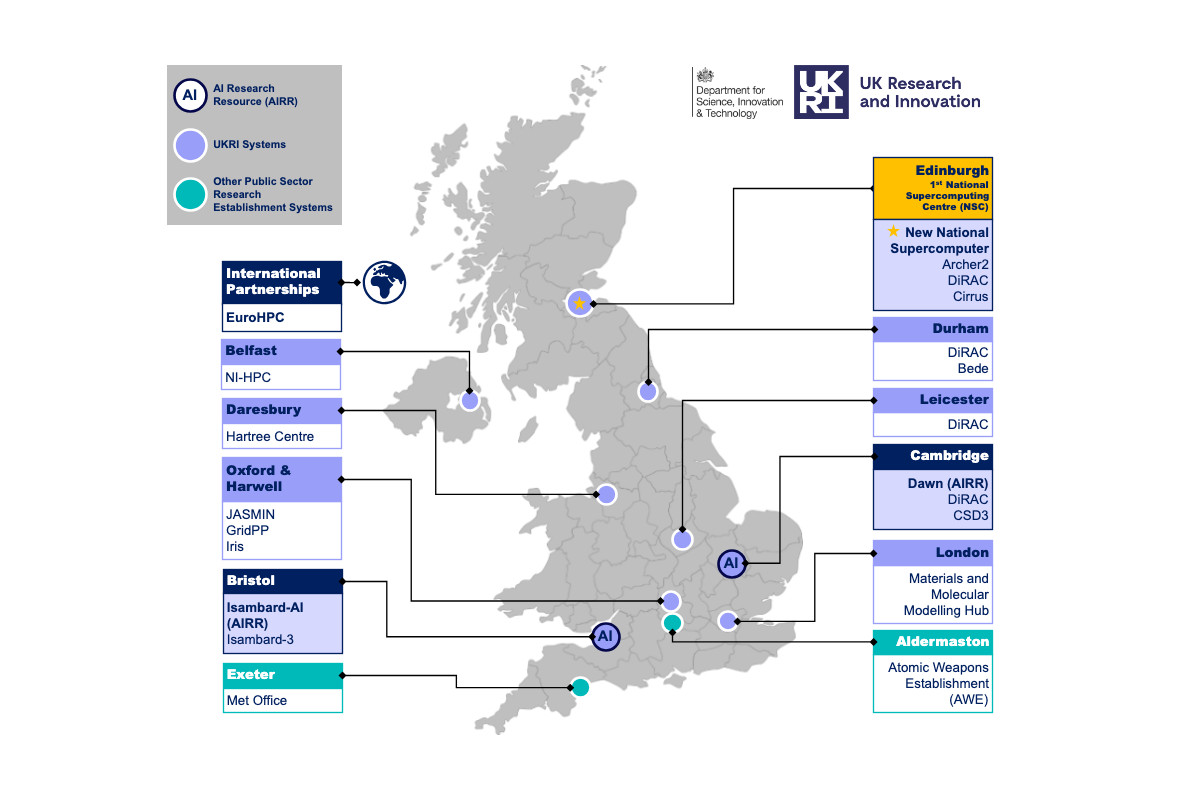
There is also a regional dimension. The UK benefits from a diverse digital infrastructure landscape. London remains Europe’s leading interconnection hub, while regions across England, Scotland, Wales and Northern Ireland each offer different combinations of renewable energy, land availability, connectivity and economic opportunity. AI Growth Zones should encourage that diversity rather than concentrate opportunity in a limited number of locations.
Healthy competition between regions is positive. Fragmentation of national infrastructure policy is not.
Perhaps the greatest opportunity presented by AI Growth Zones is not the designation of specific sites, but the opportunity to improve how the Government coordinates infrastructure delivery. Bringing together departments responsible for planning, energy, economic development, regulation and digital policy could remove many of the barriers that have slowed strategic infrastructure projects for years. If that coordination becomes the lasting legacy of the programme, its benefits will extend well beyond AI.
The UK has the opportunity to create an environment in which hyperscale AI campuses, enterprise colocation providers, regional operators, cloud platforms and edge infrastructure can all flourish together. These are complementary parts of the same national ecosystem, not competing alternatives.
The UK’s AI ambitions should therefore be built on a simple principle: accelerate new capability without undermining the foundations that already exist.
AI Growth Zones have the potential to become a catalyst for the next generation of British digital infrastructure. Their long-term success will not be measured simply by the number of AI campuses they attract, but by whether they strengthen the resilience, competitiveness and connectivity of the entire UK market.
That outcome would benefit the Government, investors, AI developers and, just as importantly, the operators that have been building Britain’s digital infrastructure for more than 30 years.