
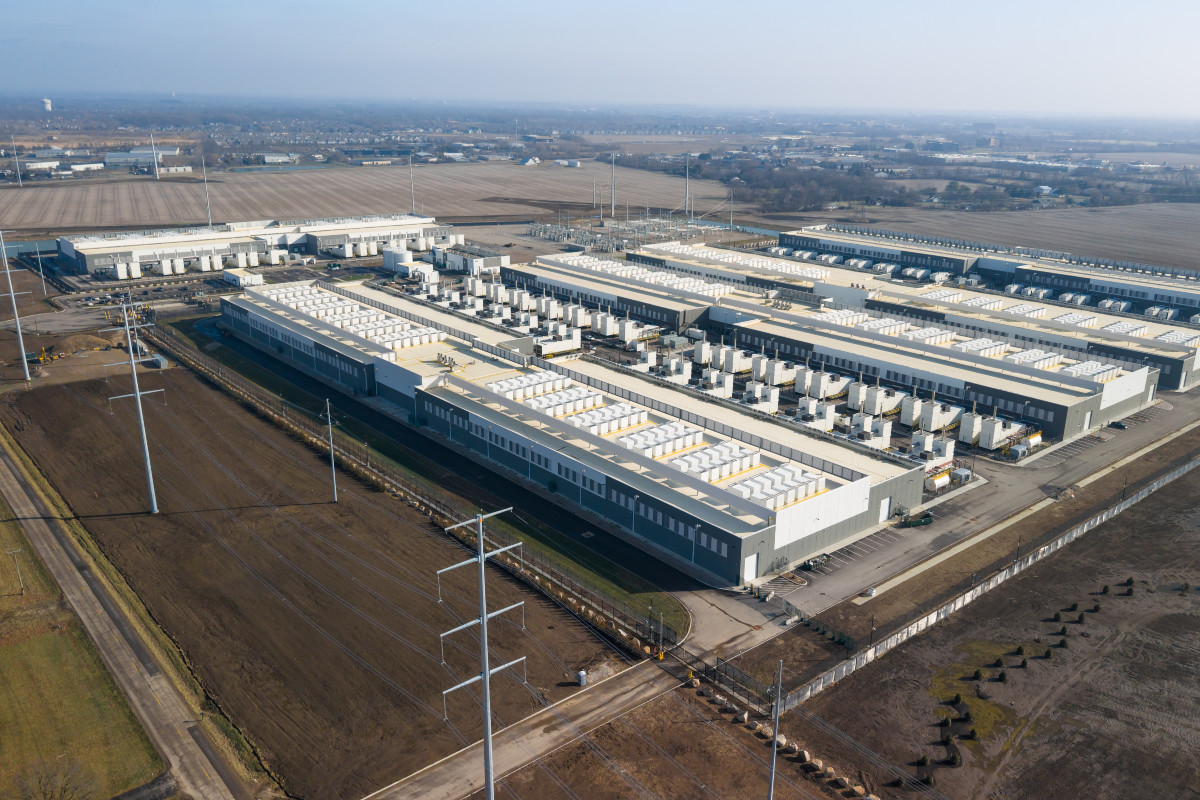
Europe’s next generation of hyperscale data centres will be located almost four times further from established hubs than projects delivered over the past three years.
That’s according to new research from JLL, which found that hyperscale campuses planned between 2026 and 2028 will be located an average of 175km from major EMEA hub cities, compared with just 46km for projects delivered between 2022 and 2025.
The shift comes as developers attempt to secure the increasingly large amounts of electricity required by AI infrastructure, while grid constraints, planning restrictions and a shortage of suitable land make further development around Europe’s traditional data centre hubs more difficult.
According to JLL, the world’s four largest hyperscale cloud providers are expected to invest $725 billion in capital expenditure during 2026, up 77% from $410 billion in 2025, with much of that spending directed towards AI compute and the data centres needed to support it.
In fact, the research expects that AI workloads will account for around half of global data centre capacity by 2030 – highlighting the sheer scale of the shift.
“We’re seeing a fundamental change in how data centre infrastructure is planned. Historically, operators built as close as possible to major population centres, but today’s growing AI training infrastructure follows a different logic,” said Assad Noori, Head of Data Centres, Work Dynamics EMEA.
“The determining factor is increasingly where sufficient power can be secured, rather than simply where demand exists. Data centres are being brought to where the power is, not the other way around.”
Following the power
JLL’s findings support the argument made by atNorth CFO and Deputy CEO Eva Sóley Guðbjörnsdóttir, who noted that the factors determining where data centres are built have continued to change as the industry has moved from enterprise computing, through cloud and into the AI era.
While connectivity and proximity to customers helped concentrate much of Europe’s data centre development around Frankfurt, London, Amsterdam, Paris and Dublin, large-scale AI training infrastructure can be more flexible about where it is located.
That makes access to sufficient power and land increasingly important – especially as individual hyperscale developments begin demanding significantly more capacity than traditional enterprise facilities. JLL’s figures suggest that change is already beginning to show in the development pipeline.
Greenfield sites now account for 39% of Europe’s future data centre pipeline, compared with just 8% of projects delivered during the previous three years, as developers increasingly look beyond established industrial estates towards larger regional sites capable of supporting AI-scale infrastructure.
“Europe’s core markets will remain critical because enterprise demand isn’t going anywhere. However, hyperscale AI infrastructure requires a completely different scale of power and land,” said Martin Jensen, EMEA Division President, Data Centres at JLL.
“These requirements are accelerating investment into secondary markets, greenfield developments and entirely new locations capable of supporting the next generation of AI capacity.”
FLAP-D remains healthy, despite push for power
That does not mean Europe’s established data centre markets are about to lose their importance.
Combined live capacity across the five core FLAP-D markets – Frankfurt, London, Amsterdam, Paris and Dublin – has now reached 3.8 GW, more than double the level recorded in 2019.
A further 1.4 GW is currently under construction and another 2 GW remains in the planned pipeline, while annual deliveries are expected to reach 453 MW during 2026 – almost three times the level delivered in 2020.
But despite that record-breaking growth, available capacity remains tight.
Vacancy across FLAP-D currently stands at just 6.4%, with Frankfurt recording the tightest market at 3.1%.
Paris, meanwhile, was the strongest-performing market during the first half of the year, delivering 72.5 MW of new capacity and already exceeding JLL’s forecast for the whole of 2026.
It’s expected that the FLAP-D market will continue growing, despite more large-scale deployments in other areas. In fact, in London we’ve seen a number of data centres receive planning approvals in recent months – including CyrusOne’s new facility in Southall – while Sadiq Khan has also promised to open London’s grey belt to data centre developments.
That continued growth will be driven by enterprise workloads and applications where latency remains important, however. AI training infrastructure isn’t as time-sensitive, and therefore can be located considerably further away if doing so gives developers access to sufficient electricity, land and a quicker route through planning.
That could leave Europe with a much more geographically dispersed data centre market than the one that developed during the cloud era.
Europe isn’t alone
Europe isn’t alone in having a more geographically diverse data centre portfolio, as the same trend is already beginning to emerge elsewhere in EMEA. JLL says the Middle East currently has 2.6 GW of data centre capacity under construction and another 13.8 GW in the planning pipeline, with total capacity forecast to quadruple by 2030.
While heightened regional tensions have delayed some investment decisions, sovereign-backed developments continue to move forward, including HUMAIN’s planned 100 MW AI campus in Dammam and the first 200 MW phase of Stargate UAE.
“Momentum moderated over the past six months, with heightened regional risk leading several operators to defer investment decisions and extend delivery timelines,” said Daniel Thorpe, Head of Data Centre Research, EMEA.
“However, the region hasn’t stepped back, it’s re-sequenced. Timelines have been adjusted, not intentions. He added: “And because sovereign capital doesn’t wait on fundraising cycles, the question here is delivery sequencing, not viability.”
For Europe, the conclusion is simple. The traditional hubs are unlikely to disappear, but the largest new AI campuses no longer need to cluster around them.
If developers cannot bring enough power to the data centre, the data centre will increasingly go to where the power already is.