

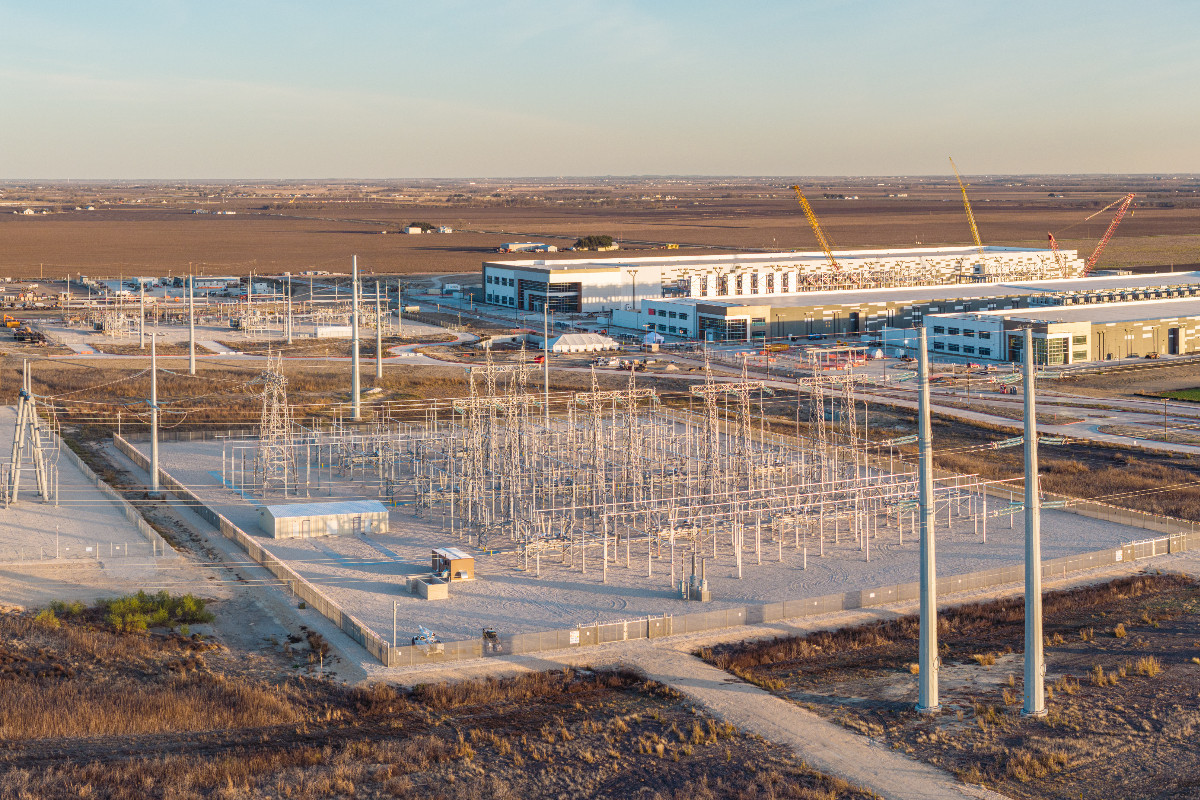
Owen Thomas, CEO and Senior Consultant at Red Oak Consulting, explains why the next phase of AI growth in the UK will depend not just on compute ambition, but on the power and cooling systems that can support it.
Artificial intelligence is advancing at pace. In the UK, however, its growth is meeting a hard physical reality. The systems that power and cool our data centres are under strain, and in key regions, grid capacity is tightening. AI ambition is running into a heat and power wall.
Step inside a modern data centre and the shift is clear. Facilities designed for predictable enterprise workloads are being reshaped by the intensity of AI training. Rack densities are rising sharply, along with power demand and thermal output. Many existing UK sites were never built for sustained high-density operation.
The limits of digital expansion are no longer theoretical. They are set by power availability, cooling performance, and thermodynamics.
A tale of two grids
Britain is playing a high-stakes game of infrastructure Tetris. In West London, long-established as a primary data corridor, grid capacity is constrained. Securing new high-voltage connections for large-scale compute projects can take years. In some cases, connection dates now extend into the early 2030s.
The challenge is not simply generation. Transmission bottlenecks, substation reinforcement, and local distribution upgrades all shape delivery timelines. Even as renewable generation increases, routing reliable capacity into dense urban data centre clusters remains complex.
At the same time, demand is rising steeply.
AI training environments built around modern GPU architectures routinely draw 60 kW to 80 kW per rack. Specialist deployments can exceed 100 kW per rack. Traditional enterprise racks typically operated at 5 kW to 10 kW. This is an order-of-magnitude shift within a similar footprint.
For operators, the implications are immediate. Transformer capacity, switchgear ratings, and UPS topology must be reassessed. Electrical distribution systems designed for lower densities may not tolerate sustained 80 kW racks without significant modification. Backup generation strategies also come under pressure as peak load profiles change.
The mechanical impact is equally significant. Conventional air cooling struggles to manage sustained AI densities efficiently. Airflow volumes, containment systems, and chilled water loops reach practical limits before delivering the required thermal stability. Liquid cooling, whether direct-to-chip or immersion-based, is therefore becoming increasingly common in AI-focused deployments.
Retrofitting brownfield sites for high-density liquid cooling is rarely straightforward. Floor loading, ceiling height, plant capacity, and pipe routing all impose constraints. In many cases, the complexity and cost of adaptation approach that of new-build development.
Engineering a way through
In a grid-constrained UK, progress depends as much on precision as on additional capacity. If more electricity is not immediately available, greater value must be extracted from existing supply.
That work begins before hardware procurement. It begins in the software.
Many organisations still run advanced hardware on applications written for earlier processor generations. Without optimisation, workloads perform unnecessary calculations, move excessive data, and underutilise parallel GPU capability. The result is longer runtimes, higher energy consumption, and increased heat output for the same analytical result.
Research software engineering offers one practical response. Redesigning algorithms to exploit parallelism more effectively, reducing memory bottlenecks, and refining numerical methods can materially shorten compute time. In energy terms, shorter runtimes mean lower total power consumption and reduced cooling demand.
At high density, even modest efficiency gains compound. A reduction of a few percentage points in compute energy at rack level can ease pressure on cooling systems, electrical distribution, and standby capacity across the facility.
This also affects power usage effectiveness. Maintaining low PUE values becomes more complex as rack densities rise and liquid cooling systems are introduced. Pumping energy, heat rejection strategy, and resilience requirements all influence overall performance. Reducing IT load through software optimisation can support the broader efficiency profile of the site.
In practical terms, improving code efficiency may delay or reduce the scale of electrical and mechanical upgrades, particularly where grid reinforcement timelines remain uncertain.
Balancing cloud and concrete
The heat and power challenge also demands disciplined workload placement.
Much AI development begins in the cloud, where hyperscale platforms provide access to specialised hardware at scale. This enables rapid experimentation without immediate capital investment and can reduce exposure to local grid constraints for short-duration workloads.
However, sustained training runs, predictable production environments, and sensitive datasets often favour on-premises deployment. In these cases, infrastructure must be designed from the outset for high-density operation. Power distribution architecture, cooling topology, and redundancy models must align with the expected load profile rather than be adapted retrospectively.
A hybrid approach becomes a deliberate strategy rather than a compromise. By segmenting workloads according to duration, density, and sensitivity, organisations can distribute demand intelligently. This can reduce pressure on constrained grid connections while maintaining control over critical systems.
Defaulting to either cloud or on-premises infrastructure without analysing duty cycle and power implications invites inefficiency.
The convergence of skills
AI infrastructure is blurring traditional boundaries. Software architecture now influences plant design. Electrical capacity planning must reflect workload variability and sustained peak demand.
Data centres cannot be treated as passive utilities. They are engineered ecosystems with defined electrical and thermal envelopes. Inefficiency at one layer creates strain at another.
As densities increase, coordination becomes critical. Software engineers, infrastructure designers, facilities teams, and energy planners need a shared understanding of constraints. Without that alignment, the risk of overprovisioning, thermal instability, or stranded capacity increases.
In the UK, where grid reinforcement projects unfold over years rather than months, these decisions carry long-term consequences. Infrastructure choices made today may shape operational flexibility for a decade.
A cooler path forward
The UK must move beyond brute-force scaling. Simply adding more racks and more megawatts is neither fast enough nor economically sustainable under current grid conditions.
Competitive advantage will favour those who combine high-density capability with operational efficiency. That means optimised software, carefully engineered facilities, and infrastructure strategies grounded in realistic assessments of grid capacity.
The heat generated by AI reflects a structural change in computational intensity. Addressing it requires disciplined engineering and a clear understanding of how power and cooling constraints shape digital ambition.
Britain has the research capability and technical expertise to lead in advanced AI. Success will depend on recognising that progress in computation is inseparable from the physical systems that sustain it.
The wall is not abstract. It is electrical and thermal. How the sector responds will define the next phase of AI infrastructure in the UK.