

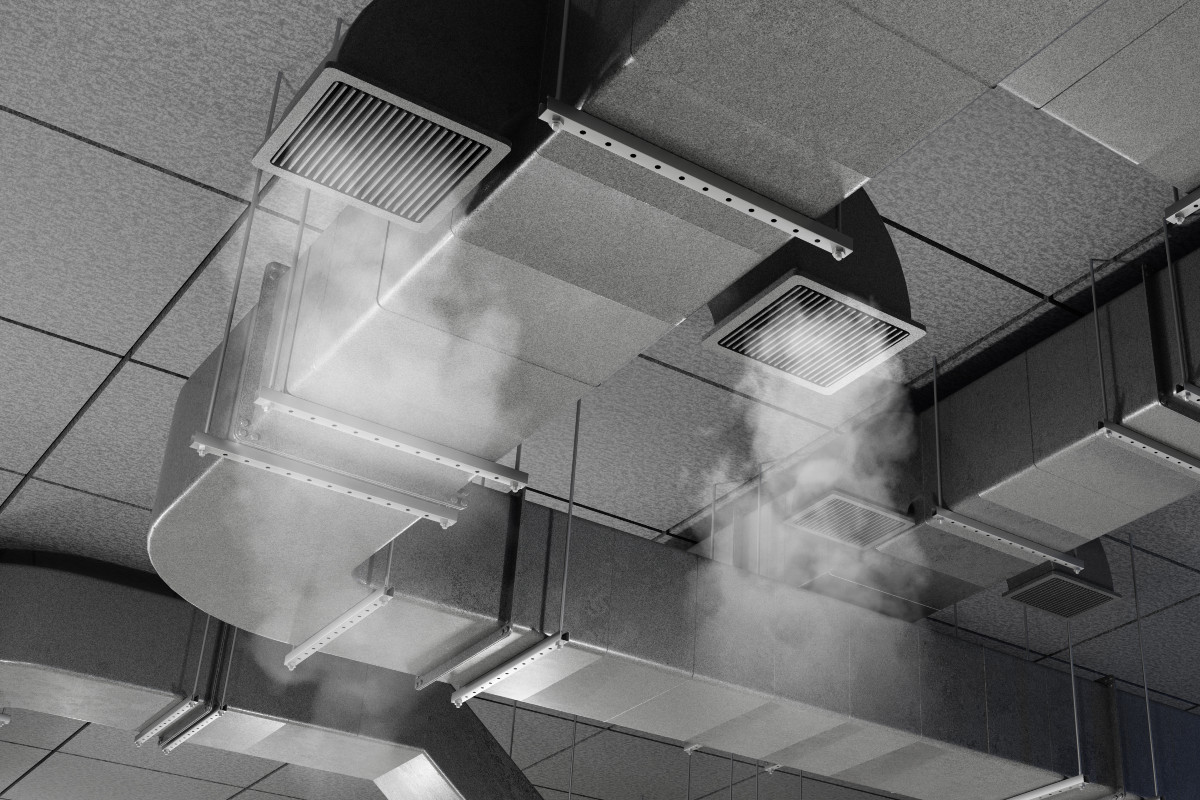
While power and cooling dominate data centre design, Glyn Hodgkiss, Associate, Air Quality at Cundall, argues that air quality deserves far closer attention.
Data centres are built on certainty. Power resilience is modelled, cooling demand is calculated, and performance is tested against failure scenarios. This all happens before the facility is even operational.
Yet, compared to those technical factors, the environment itself is often overlooked. And this affects every data centre and building, no matter where it is in the world.
While temperature and humidity are tightly controlled within data halls, the composition of the air is less predictable. Over time, it can have a measurable impact on system dependability and change how frequently components need to be replaced. In short, it affects how resilient the site will be when it is operational.
As data centres are built in increasingly diverse environments, designers can no longer ignore environmental factors.
Are all sites the same?
It is easy to think of environmental risks at a regional level. Coastal locations bring salt into the air. Industrial areas, including cities, increase the concentration of sulphur and nitrogen compounds. The climate itself affects humidity and the dispersion of pollutants.
Conditions can change significantly even within the same facility. The air composition at intake zones will be different from that in data halls or corridors. This is because of how the air is drawn in, filtered, and circulated back across the facility.
This creates a challenge for operators. Without detailed insight into site conditions, risk is managed with standardised assumptions and uniform maintenance. This can lead to inefficiency through over- or under-maintenance in different areas, either increasing the risk of failure or creating unnecessary costs.
What is the consequence of these pollutants?
Despite not being the most visible risk, airborne pollutants remain highly significant.
Compounds such as sulphur dioxide, nitrogen dioxide, ozone, and hydrogen sulphide, when combined with moisture and dust, can gradually degrade metal components. This can affect connectors, circuitry, and other systems that support the data centre’s operation.
This is a slow process that develops over months or years, often without obvious indicators in standard monitoring. By the time issues are noticed, serious deterioration may already have occurred.
Therefore, mitigation depends on anticipating and managing environmental effects over the long term, not just responding to single events. Long-term site resilience depends on proactive, data-informed environmental management.
Why evidence matters
To reduce uncertainty and support more targeted maintenance approaches, many operators are seeking evidence to inform their strategies.
Atmospheric corrosivity testing supports this. By measuring environmental conditions, operators can more accurately forecast how these factors affect the materials in their data centres.
These tests usually consist of a mixture of on-site monitoring and laboratory analysis. Corrosion test coupons, typically silver or copper strips, are exposed to the environment and then assessed to determine the corrosion rate. These results are often combined with measurements of pollutant concentrations, such as sulphur and nitrogen, as well as temperature, humidity, and dust concentration.
The data is then classified against recognised standards such as ANSI/ISA 71.04 and ISO 9223/9224. This provides a consistent framework for understanding the environment.
How does the data inform design choices?
In environments with higher corrosivity, targeted design choices can be made early. This could include changes to filtration systems or ventilation design, or could influence the maintenance schedule in specific areas of the facility.
On the other hand, in less aggressive environments, the findings can prevent unnecessary maintenance. Repair and replacement schedules can be extended with confidence, avoiding the replacement of components that are still in good condition.
Both scenarios can occur even within the same facility. By viewing a data centre as being made up of multiple environments, operators can design and respond to the specific conditions of their site rather than rely on standard assumptions. As more data is collected, trends become apparent and can shape future decisions for other sites.
How does this impact resilience?
Resilience in data centres often centres on terms such as redundancy, uptime, and reliability. These are useful and will always be important, but they focus only on part of the data centre’s resilience.
The environment’s impact is gradual, but not negligible. It influences system degradation and maintenance requirements. It affects long-term resilience, rather than causing immediate failures.
Understanding the environment has always been essential, but it is now even more important as the number and geographic diversity of data centres increase. For operators seeking to maintain performance while controlling costs, site-specific environmental analysis can support more informed decision-making.
Ultimately, accounting for environmental variation is necessary for long-term resilience, cost optimisation, and improved reliability.