
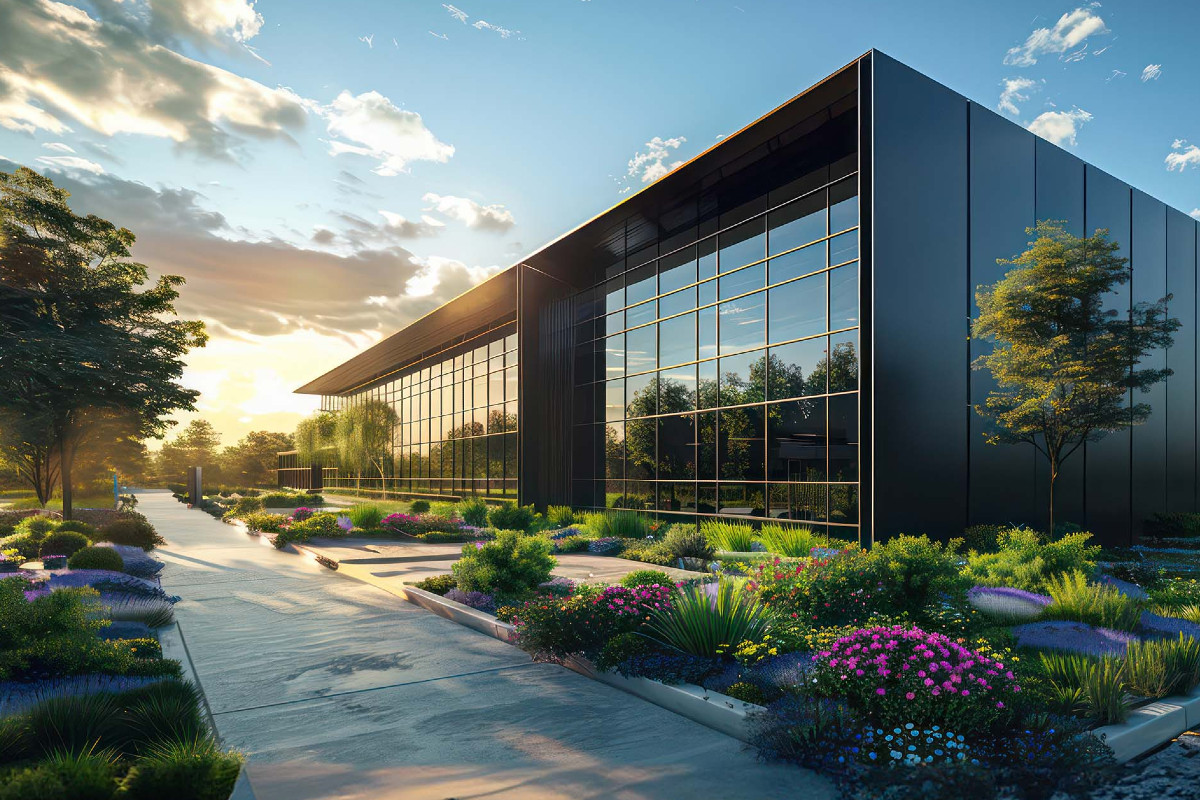
ILI Group has submitted a planning application for a £5 billion data centre near Auchtertool in Fife.
The proposed development, known as Cato, would be a 600 MW hyperscale data centre designed to support AI, cloud computing, and other data-intensive digital services. If approved, it would be built in phases over several years.
The scheme is the first in ILI Group’s planned Stoics network, which is the company’s idea for a network of large-scale digital infrastructure projects across Scotland’s central belt. The project also includes Rufus, a 540 MW project in East Ayrshire, and Aurelius, a 400 MW development in North Lanarkshire.
If fully realised, the Stoics network would amount to around 1.5 GW of data centre capacity and see total investment stand at around £15 billion – which is a significant chunk of change for an area that has not traditionally been seen as a data centre hub.
That’s beginning to change, however. While existing FLAP-D areas become congested, data centre operators are beginning to explore alternatives – especially areas that can offer an abundance of clean power. Scotland has long been the engine behind much of the UK’s renewables revolution, so it makes sense that it would attract interest from data centre developers.
In fact, according to ILI Group, one of the biggest selling points of the Fife site is its grid position. Cato would have a 600 MW grid connection at maximum capacity, with the site having secured an approved Gate 2 grid position.
ILI Group says the development would run on renewable electricity, arguing that projects of this kind can create long-term demand for renewable power and support further investment in grid infrastructure.
Opposition to Fife data centre is already brewing
Despite what ILI Group sees as an ‘ideal location’ for a data centre, opposition to the Fife project is already brewing. Action to Protect Rural Scotland (APRS), which was the campaign group that successfully stopped the development of a data centre in Edinburgh earlier this year, has argued that the Cato data centre would use the same amount of energy in a year as half of Scotland’s households, or around 20% of Scotland’s total energy use. That’s before even beginning to account for the other projects.
ILI Group has pushed back against those concerns, with the company’s Chief Executive, Mark Wilson, arguing that additional demand in Scotland could help reduce renewable curtailment, which was estimated to have cost £343 million in 2025.
The company also pointed to the potential benefits for the local area. Economic analysis by BiGGAR Economics estimates that construction of the Cato project could generate around £708 million in Gross Value Added across Scotland, including approximately £105 million in Fife. It also projects around 9,660 job-years during construction across Scotland, with around 1,450 of those in Fife.
Once operational, the project is expected to support around 540 jobs across Scotland, including about 262 in Fife. The site itself would support around 120 permanent skilled jobs once fully built out.
That level of employment may not be transformative on its own, but ILI Group is also exploring skills, training, and apprenticeship opportunities linked to the construction and operation of the facility, alongside a proposed community benefit fund.
The company has also got ahead of concerns surrounding water usage. ILI Group has said the development would use around 34,000 cubic metres of water a year, which it describes as equivalent to the annual use of around 239 homes. The company says the data centre would be supplied through infrastructure separate from the network serving Auchtertool village, and that Scottish Water has confirmed sufficient capacity for the site.
Of course, that’s unlikely to satisfy APRS, which has been calling for a moratorium on data centre developments across Scotland. While the Scottish Government has been generally supportive of data centre developments in the country, as long as they’re ‘green’, the recent Scottish parliamentary election saw the SNP slip further away from holding a majority in Holyrood. That means it’s going to have to rely on votes from other parties to pass legislation, and the Scottish Greens, who have previously been in a coalition with the SNP, have already called for the Fife data centre plans to be rejected.
Of course, whether the plans go ahead or not is up to Fife Council, and not the Scottish Government. It has determined that the plans do not require an Environmental Impact Assessment, and is due to make a planning decision after the consultation period closes on July 2. For ILI Group, it’s hoping that construction can begin on the site in 2027, with the data centre being built in phases over a five year period.