
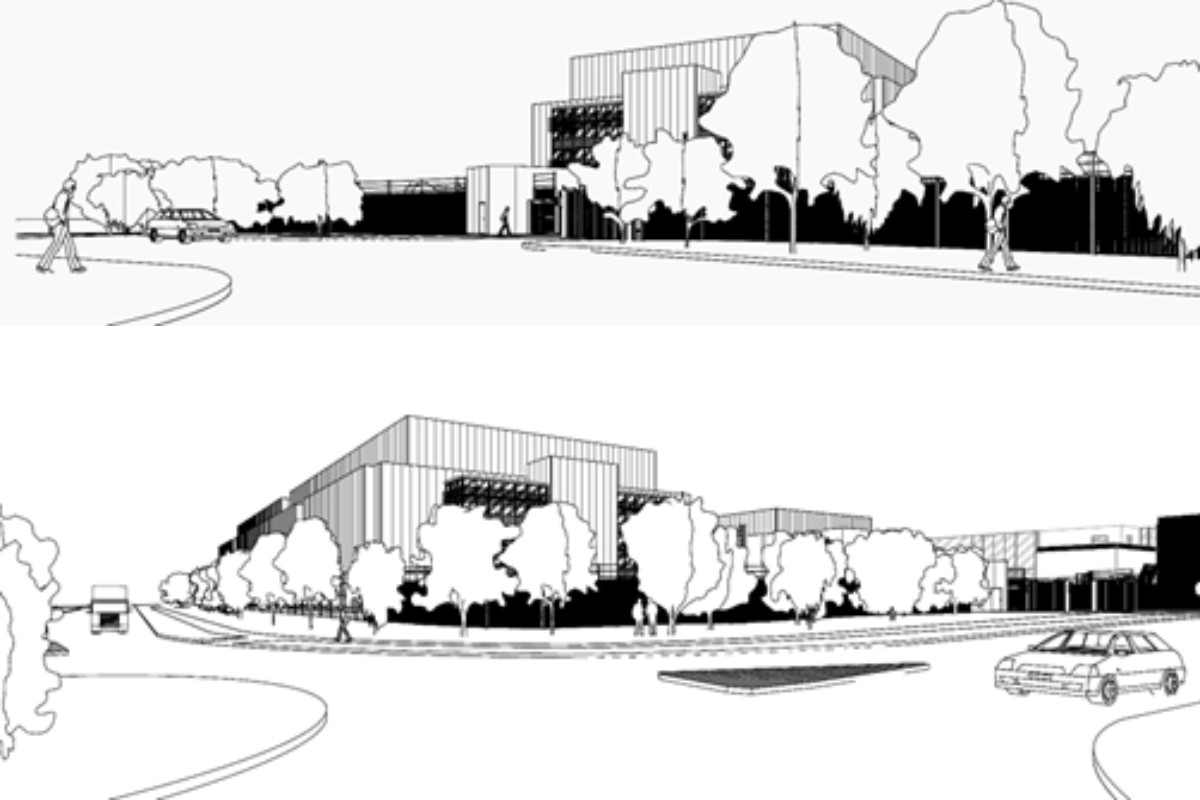
Shelborn Drummond, the developer behind the recently-rejected 210 MW AI data centre on the outskirts of Edinburgh, must submit a full Environmental Impact Assessment before its planning appeal can proceed.
That’s according to the Scottish Government, which has ruled that the proposed data centre could have a significant effect on the environment, and thus put the developer’s appeal on hold until a full Environmental Impact Assessment (EIA) is produced.
The Scottish Government’s decision comes despite Edinburgh Council earlier ruling that the site would not require an EIA, something that infuriated campaigners, with campaign group Action to Protect Rural Scotland (APRS) describing the decision as ‘gobsmacking’.
Now, Shelborn Drummond has until August 20 to confirm whether it intends to submit an EIA report. If the developer fails to respond, the Scottish Government’s Planning and Environmental Appeals Division will no longer be required to consider the appeal.
It could be a significant blow to the data centre which was previously rejected by Edinburgh Council back in February on the grounds that it could not prove its ‘green’ credentials. Councillors concluded that the proposal did not adequately address its total greenhouse gas emissions, the climate crisis or its relationship with a planned regeneration project in the area.
Concerns over power and emissions
The proposed hyperscale data centre would have a capacity of around 210 MW, with the developers claiming that the site would be powered by renewable electricity. The problem the planning report found, however, was that Shelborn Drummond had not indicated exactly where that renewable electricity would be coming from – or whether it could meet the site’s entire needs.
Local campaigners also caused a stir, with APRS mounting a last-ditch bid to block the data centre before the planning committee decided by highlighting the potential impact of the back-up power generators. It noted that if the generators were to be run at scale it would be the equivalent of ‘100,000 idling cars-worth of diesel’ being burned.
While data centre operators try to avoid running their back-up generators for any long period of time, it created an evocative case against the data centre – which ultimately led to Edinburgh Council choosing to reject the proposal.
But it wasn’t just based on the back-up generators, as councillors argued that Shelborn Drummond had simply not built a detailed enough case as to how the site would fit in with the Scottish Government’s backing for ‘green’ data centres. The council highlighted that the developer’s plans on what to do with the waste heat generated by the data centre were a particular pain point.
While the developer has suggested that the site could support a future heat recovery network, no detailed scheme has been provided. The report therefore concluded that the effectiveness of such a system could not currently be determined.
Noise from the development was also identified as a potential issue, particularly when the backup generators are operating.
The report said “there are potential significant effects on occupants of nearby residential properties” and offices during both normal operations and emergency conditions.
What does the future hold for Shelborn Drummond?
Shelborn Drummond now has until August 20 to decide whether it intends to submit an EIA report or not. If it chooses to do so, it could provide a more detailed look at some of the shortcomings identified by Edinburgh Council, which could ultimately lead to its approval. That’s not guaranteed, however.
The environment in which Shelborn Drummond is operating has changed significantly in recent months. While the Scottish Government has previously come out in support of ‘green’ data centres, the ruling party has since signalled support for a potential moratorium on data centres in Scotland.
It has already chosen to intervene in Shelborn Drummond’s appeal to ask for an EIA report, which many other hyperscale developers across the country have managed to avoid. In fact, seven of the 12 hyperscale data centre proposals to have reached the EIA screening stage have reportedly not been required to produce a full assessment.
Kat Jones, Director of APRS, commented, “The Scottish Government have evidently realised that, in order to make an informed decision in the planning appeal for the Edinburgh hyperscale data centre, they need to see an Environmental Impact Assessment.
“We now need to see the Scottish Government make EIAs mandatory for all similar developments so that local authorities also have access to adequate information for their own decision making.
“Environmental Rights Centre Scotland and ourselves have been calling for this to happen since late last year and it is now becoming urgent, with two live applications which will require decisions from Fife and Falkirk councils in the autumn.”
That’s why the Scottish Government ruling on Shelborn Drummond’s proposals for a data centre in South Gyle could have a huge impact on the wider market in Scotland. It could also signal to developers whether Scotland remains open to ‘green’ data centres, or is inching ever close to a temporary ban.