

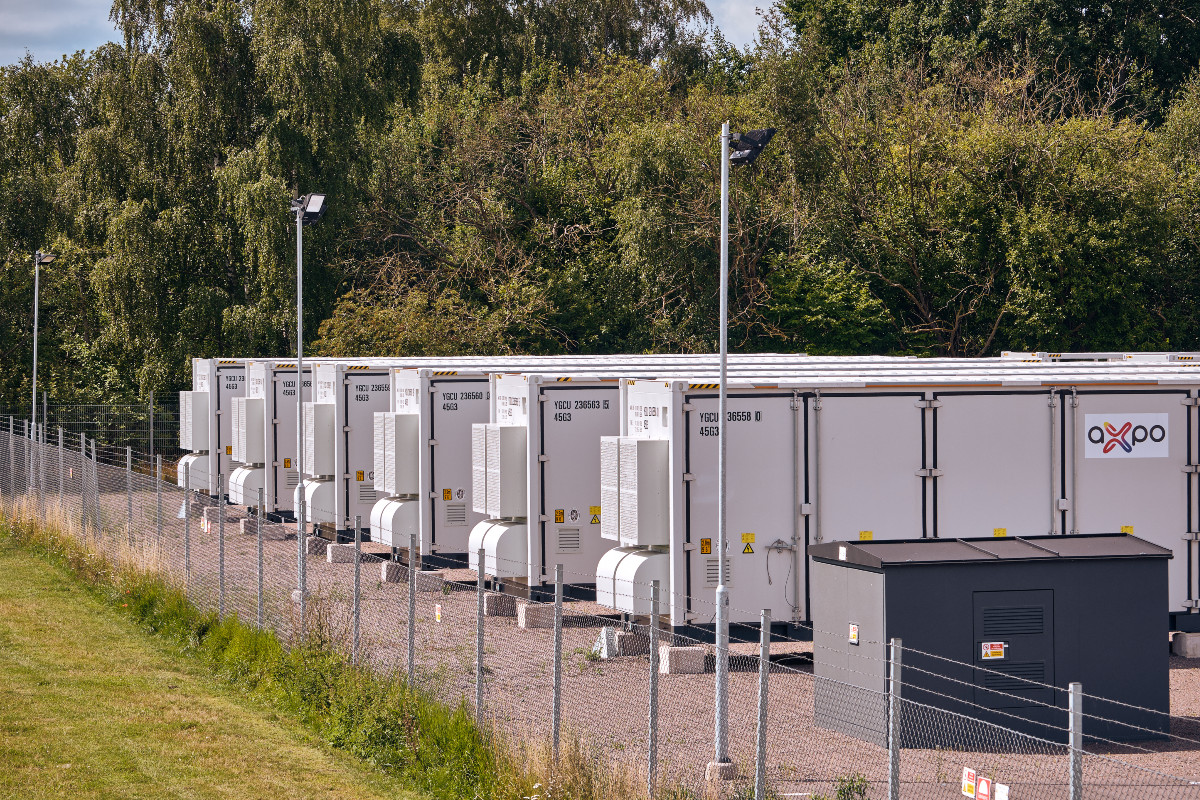
With grid constraints threatening to slow data centre delivery, Amey Karnik, Director at Ramboll, explores whether microgrids could offer operators a faster, more resilient route to power.
Data centres are powering the digital economy, but they are also intensifying pressure on an already stretched UK power grid, where energy demand now outpaces supply and new connections can take years. With climate impact rising and resilience under strain, simply plugging into the grid is no longer always enough.
Microgrids could offer one possible response to that challenge. By generating, storing and managing power locally, they can give data centres faster access to energy, improved resilience during outages, lower exposure to price volatility and a clearer route to renewables. As data demand accelerates, future-ready digital infrastructure will increasingly depend on power strategies that are smarter, faster and more resilient by design.
Decentralising energy
By decentralising their energy sources, rather than purchasing power directly from the grid, operators can gain greater clarity and control over their energy usage when relying on microgrids. This is particularly beneficial as operators can, first, build the energy capacity they specifically need and, second, gain the ability to track exactly what proportion of this usage has been generated by renewables. This, in turn, allows for greater scrutiny and more finely tuned responses to how this balances out in practice. Given ESG and sustainability credentials are of increasing importance to investors too, this is an additional benefit of setting up a microgrid.
Balancing zero-emission energy
To this end, a common misconception is that microgrids remain primarily reliant on fossil fuels for power generation. This is no longer entirely the case, as microgrids are now capable of balancing zero-emission and renewable sources with distributed generation at a far greater capacity and efficiency.
The ongoing development and diversification of renewable technologies should also support more sustainable microgrid design, and demonstrating access to these energy sources could improve the chances of securing planning permission and external investment. That said, these complementary on-site generation methods do come with their own complications, making it crucial to identify and assess these areas of vulnerability early.
While low-carbon energy sources such as solar and wind are playing an increasing role in microgrid design, their practical implementation is often limited by the physical requirements of the complementary build. Solar and wind both require significant space to scale, so where nearby infrastructure comes into the equation, it can be challenging to support large, high-density data centre loads without extensive adjacent land available. Any distance introduced between the end user and the solar or wind farm will also introduce additional transmission complexities and costs.
Fuel cells and steam turbines are a more space-efficient alternative and can deliver higher power density per square foot, with stacking fuel cell systems vertically proving an effective way of further bolstering these capabilities. If controlled properly, the environmental impact of the pressurised natural gas supplied by these utilities can be better managed and reduced than with conventional power grid sources.
Where microgrids are not completely clean, efforts can be made to control emissions, mitigate greenhouse gas levels and offset unavoidable impacts. This includes hydrogen conversion of these plants at the very upper end of the cost and time scale, carbon capture technologies that distribute any excess to off-site practices at the more practically implementable end, and also the possibility of engaging in a district heat network to address additional waste heat concerns.
Where the cost of a microgrid is a concern, a power purchase agreement with a third party can be useful in navigating this as a barrier to entry. It is also well worth establishing a strategic relationship with the relevant technology suppliers from the outset. In a market where some developers are progressing data centre schemes based on projected rather than secured power availability, setting out a credible plan to build your own power supply could help limit the long-term risks of instability and strengthen the investment case.
Challenges to be overcome?
While microgrids offer significant advantages, there are some limitations. In particular, the interconnection approval process is often lengthy, uncertain and opaque, which can lead to delays in getting microgrids operational. Indeed, fully isolating a microgrid from the main grid is often either impractical, uneconomic or both. Most real-world deployments require a permanent grid interface as a result, which introduces additional design and operational challenges.
Developing a realistic grid-connected microgrid requires careful management of bidirectional power flows, dynamic operating modes and compliance with grid codes that were not designed for hybrid systems. The procurement process also needs to be managed carefully, particularly for multi-asset microgrids, which typically require complex contracting arrangements and delivery structures.
Moreover, while microgrids do offer advantages in terms of energy resilience by reducing reliance on the grid, unlocking the benefits of this often demands redundancy, black-start capability and, in some cases, maintaining parts of the plant in hot standby, which can materially increase both CAPEX and OPEX.
Responding effectively to equipment or grid failures, meanwhile, necessitates detailed operational strategies, including prioritisation of critical loads and coordinated system responses. Designing protection schemes that work seamlessly across grid-connected, islanded and transitional states also remains technically complex and highly site-specific.
The long-term value of microgrids also needs to be carefully considered by data centre operators and investors alike. Realising the value of a microgrid requires the management of several potential revenue streams – for instance, resilience, grid services, peak shaving and decarbonisation. Adding to the complexity is the fact that technology, regulation and the market are all evolving at pace, making flexibility an essential quality for operators.
That is not to say that these are insurmountable obstacles, nor that microgrids are not a worthwhile consideration for data centre developers. Indeed, a shift in strategy from utility-purchased power to self-generated or locally managed power can give operators and developers greater control. This includes deciding the extent to which renewables are integrated, the strategies used to offset emissions and the kinds of relationships formed across industries to encourage further investment and innovation. But to achieve this, it is essential to develop a comprehensive plan that is kept under review.