
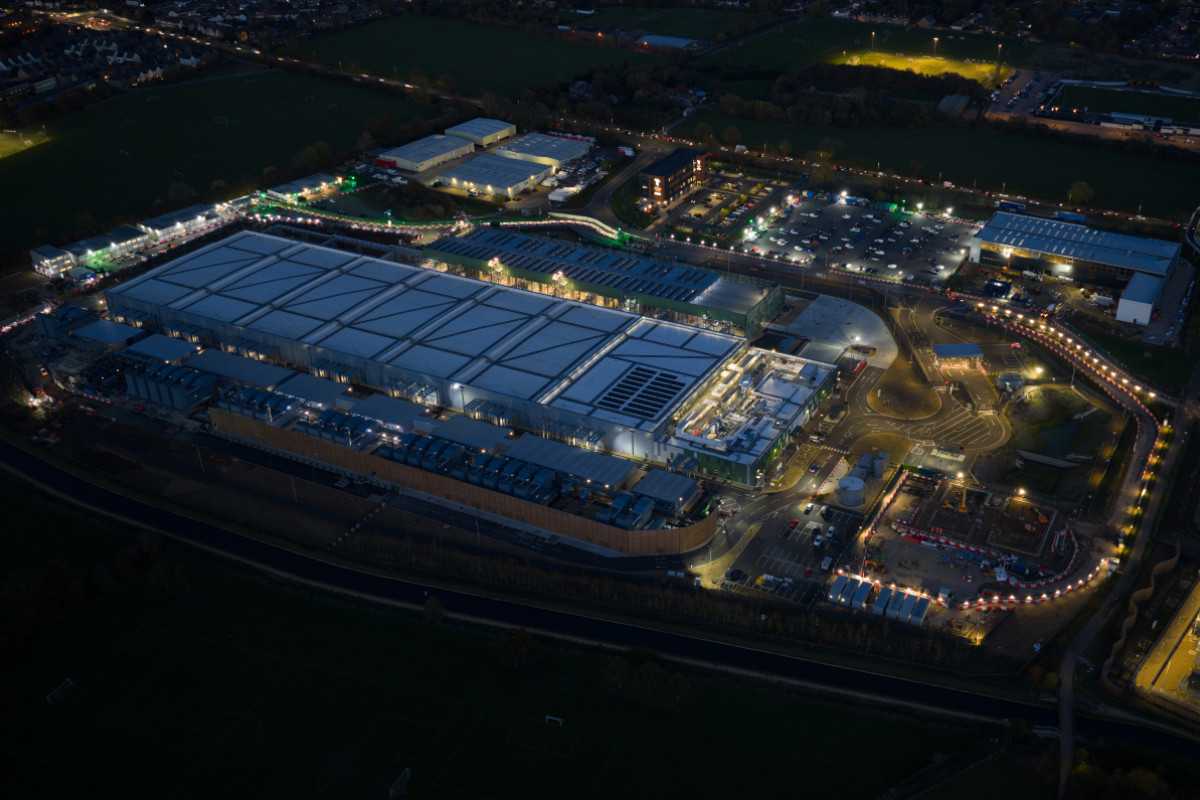
Data centre construction activity is expected to remain strong through 2026, with new analysis from Glenigan pointing to a growing pipeline of approved schemes that are due to start on site over the next 12 months.
According to Glenigan, 29 data centre projects have already secured planning permission and are expected to begin construction this year – although that doesn’t account for the latest planning applications that have just been given the go ahead – like Segro’s two projects in Slough and Park Royal, or plans for one of the UK’s largest AI data centre campuses in North Lincolnshire.
Glenigan has been tracking construction activity in the UK for some time, placing data centres under the wider office sector. The company noted that the booming growth in UK data centres has caused a significant uplift in the total office sector – with project starts valued at up to £100 million forecast to rise by 13% during 2026.
Allan Wilén, Economics Director at Glenigan, noted, “The development of data centres is expected to be a growing segment within the sector. The government is aiming to attract private sector investment in AI and recently signed a Tech Prosperity Deal, announcing a £30 billion investment to create an AI growth zone in the North East.”
It doesn’t take a genius to see the data centre boom that is occurring in the UK, with new projects popping up almost daily. There has been a surge of investment in AI, with the UK continuing to be one of the world leaders in AI development – often cited as having the third biggest AI industry, behind only the United States and China.
That growth is unlikely to slow either. While there have been talks of an AI bubble, the UK Government has thrown its full weight behind the technology – pledging to adopt AI faster than any other G7 country. To achieve that goal, Rachel Reeves, the UK’s Chancellor of the Exchequer, has announced a £2.5 billion boost in investment for quantum computing and AI development.
While £2 billion of that fund is earmarked towards quantum computing, AI will still get a cash injection from the Government. It includes a £500 million Sovereign AI Fund, which will launch next month at Wayve. That will give British companies access to funding, compute and other support to compete and succeed on the global AI market.
The funding comes as the UK Government attempts to stop homegrown tech companies from fleeing abroad. While the UK has become Europe’s biggest AI hub, with companies such as OpenAI pledging to open their largest research base outside of the United States in London, the country has a problem when it comes to growing its smaller businesses into businesses that can compete with American big tech. DeepMind, which was an early pioneer of AI, is one such example. The company was founded in the UK before being snapped up by Google for around £400 million in 2014 – an absolute bargain compared to the valuation of many AI companies now, with OpenAI reportedly valuing itself north of $700 billion.
While everyone seems onboard with the UK becoming an AI hub, there remains the question of the skills shortage, alongside longstanding issues surrounding land availability, power availability, and the planning process. A report from AECOM last month warned that demand for specialist mechanical, electrical and public health (MEP) subcontractors is outstripping supply in London, with many data centre projects forced to either wait or to stump up even more cash.
That trend is concerning given that London remains the clear focal point for much of the activity in the data centre market. Of the 29 projects expected to begin construction over the next year, seven are located in the capital.
However, the pipeline is far from being a London-only story. Some of the biggest projects in the next wave are located elsewhere in the UK, underlining how developers are increasingly looking beyond the capital for suitable sites, available power and room to scale.
And while there may be a wealth of projects getting off the ground this year, Glenigan has identified even more that are currently in the pipeline. In fact, it found a further 246 data centre projects at pre-tender stage, highlighting the scale of the pipeline still working its way through the system. Of course, not all of those schemes will make it to site on their current timetable, but the direction of travel is clear enough.