
Alex MacColl, Project Manager (EMEA) at DataMove, outlines the operational, engineering, customs and risk considerations that can make or break a cross-border relocation.
When you hear people talking about the data centre industry, the buzzwords are ‘uptime’, ‘redundancy’, ‘resilience’ and so on. What you don’t often hear spoken about are the more mundane, but nonetheless crucial, operational realities that are essential for day-to-day operations. None are more important to consider than those involved in cross-border relocations.
In recent years, cross-border relocations have grown significantly. Regulatory changes, tax jurisdictions and overseas investment have resulted in various pressures that influence operators depending on their motivations and corporate requirements. Here are some key pointers that infrastructure leads need to consider before the wheels start turning on any project.
1. Documentation: don’t get the simple stuff wrong
On 31 January 2020, the United Kingdom formally left the EU. With that has come many challenges, not least when moving corporate-owned equipment between two jurisdictions. T1 declarations are now essential, as are EORI numbers, proof of ownership, accurate and up-to-date valuations, commercial invoices and packing slips. Get any of this wrong and the entire project could be delayed.
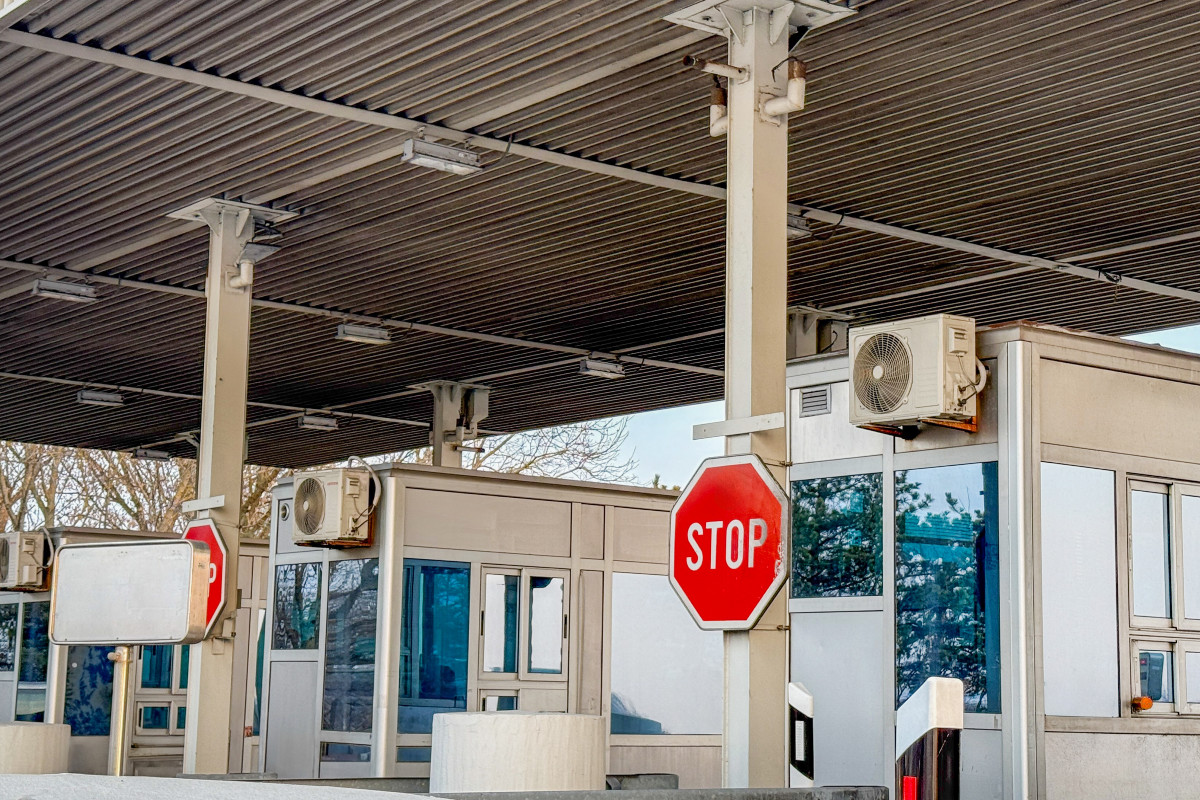
A clear example of this is the hard border between Spain and Gibraltar – a popular cross-border route for data centre hardware. If the documentation is not completed correctly, delays can be measured in days, not hours.
2. Which route? The reality of borders
It might seem simple, but it really isn’t. Whether the route is from the UK to Gibraltar, or from Sweden to Malta, there are numerous different options – all with their pros and cons. Channel Tunnel versus ferry trade-offs around cost and time, or Spanish ferries that save driving time but affect scheduling, can all have an impact. The sweet spot for arriving at the Gibraltar border is between 9.30am and 10.30am, almost guaranteeing a same-day drop-off. Arrive in the evening and things are very different. It is small nuances like this that can be the deciding factor in which week a move occurs, and precise routing is key to that.
3. Vehicle specifications and why a general carrier doesn’t always work
There are many capable general logistics outfits in Europe, but there is a good reason why, when it comes to cost- and time-sensitive data centre projects, choosing the correct specification for the requirements is crucial.
Air suspension, a climate-controlled cargo area, deadlock security, little or no branding on the vehicle, GPS and CCTV, and two- or three-driver teams all contribute to security, traceability and confidence for the stakeholders and the project at hand.
Secure, sprung flight cases rather than freight skids or cardboard; anti-static wrappings and rack jackets where necessary; loading staff who understand how to secure valuable and fragile equipment appropriately. The list goes on, but without these controls in place, mistakes – costly at best, catastrophic at worst – are potentially on the table.
4. Chain of custody: proper audit trail
A full end-to-end audit trail is non-negotiable when it comes to any data centre move – whether it is 400 yards between sites in Slough or 2,000 miles across Europe or further afield. Third-party insurers are increasingly auditing established procedures to ensure they can continue to offer coverage during a move event, while transit insurance also requires significant safeguards to be in place for any move.
In layman’s terms, the critical elements are:
First and foremost is a real-time inventory ahead of any activity. Ordinarily, this is data gathered and verified against rack elevations, but it can be done from scratch if rack elevations do not exist. What is non-negotiable is the presence and validity of the document.
Second, photographic documentation is needed before, during and after an event. This provides visible proof of the activities that have taken place.
Third, tamper-evident seals and tamper-visible packaging. These can range from colour-coded ties on flight cases to tamper-evident tapes and anti-static materials, and finally to external door seals on vehicles.
Finally, fully documented paperwork must be signed and checked at each stage: initiation, sign-off, any customs documentation, and final handover at the destination.
A combination of the above supports insurance requirements and gives stakeholders evidence that a job has been properly planned and executed. In this context, the audit trail is not just administrative; it is central to managing risk.
5. Engineering oversight: the difference between logistics and migration
Cross-border data centre moves are too often treated as logistics projects with a bit of engineering tacked on at either end. In reality, it’s the other way round – they’re engineering projects with logistics in the middle. De-racking, labelling, cabling, configuration verification – these are not bolt-on activities; they are the project. The team that loads the vehicle should be the same team that de-racks at origin and re-racks at the destination, with engineers on the ground at both sites who understand what they are handling. If these points aren’t addressed, the operator is essentially trusting that nothing important happens between switch-off and switch-on.
6. Risk management: fail to prepare…
It’s a well-worn adage, but a real one. The key is to mitigate any potential risks to the best of the team’s ability before undertaking any kind of move or migration event. Backups, verifications, contingency plans for customs delays, vehicle breakdown protocols, damage procedures, accident response and transport redundancy – the list goes on, but all are as important as the next.
Operational lessons and experience are continually building. No project is ever perfect, even if it is as simple as hitting three hours of traffic on the A26 at St-Quentin. Mitigating the risks wherever possible is the crucial element.
7. Plan, book, execute
If it can be planned or booked in advance, then that is the way to do it. Any variables that could happen on the day can be mitigated and taken care of to a better degree if the plan is concrete and confirmed.
The day, or days, of the event itself should be a simple execution – not firefighting or problem-solving.
Customs appointments and clearances, loading bay slots, security clearances for engineers, hotel accommodation, return logistics for vehicles dead-legging – the principle is simple: get these right and you are already halfway there.
Why does any of this matter?
The requirement for cross-border infrastructure change is going to grow over the next decade in response to regulatory changes, cost pressures, jurisdictional consolidation and cloud rebalancing. Relocation planning needs to combine engineering, logistics, compliance and risk management from the outset – treating these as separate priorities, or sequencing them, is where most cross-border moves come unstuck. The checklist above is the starting point, not the finishing line.