
Ian Ferguson, Director of Sales, EMEA at Iceotope, explores why repurposing underused commercial real estate could offer a faster, more sustainable route to AI-ready compute capacity.
As the rapid growth of AI and high-performance computing fuels a massive surge in data centre development, much of the world’s attention is focused on sprawling, resource-hungry projects built from the ground up. But as businesses begin to adopt AI in earnest, and inference replaces model training as the primary AI workload, they will need more compute that is closer to where data is being created and used.
Large, purpose-built data centres will continue to serve an essential role in the AI industry, but they won’t always be the most practical solution – either economically or environmentally – for many organisations.
Turning inactive real estate into data centres
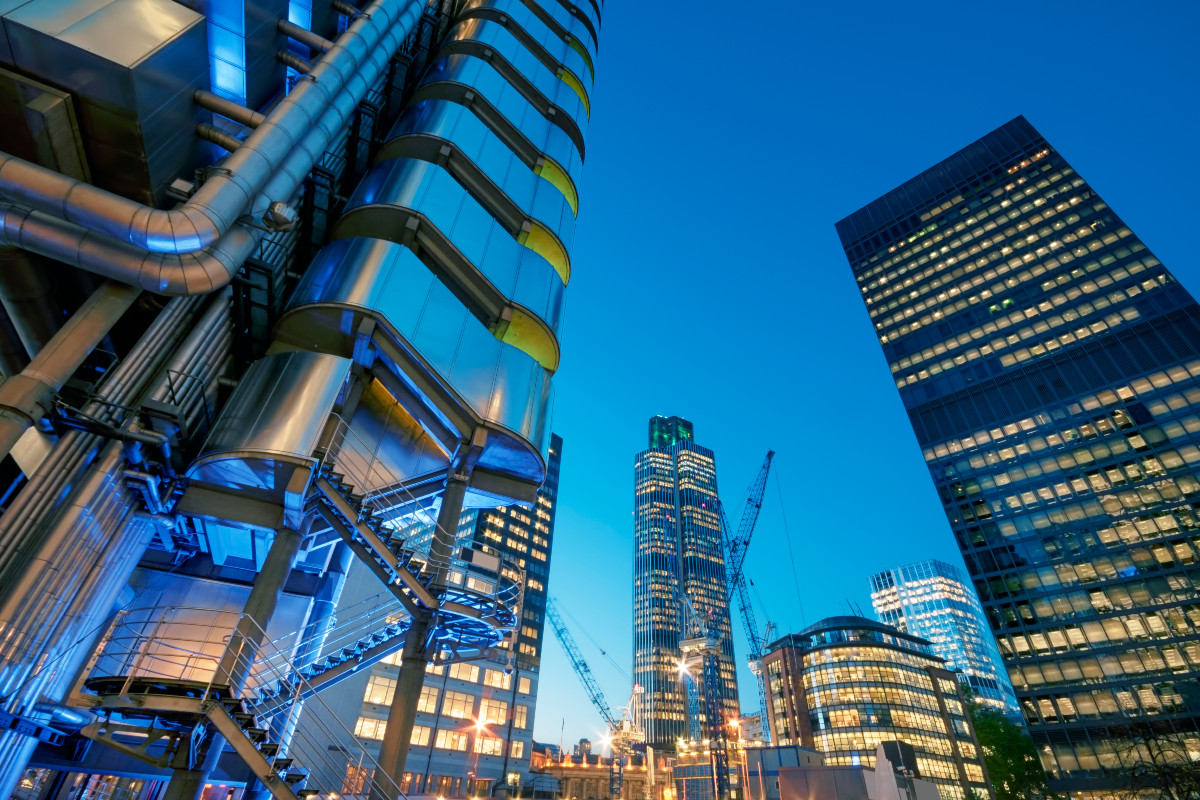
One potential alternative is the adaptive reuse of existing commercial real estate, such as unused office space, into distributed, AI-ready compute clusters. As of November 2025, the average office vacancy rate in America’s 50 largest metro areas was 18.5%, the highest level since at least 1979. Some European office markets, including Frankfurt, Paris and Madrid, reported vacancy rates of 9-13% in mid-2025.
Reconfiguring these underutilised assets as data centres presents a number of potential benefits, including lower overall costs, better operational sustainability and faster deployment. While it can take considerably less time than the 18-30 months typically required to site and commission a new purpose-built data centre, adaptive reuse is not simply a matter of rolling server racks into unused office space and plugging them in. From structural and electrical infrastructure requirements to regulatory and planning issues, and the fundamental economics of commercial real estate, there are several important considerations involved in transforming office space into useful data centre capacity.
One of the most significant is heat. AI rack densities have rapidly climbed from 30-50 kW at the outset of the decade to over 130 kW today, and are likely to reach 600 kW–1 MW by 2030. Cooling these high-density systems is a major focus of modern data centre design, particularly as the thermal challenge exceeds the effective limits of traditional air conditioning and air handling technology.
Purpose-built data centres typically address this problem with chillers and evaporative cooling towers that consume a significant amount of energy and water – one of the contributing factors in the growing public concern around data centre development.
Apart from the sustainability issues involved, that kind of infrastructure is unlikely to be a fit in an urban office environment. Industry leaders are taking note of this challenge. In his CES keynote, NVIDIA CEO Jensen Huang signalled an industry shift towards warm-water cooling as a way to reduce dependence on chillers and evaporative cooling systems. Modular, self-contained liquid cooling technology can offer a more power- and water-efficient solution for both large data centres and more constrained environments.
This makes it relevant to the adaptive reuse model. Self-contained liquid cooling systems are not only more energy efficient, they are nearly silent, produce no vibration and require significantly less plumbing and heat-rejection infrastructure. Some use little to no water, relying on dielectric fluids that transfer heat as they move through a closed loop from a rack chassis to a heat-rejection system. They also offer more flexibility in where heat-rejection infrastructure can be placed, whether in a side yard or on a rooftop, depending on the setting.
Power efficiency is crucial to adaptive reuse, since a conventional office building can require upgraded power capacity to support high-density server racks and related power supplies, storage and networking equipment. In dedicated AI data centres, cooling typically consumes 25-50% of the facility’s total energy. However, thermally efficient, self-contained, rack-level liquid cooling systems can reduce the power needed for cooling IT equipment by 40%, potentially reducing the need for grid and transformer upgrades to a repurposed office facility.
Not a one-size-fits-all approach, but that’s where modular comes in
From a structural standpoint, not every vacant office can become a data centre. Heavy server racks may exceed floor-loading capacity and require taller ceilings and wider column spacing than is common in the built environment. Modular, warm-water cooling systems that are designed to fit into standard racks can help reduce the weight of server systems and don’t require the raised flooring often used in traditional air-cooled data centres, potentially expanding the range of office space that can be repurposed.
Adaptive reuse also introduces a range of regulatory and commercial challenges that must be navigated. On the regulatory and planning front, a change of use from office to data centre frequently triggers fresh scrutiny under existing building codes, accessibility requirements and environmental permitting. Local planning and zoning rules may also impose restrictions on noise, the placement of rooftop plant and external heat-rejection equipment, and increased electrical capacity.
Commercially, the challenge lies in navigating landlord-tenant dynamics, dealing with lease remnants and strata ownership, and securing financing. Not every commercial landlord is willing to approve a highly specialised, single-tenant fit-out that might make future re-tenanting more difficult.
This is where the modular nature and design of warm-water cooling systems can be useful. By being nearly silent and producing minimal vibration, they reduce the potential for noise complaints and make external heat rejection less cumbersome to install and site. Their compact, rack-level integration and water-efficient operation can also simplify the process of gaining environmental permits and ease concerns from landlords regarding highly specialised, permanent infrastructure, making adaptive reuse more attractive as a medium- to long-term alternative to leaving office space unoccupied.
While substantive, none of these issues is insurmountable. There are already successful examples of adaptive reuse. In one European capital, a 1980s-era office building was converted to support 50 kW rack systems with warm-water cooling that did not require rooftop chillers.
Considering the increased scrutiny on, and increasing opposition to, new data centre construction, adaptive reuse of existing office space can be a meaningful part of the solution to the growing need for AI compute capacity. By strategically repurposing underutilised commercial real estate with technologies such as modular, warm-water cooling, organisations can deploy high-performance compute closer to the edge, improve operational sustainability and address some of the economic and environmental challenges associated with sprawling, purpose-built facilities.
Adaptive reuse is not a universal answer, but it is likely to become an increasingly important part of the conversation around distributed, sustainable and AI-ready data centre infrastructure.