

Ambition is too often softened, qualified, or apologised for by women in the industry. Lizzy McDowell, Director of Marketing at Kao Data, explains why that needs to change.
There is a word I have been turning over in my head since the start of this year. It is a word most men in our industry use without a second thought, while most women I know hesitate before claiming it. That word is ambition.
I have lost count of the number of conversations where a brilliant woman has told me what she wants from her career, then immediately softened it. The qualifier comes in quickly. ‘I do not want to sound full of myself.’ ‘I know it sounds a bit much.’ ‘Obviously, I am happy where I am.’ There is almost always a ‘but’ waiting at the end of the sentence, and almost always a small apology in front of it.
That apology starts early. Girls who are direct at school are described as bossy long before boys with the same instinct are described as leaders. By the time we reach the workplace, the wiring is already there. Ambition becomes something to manage, something to dress down, something to mention quietly to a manager rather than name out loud. For a sector that prides itself on building the infrastructure of the future, we seem to have inherited a strange habit of treating ambition like a confession.
You cannot be what you cannot see
The most honest answer to why so many women hold back on ambition is that they do not see enough women in the rooms they are aiming for. If you look up through a leadership team and cannot find anyone who reminds you of yourself, your sense of belonging takes a knock, without anyone needing to say a word. Being a party of one in a room is exhausting, and it is even harder to put your hand up for the next stretch role when you are already carrying the weight of being the only one.
This is not exclusive to women. Colleagues from different ethnic backgrounds, educational journeys and parts of the world describe a version of the same experience. When the visible markers of success in an industry all look one way, ambition starts to feel like something other people, usually men, are allowed to have.
The fix is not complicated, but it is slow. Senior leaders such as Eve McIlvaney at Yondr Group and Catriona Shearer at JLL are making themselves visible, taking the stage, putting their names behind ideas, and giving the next generation something concrete to point at. Every time a woman further up the path tells her story honestly, the room behind her gets a little bigger. I have watched young women in our team look at leaders like these and quietly recalibrate what they believe is available to them. That recalibration is powerful to witness and should be harnessed and encouraged.
Ambition does not have one accent
One of the most damaging myths about ambition is that it has a single sound. The loud, confident voice in the meeting. The hand that goes up first. The person who makes themselves the largest in the room. If you do not recognise yourself in that picture, it is easy to assume ambition is not for you.
In my experience, ambition wears many temperaments. The quietly analytical finance leader who builds a board pack so sharp it shifts the conversation is being ambitious. The engineer who writes a thoughtful LinkedIn piece on a problem most people are pretending not to see is being ambitious. The early-career colleague who asks for a stretch project rather than waiting to be offered one is being ambitious. None of them are shouting, but all of them are reaching and preparing to step outside of their comfort zone in order to succeed.
What sits underneath every version is a strong sense of why. If you know why you want what you want, whether that is for your family, your community, your independence, or simply the version of yourself you are working towards, you can withstand almost any how. The women I know who go furthest in this industry are not the ones with the loudest voices. They are the ones whose reasons are clearest to themselves.
Supporting ambition is a leadership skill
It is one thing to own your own ambition. It is another to make space for somebody else’s. The two are connected, and the second is often where senior leaders quietly fall short.
Supporting ambition shows up in small, unglamorous ways. It looks like listening properly when a colleague shares a half-formed idea, rather than rushing to improve it. It looks like helping someone shape an aspiration into a tangible plan with a date attached. It looks like trusting a junior colleague with something important and resisting the urge to take it back when the timing gets tight. Most of all, it looks like passing on the opportunities you no longer need, rather than holding them as proof of your own seat at the table.
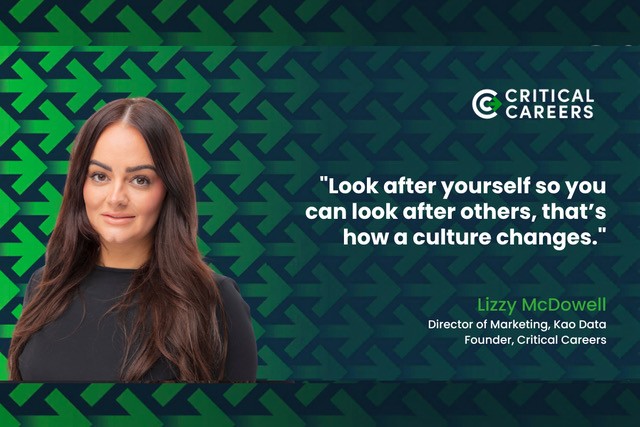
I keep coming back to a simple idea here. Look after yourself so you can look after others. Personal ambition is usually individual by nature, but in a healthy team, it does not stay that way for long. The fruits of one person’s ambition become the example that gives the next person permission. Put your own oxygen mask on first, then pull others up. That is how a culture changes.
Permission is the missing ingredient
If I could change one thing about how our industry talks to women at the start of their careers, it would be the permission piece. There is nothing wrong with wanting to do your best, wanting to achieve, wanting the title, the salary, and so on. There is nothing wrong with wanting more responsibility, more reach, more impact. There is nothing wrong with being hungry. We praise these qualities relentlessly in our customers, our products and our investors. It is strange that we still flinch when we see them in our own people.
The truth is that digital infrastructure cannot afford a workforce that whispers about ambition. The build-out ahead of us is enormous, the demands are unknown, and the talent gap is widening. We need people who want to lead, want to build, and want to set the direction. The women who have been quietly carrying that drive for years deserve to be the beneficiaries of what comes next.
Critical Careers will keep telling these stories because the more we hear ambition spoken plainly, in different voices and different temperaments, the less it sounds like a dirty word. It starts to sound like the industry is genuinely moving forward.
See you next month.