

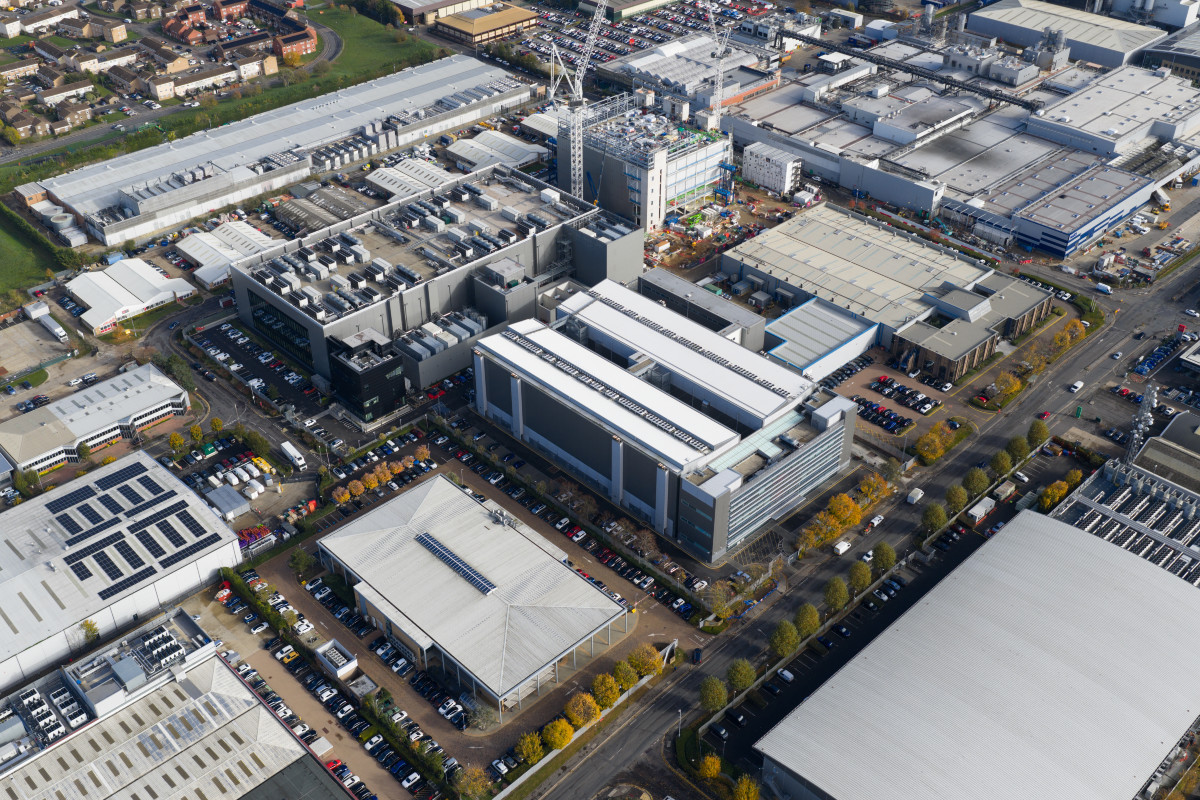
Adam Eaton, CEO of VIRTUS Data Centres, explains why outdated assumptions around water, power, land use and location are holding back a more productive conversation about the UK’s digital infrastructure.
There is a productive conversation to be had about data centre development in the UK. It would cover grid investment, planning reform, regional economic strategy, workforce development and the role of digital infrastructure in the country’s industrial future. That conversation is happening in some quarters, and it is generating useful policy thinking. It is also consistently interrupted by a set of objections that rest on outdated assumptions, and until those assumptions are properly addressed, the debate will keep returning to the same unproductive ground.
The misconceptions are familiar to anyone working in the sector. Data centres consume large amounts of water. They strain the grid and run on dirty energy. They compete with housing for land. They can only operate in London.
Each of these claims contains a kernel of historical truth that has long since been overtaken by how the industry actually operates. The gap between perception and reality has real consequences for planning decisions, investment timelines and public support for development that the UK genuinely needs. techUK modelling suggests the sector could deliver an additional £44 billion in gross value added and more than 58,000 jobs between 2025 and 2035 if the right conditions are in place. Getting the debate onto the right ground is a precondition for those conditions materialising.
The water question
Water consumption is the objection that generates the most heat relative to the evidence. The concern originates from an era when evaporative cooling was the dominant technology and large facilities did consume significant volumes of water in the process. That is not the industry that exists today.
Modern facilities overwhelmingly use closed-loop systems that recycle cooling water with minimal top-up requirements, or air-based and hybrid cooling approaches that use no process water at all. More than half of UK data centres now operate with waterless or highly efficient methods. The volumes consumed by those that do use water are, in most cases, comparable to those of a local leisure centre swimming pool rather than an industrial abstraction point.
This matters because water objections are appearing with increasing frequency in planning processes, sometimes in areas where the local water table is not under meaningful stress. Operators are having to spend time and resources countering claims that do not reflect current operations, which delays projects and absorbs capacity that could be directed at genuine environmental challenges. The planning system would benefit from updated guidance that reflects how cooling technology has actually developed.
Power and the renewable energy reality
The grid burden argument is more substantive than the water one, and it deserves a more careful response. Data centres do place significant demand on electricity infrastructure, and the growth of AI workloads is intensifying that demand. The connection queue problem in the UK is real, and the reforms introduced in early 2026 to prioritise strategic projects and clear speculative applications are a necessary response to a genuine problem.
The high-carbon characterisation is where the argument breaks down. The data centre industry has made a decisive shift towards renewable energy procurement over the past several years, driven by a combination of sustainability commitments, customer requirements and the commercial logic of long-term price certainty. Long-term power purchase agreements (PPAs) with offshore wind and solar generators are now standard practice among leading operators, and the effect has been to make data centres one of the more significant demand-side enablers of new renewable capacity coming online.
The dynamic here is worth understanding clearly. Renewable energy projects require long-term revenue certainty to secure financing. Data centres, as large, predictable, continuous energy consumers, are well placed to provide that certainty through multi-year PPAs. In practical terms, data centre growth and renewable energy development are mutually reinforcing rather than in tension. An industry characterised as a carbon liability is, in many cases, directly financing the clean energy infrastructure the grid needs while generating substantial economic value in the process.
Land use and the brownfield opportunity
The ‘homes versus data centres’ framing is the misconception with the least evidential foundation, and it persists largely because it is politically convenient rather than because it reflects how development actually works. Data centre operators are not competing with housebuilders for the same sites. The industry has adopted brownfield and former industrial land as its primary development model, for reasons that are both practical and strategic.
Former factories, redundant power stations and disused industrial facilities offer large footprints, existing grid connections, established road infrastructure and planning histories that make them more suitable for data centre development than for residential use. Transforming these sites delivers economic regeneration without displacing housing. In Slough, Europe’s largest data centre cluster has replaced declining manufacturing jobs on a near one-to-one basis while generating significant local business rates. The planning system’s own preference for brownfield development aligns with where the industry wants to build, and the conflict that dominates public debate largely does not exist on the ground.
Where genuine land-use tensions do arise, they tend to be localised and resolvable through thoughtful site design and community engagement. Living roofs, landscape integration, biodiversity net gain commitments and meaningful consultation with local stakeholders are all tools that responsible operators use to address legitimate concerns. Government AI Growth Zones explicitly promote data centre development alongside broader economic priorities, recognising that digital infrastructure complements rather than displaces community needs.
Regional development and the London assumption
The assumption that data centres are a London phenomenon is one that the market itself is rapidly disproving. Greater Manchester, South Wales, the North East, Lincolnshire and Scotland are all seeing genuine investment activity, driven by power availability, cooler climates that support efficient operations, lower land costs and active support from regional and devolved governments.
The economic case for regional development is strong. Data centre campuses create construction employment over multi-year build programmes, long-term operational roles in engineering and technology, and supply chain activity that extends well into local economies. For regions that have experienced sustained deindustrialisation, a large-scale data centre development on a brownfield site represents one of the more credible paths to high-value, long-term economic regeneration available. The broader digital economy benefits compound over time as AI firms, cloud providers and research institutions cluster around reliable compute infrastructure, amplifying innovation and productivity across adjacent sectors.
The constraint on regional development is not appetite. Operators are actively seeking sites outside the South East, partly because the Greater London market is competitive and land and power costs are higher, and partly because regional locations offer genuine operational advantages. The constraint is the pace at which grid connections, planning decisions and supporting infrastructure can be delivered. Addressing those constraints in regional markets should be a priority for the industrial strategy conversations that are currently underway.
The debate the industry needs
None of this is to suggest that data centre development is without legitimate challenges. Grid investment, energy pricing, planning capacity and workforce development are all areas where the gap between current reality and what the market needs is significant. These are the conversations worth having, and the industry is ready to have them.
The misconceptions about water, carbon, land use and geography are a distraction from that agenda. They consume time, resources and political attention that could be directed at the structural enablers the sector actually needs. With billions in private investment committed, a renewable energy procurement model that is actively financing new clean capacity and a brownfield development approach that regenerates rather than displaces, the industry has earned a debate that reflects its actual record. Correcting misconceptions is not a communications exercise. It is a precondition for the policy progress the UK needs to make.