
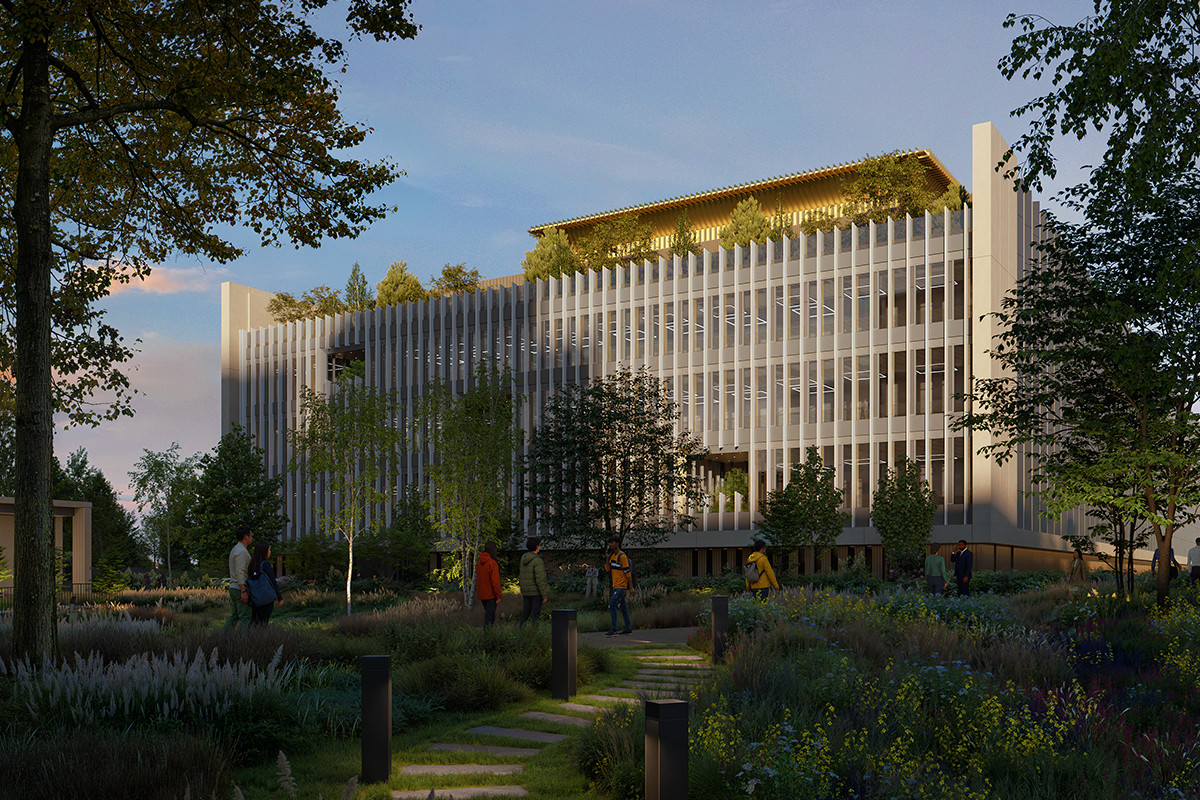
A new CyrusOne data centre has been approved in Southall, West London bringing another major digital infrastructure project to the area at a time when the capital’s data centre pipeline is facing growing scrutiny over power availability.
The scheme, which will be built on the former Honey Monster Food Factory site on Bridge Road, was approved by Ealing Council’s planning committee on July 17. It will see the vacant brownfield site redeveloped into a four-storey data centre with more than 52,000 sqm of floorspace.
While the redevelopment will bring a long-empty industrial site back into use, the approval comes amid wider questions over how London’s expanding data centre sector will be powered. West London has become one of the UK’s most important data centre clusters, but electricity capacity has become an increasingly contentious issue, with some housing schemes in the region previously delayed because of constraints on the local grid.
Ealing Council has insisted that the Southall facility will not draw on existing local grid capacity.
A spokesperson noted, “Electricity capacity is a recognised issue across West London and was considered through the planning process. Applicants are required to demonstrate the necessary utility infrastructure can be provided to support a development and any required upgrades are subject to agreement with the infrastructure providers.
“Electricity capacity will not be coming from the existing local grid and applicants are required to source and reserve this outside of the existing grid capacity.”
If the data centre will not be drawing from existing local grid capacity, how exactly will it be powered? Well, part of the solution will include a 7,000 sqm photovoltaic façade on its southern elevation, effectively creating a large solar wall that will help meet some of the building’s energy needs. However, as with most hyperscale facilities, onsite generation is unlikely to be the main answer to the site’s long-term power requirements.
That’s why in addition to onsite generation, CyrusOne will also be sourcing electricity from elsewhere. Emma Fryer, Director of Public Policy for Europe at CyrusOne, noted, “We are acutely aware of the electricity capacity constraints across west London. We have therefore secured our own power supply from elsewhere, meaning that no additional power constraints will be placed on the local network. Our external power sources are all renewable.”
East London residents will be relieved that there won’t be further constraints on its local grid capacity, as the Greater London Authority has previously said that the amount of data centre capacity already requested in London’s grid connection queue is around 10 times the capacity currently used by existing data centres in the capital. It’s likely not all the proposed data centres will be built, however.
The Southall decision was made the day before new guidance on data centres was published as part of the draft London Plan. The guidance is designed to balance the economic benefits of new data centre development with environmental and infrastructure impacts, although Ealing Council noted that the draft plan had not yet been adopted at the time of its decision making.
The council commented, “the application was determined against the planning policies and material planning considerations that applied when the decision was made”.
A spokesperson added, “Ealing Council supports a coordinated approach to planning for data centres, electricity infrastructure, housing and economic growth, ensuring that development is aligned with wider community, environmental and economic objectives.”
CyrusOne hopes that now that it has secured planning permission work can get underway at the beginning of next year. If all goes to plan, it hopes to have the campus open by 2030.