


The Green Party of England and Wales has called for a moratorium on most new data centres in the UK, echoing calls from the party’s Scottish counterparts.
Party leader Zack Polanski wants large new developments paused, with an exemption for smaller, local-scale facilities. The party is also calling for mandatory reporting of water and electricity consumption, tougher environmental standards and greater community involvement in planning decisions.
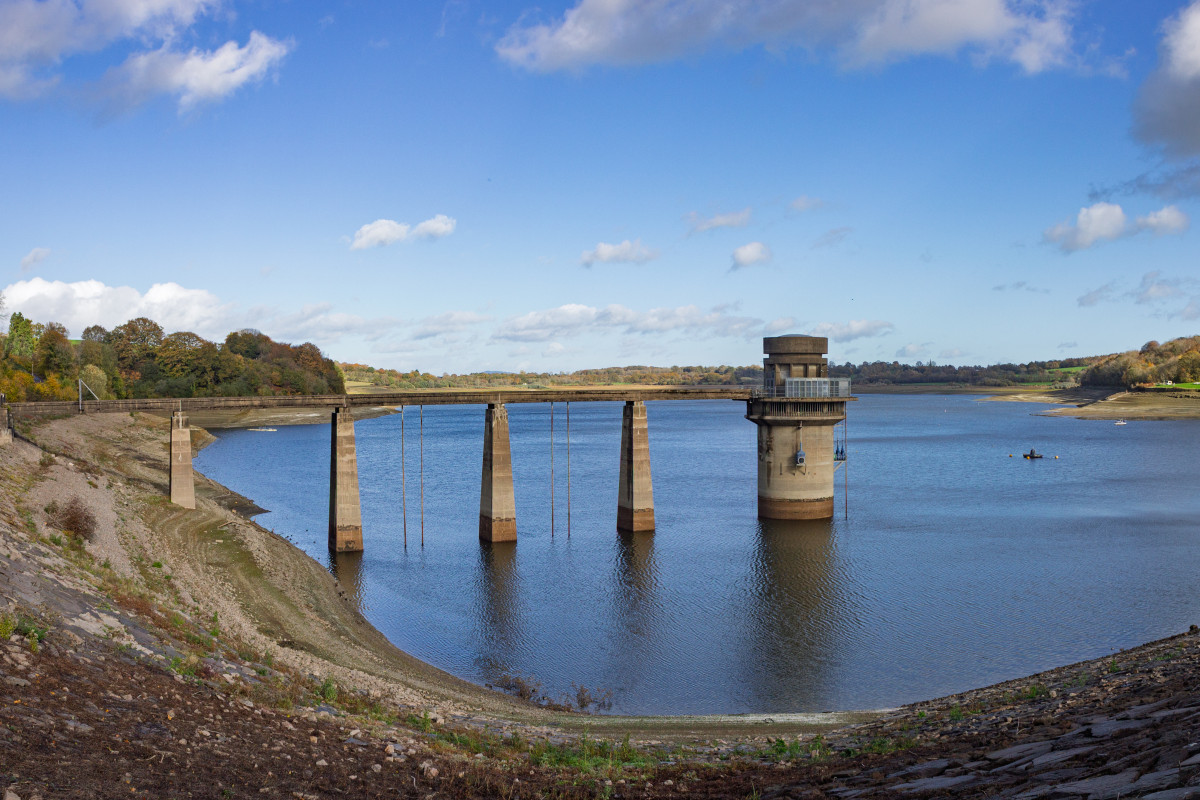
The intervention comes as much of England remains under significant water pressure. As of August 27, 71% of the country by land area was classified as being in drought, average reservoir storage had fallen below 60%, and around 30 million people were subject to temporary water-use restrictions.
While the Government has rejected the proposed moratorium, arguing that stopping development would damage jobs and national security, concerns about the availability of water for future projects are increasingly being echoed by its own environmental regulator. That could lead to new restrictions for data centre developments.
Water availability is becoming a development constraint
The Environment Agency’s National Framework for Water Resources, updated a day before the Green Party intervention, warns that large data centres can consume millions of litres of water a day, with demand rising during warmer periods.
Actual consumption varies substantially according to facility size and cooling technology, but the regulator says water availability should be considered when sites are being planned rather than assumed to be available later in development.
Neither public-water supply nor direct abstraction is guaranteed. Some catchments are already closed to new abstraction, while some water companies have refused applications from data centres where sufficient supply could not be provided.
That could become a bigger constraint as the development pipeline grows. The Environment Agency expects a rapid increase in the number of data centres in England, with many potentially being built by 2030 and before major strategic new water resources come online.
But data centres aren’t exactly the cause of England’s current drought – after all, they can’t exactly be blamed for the hot weather nor can they be blamed for the lack of new reservoirs being built by the UK’s private water companies.
Additionally, they’re not exactly water-hungry compared to some industries. Government evidence submitted to Parliament says analysis supporting the Environment Agency’s 2025 framework estimated annual water consumption of 1,125 megalitres across 200 data centres in England – less than 1% of national non-household consumption.
While that’s not exactly the water-hungry monster that the data centre industry is portrayed to be, the worry is that the demand is heavily concentrated. Of the 50 highest-consuming facilities, 38 were in the South East, while estimated data centre water consumption in the region increased by 170% between 2021 and 2025.
There’s also a double-edged sword. As temperatures rise, increasing the need to further cool components within the data centre, so too can water consumption . That adds further pressure on water supplies, as that extra need for water falls at the same time as the UK experiences a drought. In fact, the Government’s own evidence has identified a clear summer peak as hotter weather increases cooling requirements.
But there is a way around that for new data centres. That’s because cooling design can make a substantial difference when it comes to how much water a facility actually requires. A 2025 techUK survey of 73 data centre sites across England found that 51% used waterless cooling, while 64% consumed less than 10,000m³ annually. They could act as a blueprint for the industry’s future growth if the UK continues to grapple with water shortages.
Until then, however, the Environment Agency is asking the industry for better consumption data to help it accurately model and predict how much water the new fleet of data centres popping up across the UK will actually need. So far, it has stated it’s encountering significant barriers when trying to obtain that data.
What is the Green Party saying?
The Green Party of England and Wales is trying to make the argument that the industry’s water usage is a serious concern, and could lead households across the UK without water as they receive priority under the sector’s Critical National Infrastructure status. That’s certainly an emotive picture to paint, but doesn’t quite pass the sniff test.
In fact, the Government has disputed that interpretation, noting that data centres would receive greater support during critical incidents, they wouldn’t necessarily get preferential access to utilities – such as power or water. In fact, during the CNI announcement, it was noted that the sector would receive Government support during incidents including cyber attacks, environmental disasters and IT outages – it did not mention that they would get priority access to water over an old people’s home or other residential addresses.
Of course, there are separate policies that do prioritise AI infrastructure for access to utilities. AI Growth Zones receive enhanced access to power and planning support, while the Government has said designated zones will be given priority access to available grid capacity.
But water remains part of that process. Applicants for AI Growth Zone status must demonstrate sufficient access to water to support at least 500MW of AI infrastructure and provide details of wastewater-discharge arrangements.
Opposition to data centres is growing, but the industry is fighting back
Calls for tighter restrictions are not confined to the Green Party. In August, a Parliamentary petition called for a moratorium on data centres and BESS projects outside designated AI Growth Zones, citing concerns around farmland, communities and environmental impacts. That petition came from a sitting Liberal Democrat councillor, now the Green Party of England and Wales is jumping on the anti-data centre bandwagon.
But the prospect of halting development has prompted pushback from the data centre sector.
Gary Bourton, CEO of QiO Technologies, argued that the focus should instead be on improving how efficiently existing and future facilities use their available power.
He noted, “The question shouldn’t therefore be whether we need data centres, but how we ensure they operate as efficiently and sustainably as possible.
“At a time when grid capacity is constrained and demand for compute is accelerating, operators need to get more from the infrastructure and power capacity they already have. Reducing unnecessary energy consumption while maintaining performance and resilience must become a priority.”
Mark Pestridge, Managing Director of Telehouse Europe, similarly argued that responsible development would be preferable to stopping projects altogether.
He commented, “A temporary pause on new data centre development would be a short sighted and potentially damaging response. A blanket freeze risks weakening the UK’s digital infrastructure.”
He called instead for greater transparency, public education, earlier community engagement and continued improvements in efficiency.
The Environment Agency is not advocating a moratorium either. But its latest assessment makes clear that rapid data centre growth cannot be considered separately from the availability of local water resources.
For those developing new data centres, that increasingly means establishing whether a site can support its long-term water requirements alongside the more familiar questions of land, power and planning.