
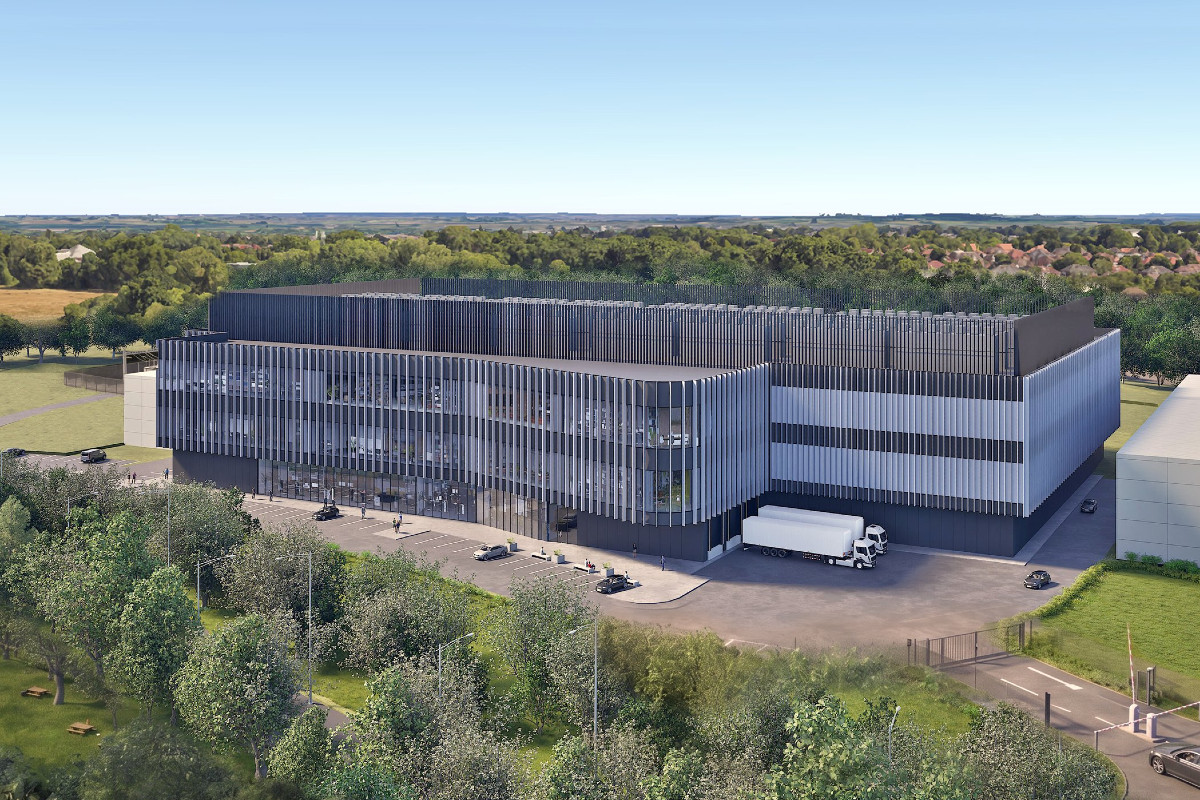
A proposed 72MW data centre near Reading is planning to use natural gas fuel cells as its primary source of electricity while it waits for additional grid capacity.
Plans submitted to Wokingham Borough Council would see three office buildings at Thames Valley Park in Earley demolished and replaced with a data centre providing up to 72MW of IT capacity.
The facility could require around 110MW of electricity at peak demand once cooling and supporting infrastructure are included, and yet it currently has only 1.8MW of grid capacity available. That’s quite the shortage.
It’s why the developers plan to work around the grid constraints and instead install 49.9MW of solid oxide fuel-cell capacity, which should provide around 42.55MW of effective supply for the first phase.
Unlike conventional standby generators, the fuel cells would provide primary power to the data halls. They would initially run on natural gas, with separate generators providing emergency backup.
Short-term measure, or long-term planning?
The data centre industry is keen to get building in the UK, but developers continue to face significant constraints when it comes to securing a grid connection. In fact, the developers behind this data centre in Reading encountered that exact problem.
While a 60MVA grid connection has been secured from SSEN, the reinforcement required to deliver it is not expected until 2037, and even then, the development may still need fuel cells.
The Energy Strategy models one scenario where the 60MW grid supply is combined with continued fuel-cell generation. The applicant’s preferred option is to move entirely onto grid electricity, but that would require around 110MW of capacity, which has not yet been secured.
Grid availability could therefore determine both when the site reaches its full 72MW IT load and how long natural gas remains part of its power strategy.
The project website says construction could take place between 2027 and 2031, with operations beginning from 2031.
It’s not the first data centre developer to consider a different approach to getting a site up and running before grid capacity is secured. Nscale has also considered solid oxide fuel cells for its proposed £2 billion Essex data centre after delays to its planned 90MW grid connection.
Gas comes with a carbon cost
According to the modelling available to Wokingham Borough Council, if the data centre is ultimately forced to retain natural gas fuel cells over the longer term, it would result in substantially higher emissions than moving fully onto the grid.
A complete transition to grid electricity is modelled as reducing lifecycle operational emissions by around 75% compared with retaining the fuel cells on natural gas.
Biomethane and hydrogen are identified as possible future alternatives, but neither is secured.
The decision to source the electricity needed to power the site from alternative means should showcase that this latest development is serious about getting built, but unfortunately that’s not the case for every data centre proposed.
In fact, one of the reasons grid capacity is so tight is because of the sheer number of speculative developments having been submitted in recent years. That’s why Ofgem has proposed measures to remove speculative data centre projects from the connection queue. Those measures could still have a material impact on viable schemes, however, especially if they’re required to pay a hefty connection fee upfront.
That’s why some data centres are exploring alternative options, and while it may not be ideal – it could be one option to ensure the UK can actually get the data centre capacity it needs to ensure it doesn’t get left behind in the global race for compute.