
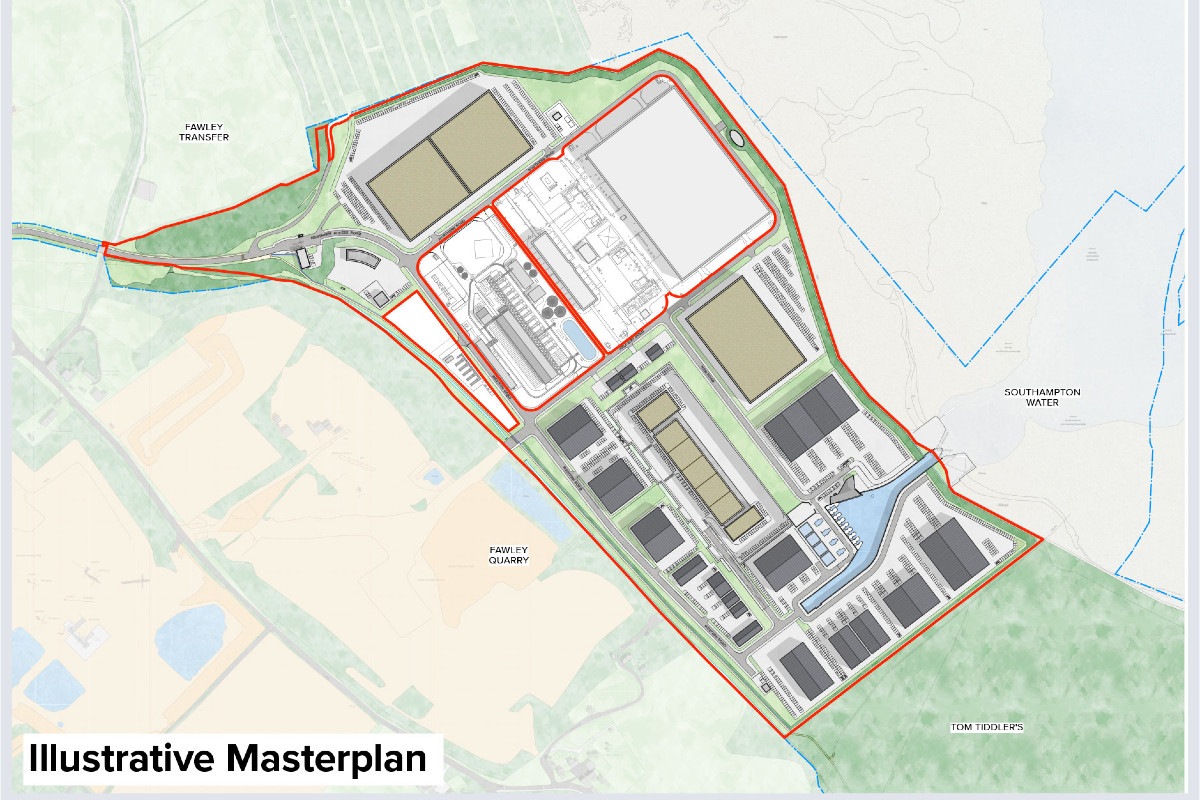
Fawley Power Station could soon become the latest UK energy site that will host data centres, as the developers behind the site outline potential plans for regeneration.
Located in Hampshire, Fawley Power Station has been inactive since it was decommissioned back in 2013. Since then there have been several plans outlined for the site, including a new town that would play host to 1,500 homes, and now a mixed-use development that would include data centres and other commercial real estate.
The plans have been revealed by Fawley Waterside, which has proposed using the site to drive employment in the area – although it should be noted that the data centre plan is just an idea at this moment in time, as no operator has signed on to lease any space.
It’s certainly an interesting idea, however, and it’s not exactly novel. In fact, it follows a wider shift in data centre development across the UK where operators are opting for locations where there was once a power station.
For example, Amazon is pursuing a four-building data centre development at the former Didcot A Power Station in Oxfordshire, while CX Tech recently submitted plans for a 1GW campus next to the former Chapelcross nuclear site in Scotland.
It’s not exactly surprising to see why these sites would be ripe for data centre development, as they already include significant power infrastructure – with existing substations and transmission equipment already in place. That could make it far easier for any proposed data centre to get the grid connection it needs.
In fact, while the power station has been decommissioned, the site still plays host to a 400kV National Grid substation. National Grid and SSEN are also actively working on infrastructure around Fawley intended to strengthen the network and increase capacity across the Solent area.
That’s exactly why Fawley Waterside has decided to pivot away from a residential-led development. It has already put the work into showcasing what a data centre on the site could look like, with the firm noting that it has already commissioned modelling on rooftop data centre cooling and its potential noise impact on nearby homes. It has also considered water use, saying any water-cooled facility would be highly likely to rely on a closed-loop system rather than salt water or additional local water supplies.
Whether that will be enough to attract an operator remains to be seen, however. There is no shortage of data centres being proposed, but whether they actually get built is another story. For Fawley, it’ll first need to overcome the planning hurdle. For that, an outline planning application should be submitted in late autumn, with a decision targeted for spring 2027.