

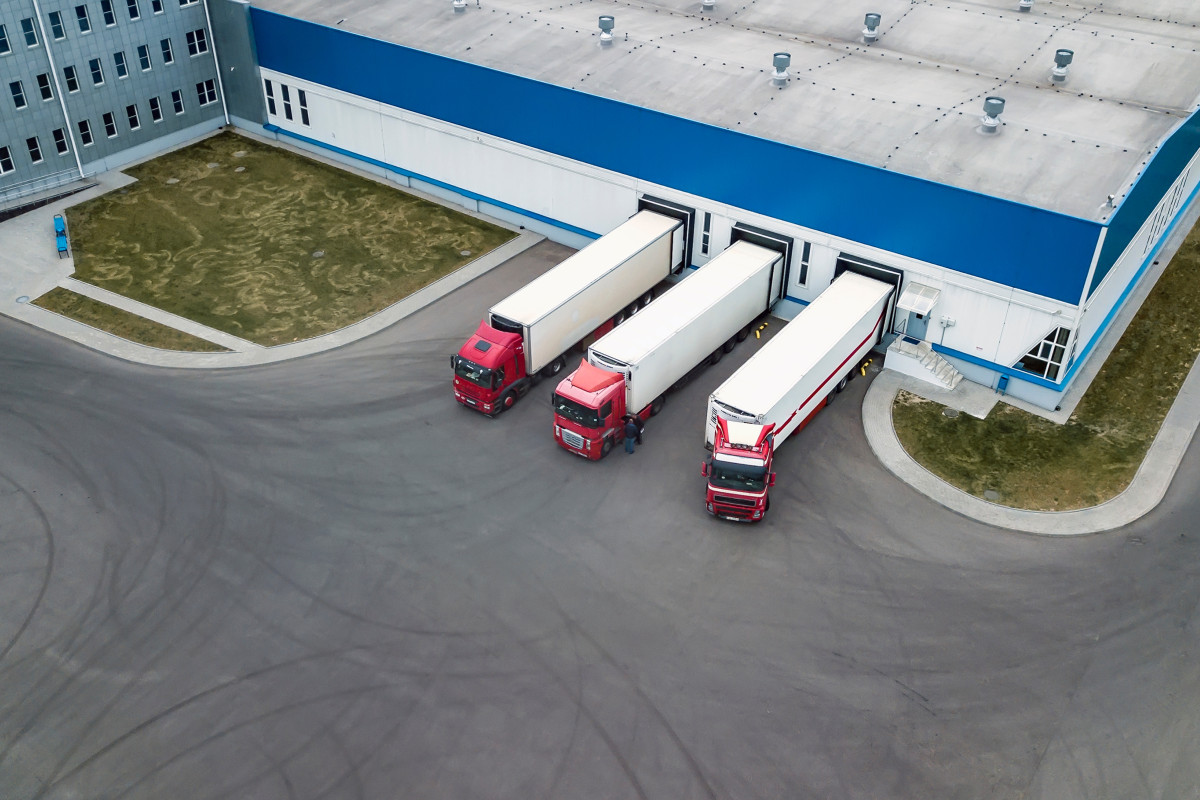
Keith Young, Vice President Data Centre Services at Arvato, explains why logistics strategy is becoming increasingly important as data centre developers race to bring new AI capacity online.
The rapid growth of artificial intelligence is driving unprecedented investment in digital infrastructure. In the UK, government ambitions to accelerate AI adoption and expand domestic computing capacity are increasing demand for the data centres and supporting infrastructure needed to power this growth. This creates an opportunity for regions that can offer the right combination of land, energy, connectivity, skills and supply-chain capability.
However, these ambitions are coming up against grid constraints and lengthy connection timelines, making ‘time to power’ a critical consideration for UK data centre projects. With developers competing for limited capacity alongside other power-intensive industries, the ability to bring infrastructure online quickly and reliably is becoming increasingly important.
While discussions around AI infrastructure often focus on the availability of land and technology, or resources such as power and water, logistics is becoming an increasingly important part of the equation. As data centre development accelerates, companies are rethinking how supply chains, inventory, transportation and deployment services support infrastructure growth. This is particularly important in the UK, where constrained sites, complex planning requirements and pressure on existing infrastructure can make project coordination more challenging.
This shift is changing logistics strategy in several important ways.
Speed-to-deployment is becoming increasingly important
AI infrastructure projects are moving at a different pace from traditional development cycles. Organisations are under pressure to bring new capacity online quickly, creating demand for logistics models that can support faster deployment timelines.
Power availability may determine whether a data centre project can proceed, but logistics will influence how quickly it can become operational once approvals and grid access are secured. Delayed equipment, fragmented supply chains or poor coordination between suppliers and contractors can all add time and cost to an already complex development.
As a result, logistics providers are being asked to do more than move products from one location to another. They must help ensure critical equipment is available when and where it is needed, while maintaining security and reliability throughout the process. That can include coordinating equipment from multiple international suppliers, managing specialist inventory, sequencing deliveries around construction schedules and supporting installation and commissioning.
A recent data centre build programme illustrates how an off-site logistics hub can relieve pressure on space-constrained construction sites. Establishing a dedicated 32,000 sq ft warehouse in London enabled materials to be managed centrally. Combined with stronger inventory controls, this helped recover and reconcile a seven-figure value of equipment that had not been accurately recorded. It also improved stock visibility and helped ensure critical components were available when required for deployment.
The ability to support accelerated deployment timelines is becoming more significant as infrastructure investment continues to grow. As data centre development expands beyond established clusters, logistics networks are evolving alongside it. Rather than relying solely on centralised distribution models, companies are increasingly evaluating how regional logistics hubs can support emerging data centre markets.
As the UK looks to spread AI-led growth across different regions and reduce pressure on locations where power, land and infrastructure are already heavily constrained, a more distributed data centre landscape will require logistics capacity that can serve both established sites and new regional clusters.
Facilities located near major infrastructure corridors can help reduce transit times, improve responsiveness and position critical inventory closer to deployment sites. They can also provide secure staging space for high-value equipment until a site is ready to receive it, helping to prevent construction delays without adding congestion or unnecessary inventory at the development itself. This reflects a broader shift towards logistics networks designed around proximity, flexibility and speed.
Hyperscalers have new expectations for logistics partners
The needs of hyperscalers and AI infrastructure companies differ significantly from those of traditional logistics customers. Data centre environments often require specialised handling, secure storage, coordinated deliveries and services that support equipment throughout its lifecycle.
Servers, cooling systems, power equipment and other high-value components may require controlled access, full chain-of-custody visibility and precisely timed delivery. As AI increases rack densities and changes data centre power and cooling requirements, logistics providers will also need to adapt to larger, more specialised and increasingly complex infrastructure.
As a result, logistics providers are increasingly expected to manage complex infrastructure deployments while meeting stringent operational and security requirements. In the UK, they must also navigate dense transport networks, site access restrictions and differing local planning and operational requirements. With continued growth in AI infrastructure investment, these expectations are becoming a more prominent part of the logistics landscape.
Logistics is becoming part of infrastructure strategy
As AI investment accelerates, logistics is increasingly embedded in broader infrastructure planning. Organisations are evaluating not only where to build, but also how to support deployment, maintenance and future expansion.
For UK developers, this means considering logistics alongside power, planning and connectivity from the earliest stages of a project, rather than after construction has begun. Logistics cannot solve the UK’s grid constraints, but it can help organisations make better use of the deployment window once capacity becomes available.
The ability to position inventory strategically, manage complex delivery requirements and enable faster deployment timelines is becoming an important consideration in how infrastructure projects are designed and executed. It will also be relevant throughout the data centre lifecycle, from initial construction and equipment replacement to refurbishment, returns and secure decommissioning.
The next phase of AI growth will require more than computing power and physical facilities. It will also depend on logistics networks that bring that infrastructure online efficiently and at scale. If the UK is to translate its AI ambitions into sustained investment and regional growth, power and logistics strategies will need to develop together.