
Daniel Thorpe, Head of EMEA Data Centre Research at JLL, explains why developers hoping to capitalise on quantum growth will need to get to grips with entirely new demands around power, cooling, location, and build complexity.
The UK is seeing a concerted focus on the future of advanced computing, marked by recent government actions aimed at bolstering its position in the quantum and AI sectors.
Initiatives such as the proposal to streamline the Global Talent Visa for quantum and AI researchers, alongside the recent £36 million government investment to upgrade Cambridge’s Dawn AI supercomputer to Zenith, collectively point to a strategic commitment. This dual emphasis on attracting specialised human capital and enhancing critical infrastructure is likely to influence real estate development and operations.
As our Future of Quantum Real Estate report suggests, this evolving landscape presents considerable challenges and opportunities, with quantum investment potentially reaching $10 billion annually by 2027 and $20 billion by 2030. Developers engaging with the sector early may be better placed to understand where the real estate implications are likely to emerge first.
This effort to cultivate quantum and AI talent, combined with the establishment of advanced computational infrastructure, is also expected to encourage a clustering effect.
Our report highlighted that leading quantum markets typically share common characteristics: robust academic institutions, existing quantum facilities, strong government backing, and a growing private sector. Hubs like Cambridge, already a centre for world-class research and life sciences innovation, exemplify this ‘proximity-driven clustering’, in which access to specialised talent and facilities becomes a primary driver of site selection.
For the next several years, investment is likely to be concentrated in quantum hubs, fostering environments that support both fundamental quantum research and the emerging commercial applications of quantum technology. For developers, that raises important questions about where specialist demand may take hold first, and what supporting infrastructure those locations will require.
However, the specialised facilities needed for quantum and advanced AI computation represent a significant step change in complexity and cost compared to traditional data centres.
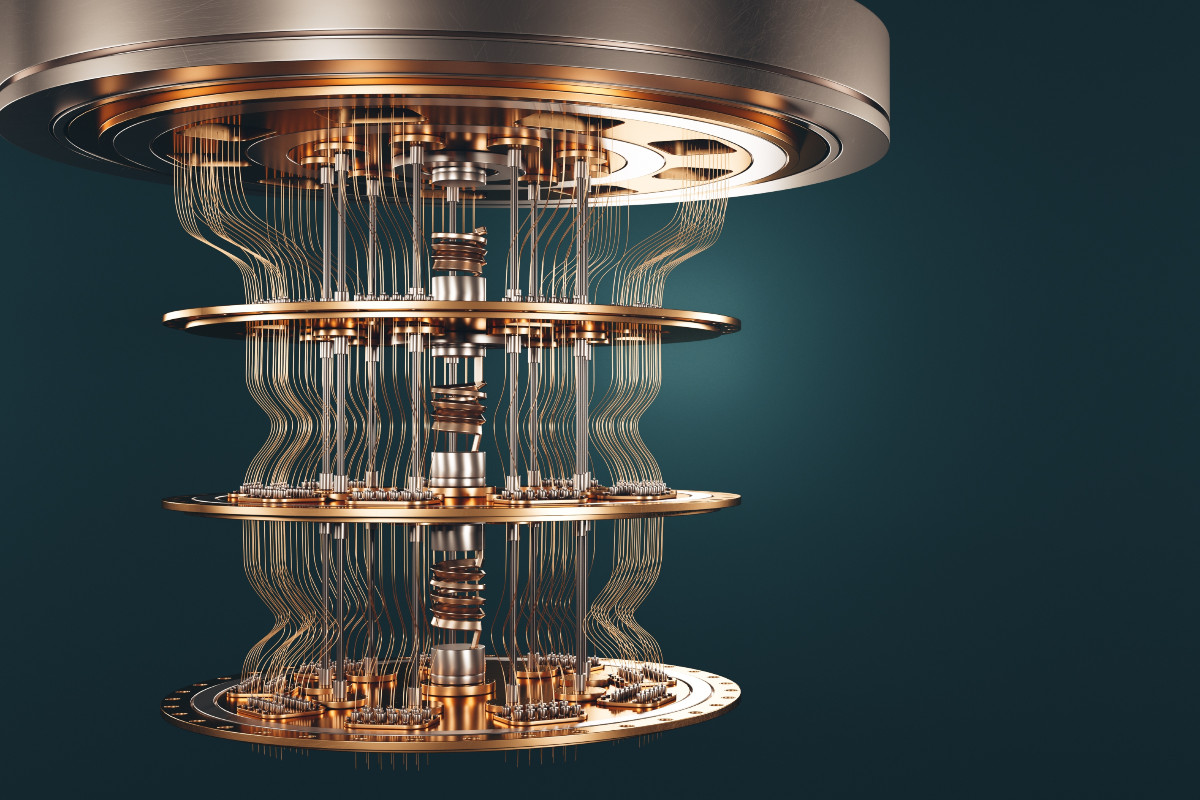
Developers entering this niche must anticipate substantial upfront investment driven by highly specific technical demands. As our report details, qubits – the fundamental components of quantum computers – are incredibly delicate. They demand highly specialised environments, including sophisticated electromagnetic shielding, cryogenic cooling, and complex control systems to protect them from environmental interference and decoherence.
The ‘cryogenic premium’ alone, which covers the dilution refrigerators required to reach near absolute zero temperatures, is estimated to add millions to the cost of a single system. This means the estimated cost for a scaled quantum computer system, including its massive refrigeration and control units, can reach up to $100 million for a single high-performance unit.
Such requirements for structural stability, vibration dampening, and precise environmental control clearly go beyond those of typical Tier III or Tier IV data centres, necessitating a different level of engineering and construction expertise.
This technological sophistication also implies substantial power demands and complex resilience requirements.
While the actual quantum computation can be remarkably energy efficient, with some quantum systems using less power for computation than an electric kettle, the essential cooling infrastructure demands considerable energy. Maintaining near absolute zero temperatures around the clock for these delicate systems can consume an estimated 10kW to 25kW of power per unit.
When combined with the power needs of co-located classical computing for hybrid quantum-classical workloads, and the general demand from a concentrated influx of researchers and support facilities, the compounded strain on the UK’s power grid becomes a critical consideration. Ultra-reliable power delivery is paramount, as any interruption could risk destroying delicate quantum states, making robust and redundant power solutions a foundational requirement for these facilities.
That, in turn, places greater emphasis on power strategy at the earliest stages of planning.
These intense power requirements are also likely to expose infrastructure bottlenecks and bring sustainability questions into sharper focus.
The primary constraints for such advanced facilities are expected to include electrical grid capacity, the availability of specialised cooling infrastructure, and high-bandwidth fibre connectivity. While quantum technology holds promise for developing climate solutions, its own energy consumption will still need to be managed carefully.
This places added responsibility on real estate developers to consider options beyond traditional grid dependency. Our report emphasises that quantum facilities will require new types of equipment and build specifications, suggesting that securing dedicated renewable power sources, whether through on-site generation or direct renewable energy contracts, should be considered from the outset.
This is not simply an environmental issue, but an operational one tied to continuity, resilience, and long-term viability.
This convergence of specialised talent and infrastructure is not just creating new types of facilities; it may also signal an evolution in data centre location strategy.
Our report outlines a plausible roadmap for quantum computing over the next decade, moving from ‘controlled environments’ for research and development to ‘co-located pilots’ within data centres, and eventually ‘commercial hybrid’ installations. In the near term, development is expected to remain concentrated in quantum hubs.
However, as quantum technology matures, there is ongoing debate about whether a larger percentage of Quantum Processing Units (QPUs) might eventually be deployed in traditional data centre markets, particularly as Quantum-as-a-Service (QaaS) becomes more prevalent and QPUs become a more familiar component in some facilities.
This dynamic presents both opportunities and risks for regional investment and land acquisition. Regions and developers that adapt early to these requirements – understanding the nuances of site selection, planning constraints around sensitive equipment, and the need for integrated green power solutions – are likely to be in a stronger position as the market develops.
Examples such as Germany’s Leibniz Supercomputing Centre, which already integrates specialised quantum hardware, cooling, and isolation in proximity to classical systems, offer an early indication of how these hybrid environments may take shape.
The Government’s strategic focus on quantum talent and computational infrastructure is likely to be a significant factor in shaping the UK’s technological landscape.
This convergence is creating new economic opportunities that will require evolving approaches to real estate development. Our Future of Quantum Real Estate report suggests that there may be a limited window for first movers, but also significant uncertainty around how quickly demand will scale and where it will settle.
For operators and developers, understanding the site requirements, prioritising robust and greener power resilience, navigating complex planning constraints, and mastering the build complexity of these facilities will be crucial. Those that develop this expertise now may be better positioned to engage with the projected $100 billion quantum market by 2035.
Real estate is likely to play an important role in shaping how this next phase of computing infrastructure develops.