
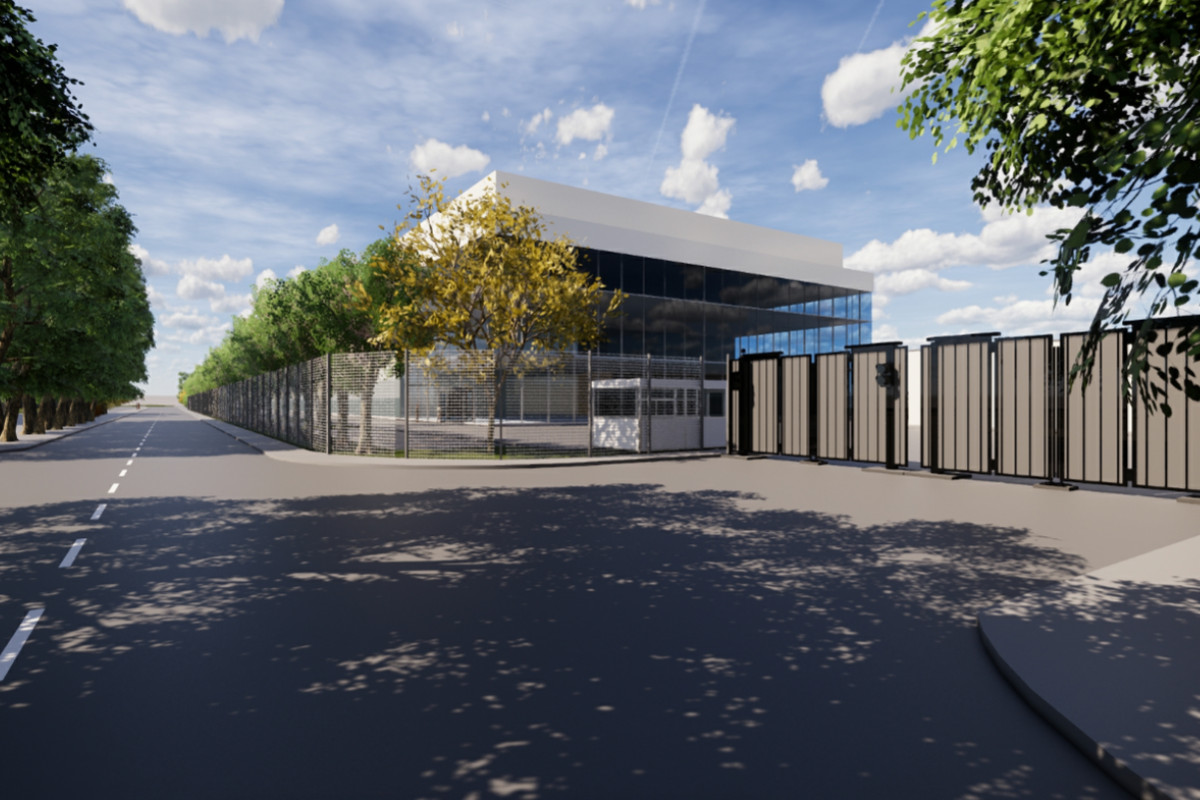
Nscale’s planned £2bn AI data centre in Essex has reportedly been hit by grid delays, forcing the company to explore alternative power options in order to keep the project on track.
According to reports, Nscale has been told that the 90 MW grid connection needed for its Loughton site will not be ready in time for the facility’s planned opening in 2027. That has reportedly led the company to hold talks with Bloom Energy over the use of solid oxide fuel cells, which could provide power to the site while it waits for a permanent grid connection.
The project is supposed to be one of the UK’s flagship AI infrastructure developments, with Nscale previously announcing that the site would support 50 MW of AI and HPC capacity, with the ability to scale up to 90 MW. The company also said the facility could house up to 45,000 NVIDIA GB200 GPUs.
Earlier this year, it was revealed that the initial opening date of late 2026 would be missed due to planning delays – a blow to the UK Government’s AI strategy in two distinct ways. Firstly because UK Prime Minister Keir Starmer has made clear that AI is key to the UK’s economic growth strategy, but also because of his Government’s promises to help combat planning delays.
Now, however, it’s the grid that is holding up the delivery of Nscale’s flagship AI data centre. This is just the latest showcase of the uncomfortable reality facing data centre developers. After all, it’s one thing to announce billions of pounds of investment, but it’s another thing entirely to secure the electricity needed to make those projects happen.
Power availability continues to plague the data centre industry
The UK’s data centre sector has been warning for some time that power availability is becoming one of the biggest constraints on growth. Developers have been snapping up land, securing planning permission, and even getting customer commitments for new data centres – but that doesn’t necessarily mean they’ll get a grid connection anytime soon.
That’s led to further growth in the grid connections queue as speculative investors look to capitalise on the industry’s thirst for sites with available power. While many of the data centre developments in the grid queue will never be built, some investors are hoping to get earlier connection dates than other sites in the hopes of selling the site to a data centre operator.
Meanwhile, sites that have the investment and the customer commitments in place are still stuck in that queue – which is a problem facing Nscale. Following delays to planning, the company has now secured the necessary permissions and has significant financial backing, but its timetable is now dependent on when enough electricity can actually reach the site. At the moment, that’s unlikely to occur in time for the planned 2027 opening.
Nscale seeks an alternative
Without a grid connection, Nscale faces two options. Firstly, it could choose to delay the project until it can finally get the grid connection it needs. That’s the easiest choice in terms of complexity, but could come with stiff financial penalties as companies have already committed to taking up capacity at the site – with Microsoft set to be an anchor tenant.
Alternatively, Nscale could look to bridge the gap. That means finding a solution that could provide enough electricity to power the data centre until it can get a grid connection. There are, of course, various ways in which it could achieve that goal – but according to reports, the company’s preferred method appears to come from Bloom Energy.
Nscale has reportedly held discussions with Bloom Energy to provide the infrastructure required to generate the electricity needed to power its AI data centre. It can achieve this using solid oxide fuel cells, which generate electricity by oxidising a fuel such as natural gas without the emissions typically associated with burning the fuel.
Bloom Energy is already well-established in the data centre market, with the company having already deployed the technology at a data centre in Manchester, while it also has a deal to provide the tech to 19 Equinix data centres around the world. Demand for the technology is growing, however, as evidenced by the company’s share price, which has soared by 800% in the past year.
It’s likely that as grid connection dates stretch further into the future, more data centre operators will look at whether they can bring power generation on-site.
What does this mean for Nscale?
The delay comes shortly after Nscale secured a $900 million credit facility to accelerate construction across its portfolio. That should give the company more room to move, but the Essex project shows that capital alone cannot solve infrastructure bottlenecks.
It also follows OpenAI’s decision earlier this year to pause its proposed Stargate UK project, which was expected to involve Nscale and NVIDIA. At the time, OpenAI cited high energy costs and the wider regulatory environment as reasons for putting the project on hold.
That makes the Essex delay particularly important. This is not just a single project running into difficulties. It is another example of the same structural problem. The UK wants the economic benefits of AI infrastructure, but it is still struggling to provide the power conditions needed to attract and deliver it.