

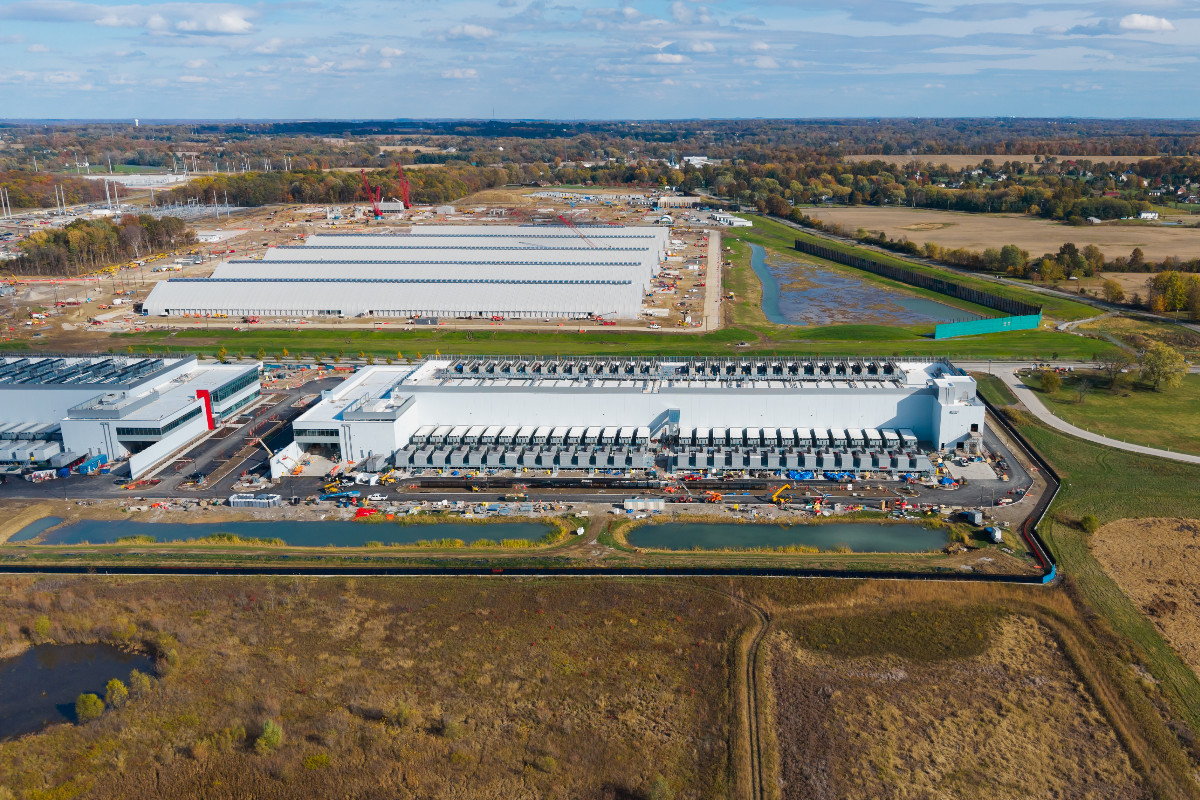
Anna Dowson, Senior Director of Sustainability at GreenScale, and Müge Karasahin, Sustainability and ESG Partner at Ethos Engineering, explain why earlier engagement, greater transparency and stronger collaboration are needed to turn embodied carbon ambitions into meaningful action.
As the data centre industry accelerates to meet the demands of AI, cloud computing and digital transformation, sustainability conversations continue to focus heavily on operational efficiency. Metrics such as Power Usage Effectiveness (PUE), renewable energy procurement and operational net zero commitments have become standard markers of environmental performance. Yet behind these advancements lies another challenge that remains significantly less visible: embodied carbon.
While operational emissions occur over the lifetime of a facility, embodied carbon is already locked in before a data centre becomes operational, creating an immediate and largely irreversible carbon impact.
Every structural frame, cooling unit, cable tray, battery system, generator and façade panel carries with it a carbon footprint tied to extraction, manufacturing, transport and construction.
As electricity grids decarbonise and operational efficiencies continue to improve, embodied carbon is becoming an increasingly important component of the overall lifecycle emissions profile of data centres.
The industry is increasingly acknowledging this challenge. Whole Building Life Cycle Assessments (WBLCA), Environmental Product Declarations (EPDs) and Scope 3 reporting are becoming more common within project discussions. However, despite growing awareness, embodied carbon still struggles to move beyond sustainability workshops and consultant reports.
Bringing embodied carbon into focus
One of the biggest barriers is visibility.
Operational energy is highly visible within project and operational decision-making. It directly affects utility costs, energy resilience and long-term operational expenditure. Embodied carbon, by contrast, is often hidden within supply chains, material specifications, procurement choices and construction processes. Its impacts are distributed across multiple stakeholders, making ownership difficult to define.
Responsibility is fragmented across developers, designers, contractors, suppliers, operators and investors. Engineers may propose lower-carbon materials, but contractors face programme pressures. Developers may set sustainability ambitions, but tenants often prioritise speed, cost and operational reliability. Suppliers may have limited carbon data available, while certification systems continue to vary in scope and methodology.
As a result, embodied carbon can easily become everyone’s concern, yet nobody’s priority.
Beneath this sits a more difficult commercial question for the industry: who benefits most from embodied carbon reduction, and who is willing to absorb the cost, time and complexity often required to achieve it? Until the industry develops stronger mechanisms to align environmental ambition with commercial incentives, this question will continue to slow adoption.
Balancing speed, growth and sustainability
The pace of data centre delivery further compounds the issue.
Growing demand for cloud services, digital infrastructure and AI capacity has intensified pressure to deliver projects at unprecedented speed. In many cases, programme risk now outweighs almost every other consideration.
Low-carbon alternatives may require additional coordination, supply chain engagement or longer procurement lead times. Under compressed delivery schedules, carbon reduction strategies can quickly be perceived as obstacles rather than long-term opportunities.
This creates a difficult contradiction for the industry. At the very moment when digital infrastructure is becoming more critical to society, the speed of expansion risks limiting the industry’s ability to fully evaluate the environmental consequences of what is being built.
Building greater consistency
At the same time, embodied carbon remains difficult to benchmark consistently.
Unlike operational energy, there is still no universally adopted methodology across the data centre sector. Differences between certification frameworks, inconsistent availability of EPDs and varying levels of supply chain transparency all contribute to uncertainty. Mechanical and electrical systems, which can account for a substantial proportion of embodied emissions within data centres – often estimated in the range of 30–60%, depending on the approach and facility type – remain underrepresented in many assessment methodologies. This lack of consistency makes it harder for organisations to compare projects, establish targets or confidently communicate progress.
Transparency plays a critical role here. The industry does not need to wait for perfect data before taking action. Carbon calculations will continue to evolve. Methodologies will improve. Supply chain data gaps will remain. But imperfect measurement can still be more valuable than no measurement at all. Organisations willing to publish assumptions, share lessons learned and openly discuss challenges can help accelerate collective industry understanding.
Embedding carbon into project decision-making
As industry understanding continues to evolve, embodied carbon is steadily moving into mainstream industry discussions. Increasingly, it is being viewed not only as a sustainability issue, but also as a governance, reporting and risk issue.
Regulatory frameworks such as the Corporate Sustainability Reporting Directive (CSRD) and the EU Taxonomy are pushing organisations to improve Scope 3 transparency. Investors are asking more detailed questions about lifecycle emissions and supply chain resilience, while clients are beginning to recognise that carbon performance will increasingly shape long-term asset credibility.
What changes behaviour is not simply awareness, but integration.
Embodied carbon begins to move up the agenda when it becomes visible within mainstream project decision-making. This means discussing carbon alongside cost, programme, procurement and risk – not separately from them. It means incorporating carbon conversations at the earliest design stages, where the greatest opportunities for reduction still exist. By the time projects reach construction, many of the highest-impact decisions have already been locked in.
Early-stage engagement is therefore important. Structural systems, material strategies, equipment selection and procurement approaches all influence embodied carbon outcomes long before construction begins. Integrating WBLCA into concept design allows project teams to compare options while meaningful flexibility still exists. Even relatively simple decisions – optimising structural grids, reducing over-specification, engaging local suppliers or challenging unnecessary material use – can significantly influence final carbon outcomes.
Creating a more carbon-conscious delivery culture
At present, embodied carbon often remains confined to desktop analysis: spreadsheets, carbon models and sustainability reports prepared by specialist consultants. While these assessments are essential, they are not enough on their own.
If carbon data does not meaningfully influence procurement decisions, value engineering discussions or project priorities, it risks becoming a reporting exercise rather than a design driver.
The industry does not yet discuss carbon with the same fluency as cost or programme. Project teams instinctively understand the implications of budget overruns or schedule delays because these considerations are deeply embedded within delivery culture. Embodied carbon has not yet reached the same level of integration.
To change this, carbon literacy must extend beyond sustainability teams alone. Procurement managers, contractors, project directors, engineers and clients all influence embodied carbon through thousands of everyday decisions. Every material substitution, specification adjustment, procurement choice and design coordination exercise carries carbon implications. The more these decisions are understood collectively, the more carbon reduction can become embedded in normal project delivery rather than treated as a separate sustainability exercise.
Shaping the future of sustainable digital infrastructure
Moving embodied carbon up the agenda is not simply about compliance, certification or reporting requirements. It is also about how the industry defines responsible digital infrastructure.
As society becomes increasingly dependent on data centres, expectations around environmental accountability are likely to grow. Communities, regulators, investors and clients are looking beyond operational efficiency alone and asking broader questions about how infrastructure is designed, constructed, resourced and integrated into the places where it is built.
Progress will depend not only on increasingly sophisticated carbon models or ambitious net zero statements, but on whether embodied carbon is brought into mainstream decision-making early enough to influence real outcomes. That, in turn, will require stronger collaboration across the supply chain, alongside greater transparency, data sharing and collective accountability.
Ultimately, embodied carbon is not just a sustainability metric. It is a reflection of the decisions the industry makes about how the physical foundations of the digital world are built.