

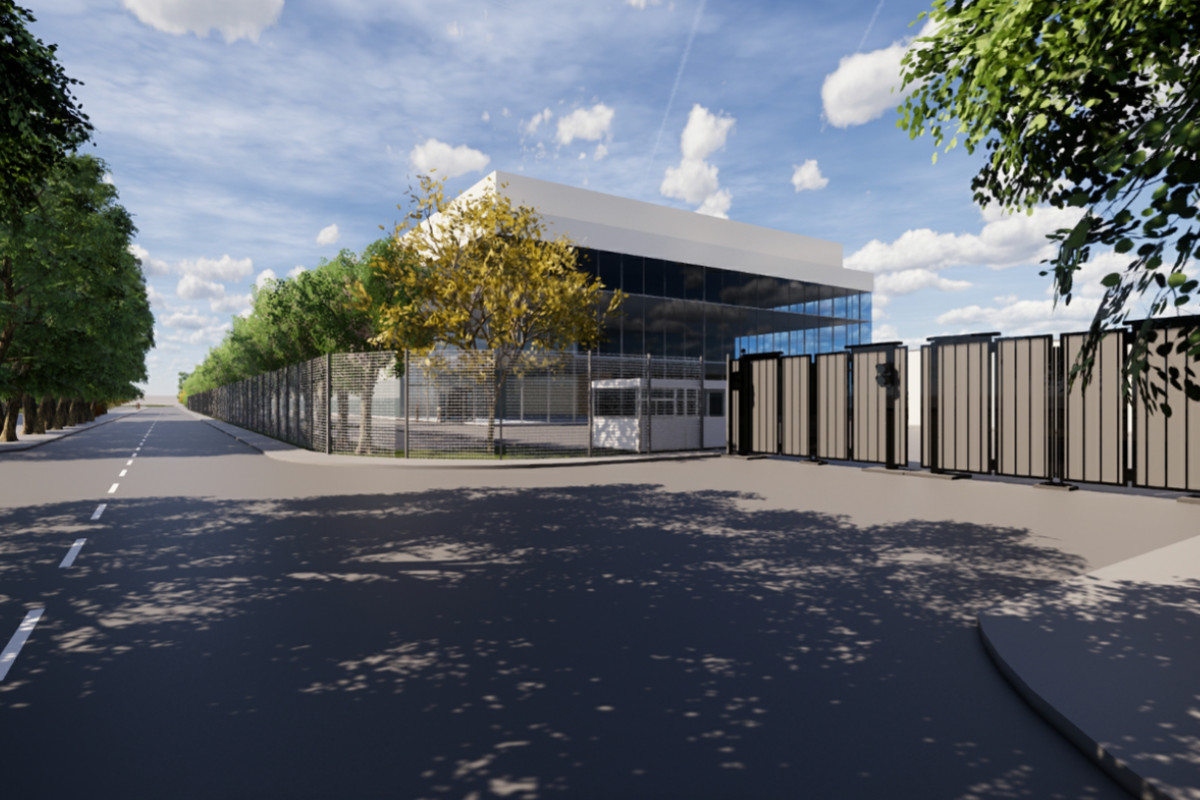
Microsoft has withdrawn from its agreement to take capacity at Nscale’s planned AI data centre in Loughton, Essex.
The US technology giant had previously agreed to become the anchor tenant for Nscale’s flagship development, which was expected to house more than 23,000 Nvidia GB300 GPUs. The facility would have helped support Microsoft’s Azure services, but grid delays have reportedly led to the cancellation of the agreement between the two companies.
Nscale had scheduled delivery of the GPUs for the first quarter of 2027, but UK Power Networks has now supposedly informed the company that sufficient electricity might not be available at the site until the early to mid-2030s.
That leaves a substantial gap between the project’s intended opening and the availability of power, which is ultimately why Microsoft likely wanted to look elsewhere. In fact, there appears to be no bad blood between the two companies, with Microsoft confirming that its withdrawal is isolated to Loughton, and it will continue to partner with Nscale elsewhere.
“This decision relates to a single site,” a Microsoft spokesperson said, adding that the company remains committed to its partnership with Nscale.
Nscale has also insisted that the development itself has not been cancelled, with the company continuing to investigate alternative power arrangements.
A spokesperson said the company remained committed to Loughton and was exploring alternative electricity sources, alongside other expansion opportunities in the UK.
The spokesperson added that “this unfortunate London-wide grid issue has no impact on our other contracts.”
Nevertheless, Microsoft’s withdrawal leaves Nscale without a publicly announced customer for Loughton, raising questions about the project’s commercial future even if an alternative electricity supply can be secured.
From grid delays to losing a customer
The loss of Microsoft is the latest setback for a development that has already struggled to meet its original timetable.
When Nscale first announced Loughton in January 2025, it expected the facility to become operational in the final quarter of 2026. Planning delays subsequently pushed back the development schedule.
By July 2026, the proposed 90MW grid connection was reportedly running behind the project’s development timetable.
Nscale was also reportedly holding discussions with Bloom Energy over the possibility of installing solid oxide fuel cells, which could provide on-site electricity generation while the company waited for its permanent grid connection.
However, Nscale has not confirmed that an alternative power arrangement has been agreed, or whether one could be delivered quickly enough to bring the facility online before the 2030s.
It also remains unclear whether the reported connection timetable applies to the initial 50MW deployment, the full 90MW requirement or both, but with Microsoft out of the picture, power availability is just one problem for Nscale to solve. Even if it can secure sufficient electricity to proceed with Loughton, it must now find another customer willing to commit to the capacity.
A setback for the UK’s AI ambitions
Loughton’s difficulties are particularly significant because the development was promoted as part of the UK’s efforts to attract major investment in domestic AI infrastructure.
The project formed part of Microsoft’s wider $30bn (£22bn) UK investment plans, announced during President Donald Trump’s state visit in September 2025.
Although that investment commitment extends well beyond Loughton, the Essex development was one of its most prominent proposed projects, having been presented as the UK’s largest AI supercomputer.
The withdrawal also comes at a sensitive time for Nscale, which filed for a proposed US stock market listing in September.
But ultimately, it’s not just Nscale that suffers. In fact, the wider UK data centre sector will once again be feeling the impact of Microsoft’s withdrawal from Loughton as it speaks to the wider issue around grid delays. In fact, it was that very reason that ultimately led to the cancellation of OpenAI’s Stargate UK.
Lee Myall, CEO of wholesale connectivity provider Neos Networks, said Loughton’s difficulties also demonstrated the importance of considering wider infrastructure requirements when planning new data centres.
He noted, “Power availability is clearly the immediate challenge, but it should prompt a broader conversation about the infrastructure AI depends on. As well as power and land, connectivity needs to be considered early in decisions about where data centres are located.”
Research commissioned by Neos Networks found that 92% of 250 UK enterprise IT decision-makers surveyed said local connectivity availability influenced where they deployed or expanded AI workloads.
That offers little solace to Nscale, which now faces the challenge of establishing both when it can secure sufficient power for Loughton and who will occupy the facility once it is available.