
Errol Bull, P.E., CSI, Application Development Leader at Momentive Performance Materials Inc., explains why a data centre roof should be viewed as the first line of defence against leaks, energy waste, and unnecessary carbon impact.
Data centres depend entirely on uptime, yet the roof is often the last thing on anyone’s mind until it leaks. While the focus usually lands on servers and cooling systems, roofs play a central role in keeping water out, supporting thermal efficiency and helping to control costs.
For building engineers, understanding how different roofs fail, and how to maintain them, is critical to reducing a facility’s carbon footprint and avoiding unnecessary downtime.
Risk management: How roofs fail
For data centres, the roof is a critical part of the uptime strategy, with water leaks posing a clear threat to servers and data. Consequently, facility managers need to move from a reactive approach, fixing leaks after they happen, to a more proactive one that anticipates how a specific roof type might fail under stress.
To do that, engineers must look at the common weak points in standard roofing materials:
- Single-ply membranes (TPO/PVC): These are reflective and widely used, but they rely on heat-welded seams. In areas with large daily temperature swings, the material expands and contracts, which can place stress on those seams. These roofs need a robust maintenance programme, including regular seam checks and thermal scans to detect loose bonds before water gets in.
- Modified bitumen: These are durable, multi-layer systems, but UV exposure can degrade them over time, causing them to dry out and potentially crack. In hot climates, they often need additional UV protection to help prevent premature ageing.
- Metal systems: The main challenge with metal systems is heat-induced movement. As the metal heats up and cools down, it expands and contracts. This can cause screws to back out and holes to stretch. Regular checks on torque and washers are essential to help keep the roof watertight.
The cost of cooling
As well as preventing water leaks, roofs are an important part of a building’s energy performance. Cooling is often one of the largest operating costs for a data centre, sometimes accounting for 40% or more of the energy bill. Any material that lowers the building’s heat load can therefore contribute to lower operating costs.
A roof’s Solar Reflectance Index (SRI), or how well it reflects the sun, is an important consideration when choosing a roofing material.
- Dark roofs (bitumen/EPDM): These absorb a high level of solar heat, transferring it into the building and increasing the cooling burden.
- White single-ply (new TPO): This offers good reflectivity initially, but performance can decline as the surface weathers and becomes dirty.
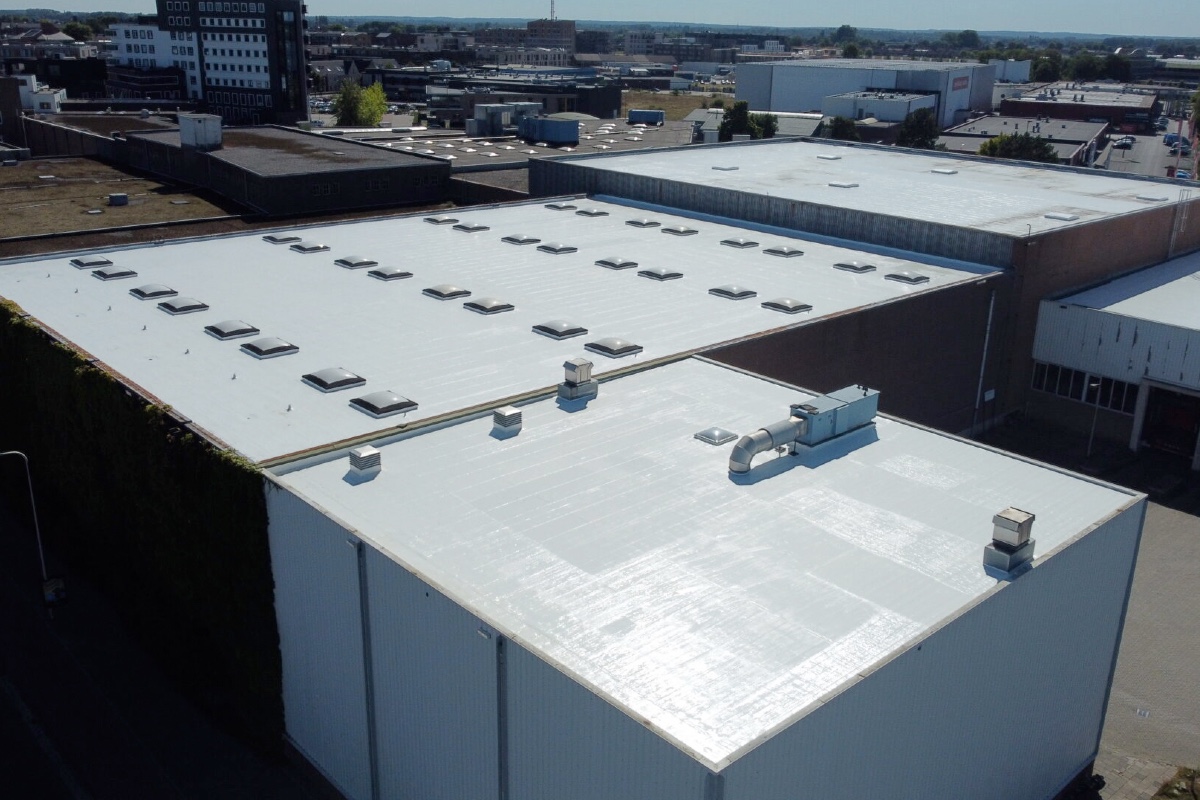
- High-solids silicone: This can maintain strong reflectivity and release heat effectively over the long term due to its inorganic chemistry.
Industry data suggests that switching from a dark roof to a highly reflective one can reduce cooling energy use by 10% to 50%, depending on location. This can lead to a 7% to 15% reduction in total annual cooling costs.
Restore or replace?
With the data centre sector under growing pressure to report on emissions, managing the building envelope is also becoming a carbon issue. When it comes to repairing data centre roofing, the traditional tear-off-and-replace model generates landfill waste and carries a relatively high carbon footprint because of the manufacturing and transport involved in new materials.
Life Cycle Assessment (LCA) indicates that retaining the existing roof deck and insulation can significantly lower a facility’s carbon footprint, provided those elements remain in good condition. This has increased interest in fluid-applied restoration systems, including acrylics, polyurethanes and silicones, as an alternative to full replacement.
However, choosing a restoration coating involves trade-offs:
- Acrylics: Often cost-effective and highly reflective, but usually best suited to sloped roofs with good drainage. They can deteriorate if water sits on them, which is often a challenge on flat-roofed data centres.
- Polyurethanes: Very strong and durable under foot traffic, making them suitable for roofs with heavy equipment. However, they can be sensitive to UV light without a topcoat.
- Silicones: Known for UV stability and for handling standing water well, making them a practical option for large, flat roofs. However, they can attract dirt if not cleaned, which may affect reflectivity over time.
For engineers focused on sustainability, the decision is rarely straightforward. It requires checking the existing insulation for moisture and assessing the condition of the assembly as a whole. If the layers beneath are dry, coating the roof may extend its service life and avoid the waste associated with replacing serviceable materials.
Managing heat stress
The impact of climate stress on a roof can be illustrated by a recent project in Mexico. A technology provider’s facility in a region prone to hot days and tropical hailstorms experienced early degradation of its six-year-old PVC roof.
Analysis showed that repeated expansion and contraction cycles had stressed the seams, creating leak risk even though the membrane itself remained in workable condition. The engineering team had to decide whether to remove the roof or restore it.
A full tear-off posed significant risks, including exposing server halls to dust, generating tonnes of waste, and disrupting operations.
Instead, the team opted for restoration using a fluid-applied silicone roof coating. By cleaning and priming the existing surface, they installed a seamless waterproof membrane. This delivered three key outcomes:
Reduced seam vulnerability: The liquid-applied system covered the mechanical weak points of the original sheets.
Improved reflectivity: A white topcoat helped restore the roof’s thermal performance, reducing the cooling load.
Retained existing materials: Keeping the insulation and deck reduced the project’s carbon footprint compared with a full replacement.
Conclusion
For modern data centre designers, the roof should not be treated as an afterthought. It is an active part of the facility’s performance and should be considered accordingly.
Whether the goal is to meet energy targets, support sustainability objectives or simply keep the business running, a fit-and-forget approach is unlikely to be enough. By understanding how roofs fail, monitoring thermal performance, and using data to decide whether to restore or replace, engineers can turn a potential risk into a more resilient and sustainable part of the facility.